








Key points
- Nigeria’s headline inflation rate eased marginally to 15.91% in June 2026 from 15.93% in May.
- Month-on-month headline inflation slowed to 1.66%, down from 1.75% in May.
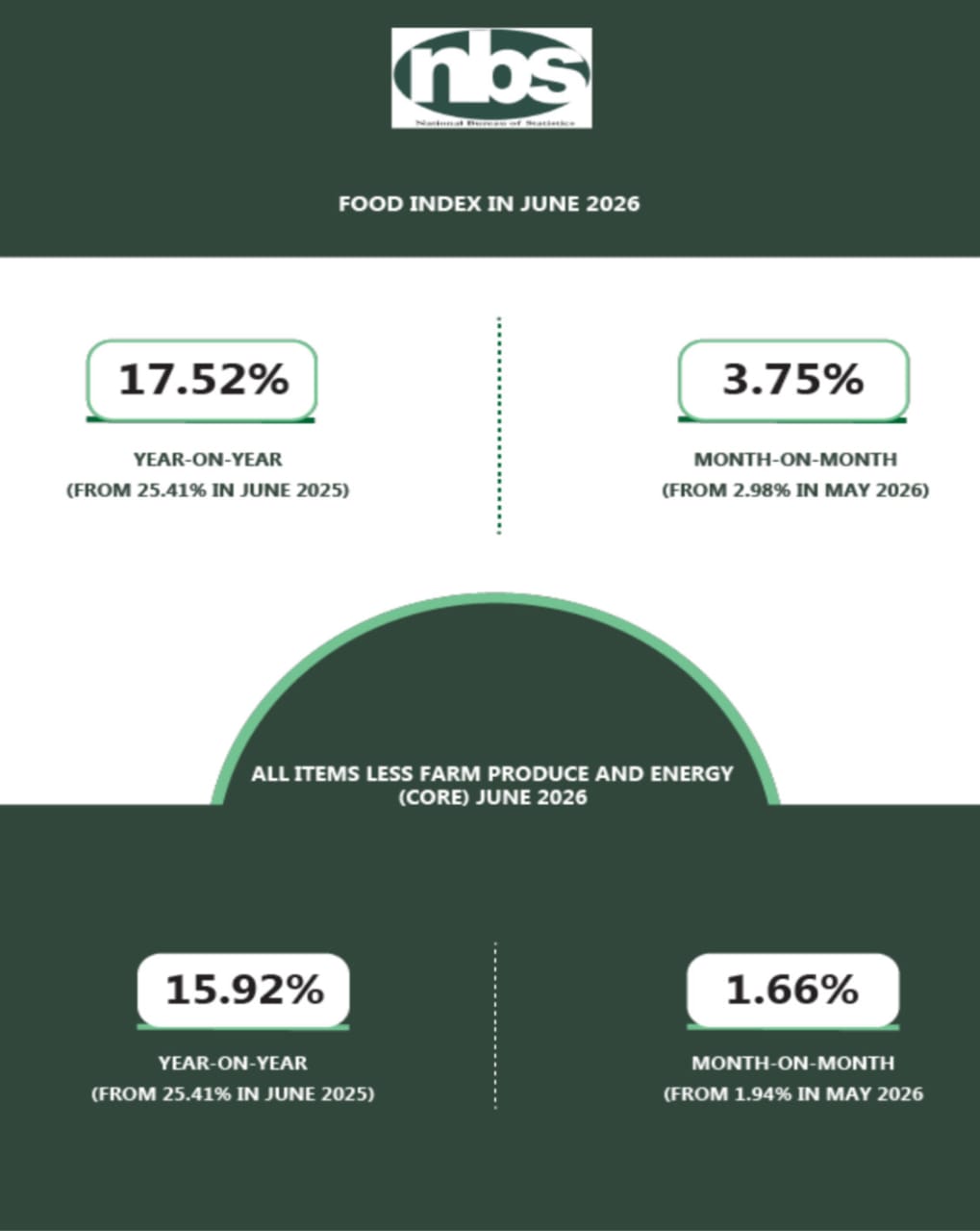
- Food inflation rose to 17.52% year-on-year, with monthly food inflation accelerating to 3.75%.
- The latest figures suggest overall price pressures are moderating, although food costs remain elevated.
Main Story

Nigeria’s headline inflation rate declined marginally to 15.91% in June 2026, extending the recent moderation in consumer price growth, even as food prices continued to rise at a faster pace.
The latest Consumer Price Index (CPI) released by the National Bureau of Statistics (NBS) showed that headline inflation eased from 15.93% recorded in May 2026.
Compared with the same period last year, when inflation stood at 25.29% in June 2025, the latest figure reflects a significant slowdown in the pace of price increases across the economy.
On a month-on-month basis, headline inflation slowed to 1.66% in June, compared with 1.75% in May, indicating that consumer prices continued to rise but at a slower rate than in the previous month.
The Issues
Although headline inflation continues to moderate, rising food prices remain a major concern for households and policymakers.
Food accounts for a significant share of household spending in Nigeria, meaning sustained increases in food prices continue to erode purchasing power despite the easing in overall inflation.
The divergence between headline and food inflation suggests that while broader price pressures may be softening, supply-side challenges affecting food production, transportation and distribution continue to keep food prices elevated.
What’s Being Said
According to the National Bureau of Statistics, food inflation stood at 17.52% year-on-year in June 2026.
On a month-on-month basis, food inflation accelerated to 3.75%, representing an increase of 0.77 percentage points from the 2.98% recorded in May.
The latest data indicates that food prices increased at a faster pace during the month even as overall inflation slowed marginally.
More Insights
The moderation in headline inflation may provide some relief for monetary authorities seeking to maintain price stability while supporting economic growth.
However, the acceleration in monthly food inflation underscores the continued vulnerability of consumers to rising costs of essential commodities.
Analysts will likely monitor subsequent inflation releases to determine whether the decline in headline inflation can be sustained and whether food price pressures begin to ease in the coming months.
What’s Next
The June inflation figures are expected to shape market expectations ahead of future monetary policy decisions by the Central Bank of Nigeria (CBN).
Policymakers will also be watching developments in food supply, exchange rate stability, energy prices and agricultural output, all of which remain key drivers of inflationary trends.
Bottom Line
Nigeria’s inflation rate continued its gradual decline in June, offering further evidence of easing headline price pressures. However, the sharp increase in monthly food inflation highlights the persistent challenge of rising food costs, suggesting that many households may yet to experience meaningful relief in the cost of living.