Key points
- President Bola Tinubu has called on African countries to strengthen cooperation and prioritise value addition in the mining sector.
- The President urged nations to end the export of raw minerals and invest in local processing, refining, and research.
- The African Minerals Strategy Group (AMSG) reaffirmed its commitment to promoting beneficiation and increasing Africa’s share of mineral wealth.
Main story
President Bola Ahmed Tinubu has called on African nations to unite in advancing the continent’s interests in the global minerals market by prioritising value addition, industrialisation, and local beneficiation of mineral resources.
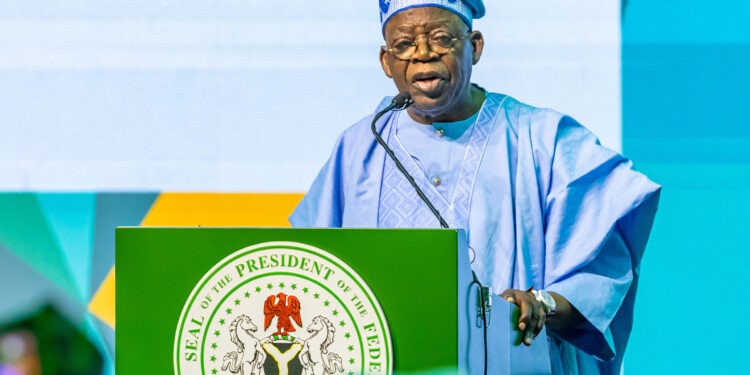
The President made the call on Tuesday while receiving a delegation of the African Minerals Strategy Group (AMSG) at the Presidential Villa in Abuja.
AMSG is a platform comprising African ministers responsible for mining and solid minerals development, with Nigeria serving as the current chair through the Minister of Solid Minerals Development, Dele Alake.
Addressing the delegation, Tinubu stressed the need for African countries to move away from the long-standing practice of exporting raw minerals without processing them locally.
According to him, the continent must work collectively to ensure that its vast mineral resources generate economic value, technological advancement, and prosperity for its people.
“We should avoid bureaucracy and deceit; we must put an end to exploitation,” the President said.
“The rest of the world will not mind if your country becomes a cesspit of dams and rubbish while excavating your raw materials without adding value.
“It is our responsibility to collaborate and cooperate to ensure that these minerals bring value to us, bring technology to us, and create prosperity for our people.”
Tinubu noted that Africa possesses abundant mineral deposits capable of driving industrialisation, job creation, and sustainable economic growth if properly harnessed.
He emphasised the importance of developing local refining capacity and strengthening research and development to maximise returns from the continent’s natural resources.
The issues
Despite possessing some of the world’s largest reserves of critical minerals, many African countries continue to earn limited revenue from the sector due to their dependence on exporting unprocessed raw materials.
Experts have long argued that the absence of local refining, beneficiation, and manufacturing capacity has deprived the continent of opportunities for industrial growth, technology transfer, employment generation, and increased government revenues.
The growing global demand for critical minerals used in renewable energy technologies, electric vehicles, and advanced manufacturing has intensified calls for African nations to secure greater value from their resources.
Many policymakers believe that regional cooperation and coordinated policies are essential to improving Africa’s bargaining power in international mineral markets.
What’s being said
Tinubu urged African leaders to invest more in research, innovation, and refining infrastructure as a pathway to building a knowledge-driven economy.
“It is about how much each country is willing to invest in research, development and refinery.
“I see no reason why we cannot centralise that conversation somewhere on the continent and utilise it to enhance our knowledge-based economy, improve quality of life and create prosperity for our people,” he said.
Earlier, Alake commended the President for supporting reforms in Nigeria’s mining sector and promoting policies aimed at local value addition and economic diversification.
According to him, Tinubu’s policies have encouraged artisanal miners, strengthened local beneficiation initiatives, and inspired similar policy directions across Africa.
“You encouraged us to focus on the core objective of this group, which is to ensure that Africa’s natural resources, especially critical minerals, are processed and utilised for the benefit of Africans,” Alake said.
He disclosed that several African countries have already introduced measures to restrict or ban the export of raw minerals in a bid to stimulate domestic industries and increase earnings from the sector.
What’s next
Alake informed the President that members of the African Minerals Strategy Group are currently participating in the fifth edition of the African Natural Resources and Energy Investment Summit (AFNIS 2026) in Abuja.
The summit, themed “One Africa, One Resource Vision,” seeks to advance a unified continental strategy for resource management, industrialisation, and value-chain development.
Participants are expected to explore policies and partnerships that will position Africa as a major player in the global critical minerals value chain through beneficiation, strategic investments, and enhanced regional cooperation.
AMSG also pledged to continue advocating policies that protect Africa’s interests and increase the value and revenues generated from the continent’s mineral resources.
Bottom line
President Tinubu’s call reflects a growing consensus among African leaders that the continent must move beyond its traditional role as a supplier of raw materials. By investing in local processing, refining, research, and regional cooperation, Africa stands to unlock greater economic value from its mineral wealth, create jobs, attract technology, and accelerate industrial development across the continent.