








In March 2026, Nigeria crossed a symbolic threshold in its decades-long quest for energy relevance: the export of over 500,000 tonnes of refined petroleum products from the Dangote Refinery to other African countries.
On the surface, the figure appears to reflect operational success. Beneath it, however, lies a deeper story, of policy recalibration, infrastructure reform, and a gradual reversal of one of Nigeria’s most enduring economic paradoxes.
Before now: a crude giant, a refining dwarf
For decades, Nigeria occupied an uncomfortable position in the global energy chain. Despite producing over 1.5–2 million barrels of crude oil per day at peak levels, the country depended heavily on imported refined petroleum products due to the collapse of state-owned refineries in Port Harcourt, Warri, and Kaduna.
Data from the National Bureau of Statistics (NBS) and industry reports consistently showed that between 2015 and 2022, over 80–90 per cent of Nigeria’s petrol consumption was import-dependent. This reliance exerted immense pressure on foreign exchange reserves and underpinned the controversial fuel subsidy regime, which at its peak gulped trillions of naira annually.
The economic implications were severe: persistent fuel scarcity, volatile pump prices, and a logistics chain vulnerable to global shocks. In essence, Nigeria exported crude and re-imported value—a cycle widely criticised by economists and policy analysts.
The intervention: policy, ports and coordination
The current shift did not occur in isolation. It is the product of deliberate reforms, particularly within the maritime and trade ecosystem.
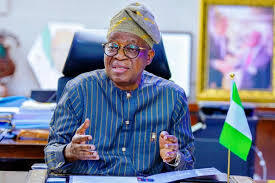
At the centre of this is the One-Stop-Shop (OSS) policy, driven by the Minister of Marine and Blue Economy, Adegboyega Oyetola. The OSS framework seeks to harmonise the activities of multiple government agencies operating at the ports-Customs, NPA, immigration, and others—into a single coordinated platform.
Before the reform, port users grappled with overlapping mandates, bureaucratic delays, and high transaction costs. Cargo clearance timelines were often unpredictable, with Nigeria ranking poorly on global ease-of-doing-business indices in trade facilitation.
The OSS model, aligned with global “single window” systems, has begun to reduce these inefficiencies. According to the Nigerian Ports Authority, vessel turnaround time has improved, documentation processes have become more streamlined, and inter-agency friction has reduced significantly, key factors in enabling time-sensitive exports such as refined petroleum products.
The catalyst: refining capacity comes onstream
While policy created the enabling environment, capacity came from the Dangote Refinery—Africa’s largest single-train refinery, with a nameplate capacity of 650,000 barrels per day.
Its phased operational rollout has begun to address the structural deficit in domestic refining. The March 2026 export figure, over 500,000 tonnes, signals not just production capability but surplus capacity, a critical requirement for any country seeking export relevance.
This marks a turning point. For the first time in decades, Nigeria is not merely meeting internal demand (albeit gradually) but also supplying neighbouring markets.
The enabler: ports as strategic infrastructure
The role of the Nigerian Ports Authority in this transition cannot be overstated. Energy exports are only as efficient as the logistics systems that support them. Under the leadership of Abubakar Dantsoho, the NPA has prioritised operational efficiency, optimising berth allocation, improving cargo handling, and enhancing marine services.
For exporters, these improvements translate into reduced demurrage costs, faster vessel processing, and improved reliability—factors that directly influence Nigeria’s competitiveness in regional energy markets.
The current reality: resilience amid global uncertainty
Nigeria’s export achievement comes at a time when global energy markets remain volatile, shaped by disruptions linked to the Middle East conflict.
While several countries continue to grapple with supply chain disruptions and price instability, Nigeria’s emerging refining capacity offers a degree of insulation. Authorities argue that this growing self-sufficiency, combined with export capability, positions the country as a stabilising force within the African energy landscape.
Within the framework of the African Continental Free Trade Area (AfCFTA), this could translate into increased intra-African trade in refined products—reducing dependence on imports from Europe and Asia.
The contradictions, exports vs domestic realities, beneath the optimism lies a more complex domestic picture.
Despite rising refining capacity, Nigerians continue to face high fuel prices, driven by exchange rate volatility, deregulation, and distribution inefficiencies. The removal of fuel subsidies in 2023 further exposed the market to global pricing dynamics.
In effect, while Nigeria is beginning to export refined products, affordability at home remains a pressing concern. This duality, export strength alongside domestic strain—will define the policy debates in the coming years.
The bigger picture: a fragile but promising transition
Nigeria’s 500,000-tonne export milestone is more than a statistical achievement; it is a signal of structural transformation. It reflects the convergence of industrial capacity, policy reform, and institutional coordination.
From a country once defined by its dependence on imported fuel, Nigeria is inching towards becoming a regional refining and export hub.
The sustainability of this shift, however, will depend on consistency—maintaining port efficiency, scaling refining output, ensuring policy stability, and, crucially, translating macro-level gains into tangible benefits for citizens.
For now, the milestone stands as both progress made and potential yet to be fully realised.