








By Boluwatife Oshadiya | March 10, 2026
Key Points
- Nigerian equities market sheds ₦726 billion in value after three-day rally
- All-Share Index drops 1,130.87 points to close at 196,066.11
- Selloffs in NASCON, Mutual Benefits, and Red Star Express drag market lower
Main Story
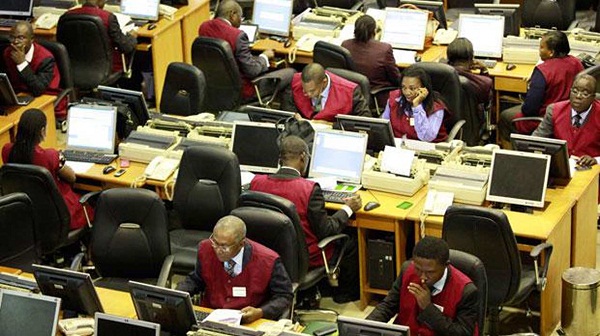
Nigeria’s equities market closed lower on Tuesday, erasing gains from the previous trading session as investors lost approximately ₦726 billion in market value.

Market capitalisation fell 0.57 percent, declining from ₦126.583 trillion to ₦125.857 trillion, while the All-Share Index dropped by 1,130.87 points, or 0.57 percent, to close at 196,066.11 points. The downturn followed three consecutive sessions of bullish trading and was driven largely by profit-taking in several mid-cap and consumer goods stocks.
Market breadth closed negative, with 44 decliners compared with 33 gainers. NASCON and Mutual Benefits Assurance led the losers’ chart with 10 percent declines each, closing at ₦147.60 and ₦4.59 per share respectively. Red Star Express lost 9.94 percent to close at ₦28.55, while Austinlaz and SCOA declined 9.88 percent and 9.85 percent respectively.
On the gainers’ chart, Premier Paints rose 9.97 percent to ₦17.65, followed by Conoil, which gained 9.95 percent to close at ₦204.40, and Sunu Assurances, which advanced 9.95 percent to ₦4.75.
Trading activity also slowed during the session. Total volume traded fell 2.06 percent to 746.85 million shares, valued at ₦27.85 billion across 65,275 deals.
Access Corporation recorded the highest trading volume with 80.26 million shares, accounting for 10.75 percent of total trades, while Zenith Bank led the value chart with ₦3.29 billion in transactions.
What’s Being Said
“More investors are currently selling stocks to take profits than those buying,” said David Adonri, Vice President of Highcap Securities Ltd.
“The market usually slows down after the earnings season because most companies have already released their financial results and proposed dividends,” Adonri added.
He also noted that geopolitical tensions in the Middle East could affect investor sentiment. “The Iran conflict may disrupt global trade flows, and any rise in global inflation could transmit into Nigeria through higher import costs,” he said.
What’s Next
- Investors will closely watch corporate dividend payments and post-earnings market activity.
- Analysts expect sector rotation toward defensive stocks if global volatility persists.
- Market sentiment may also react to movements in crude oil prices and global geopolitical developments.