





Nigerian families are experiencing a measure of relief as food prices continue to decline across major markets, following two years of unprecedented cost-of-living pressure.
A new market survey indicated that prices of staple food items have fallen by an average of 30 per cent year-on-year, driven by the ongoing harvest season, improved security in key farming corridors, favourable weather conditions, and the impact of the federal government’s import waiver introduced last year.
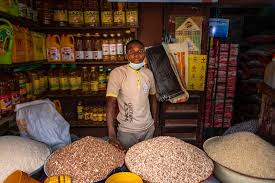
In Lagos, the price of a 50kg bag of local parboiled rice has dropped to an average of ₦65,000 from ₦73,000 in October 2024 — an 11 per cent decrease. A 50kg bag of foreign parboiled rice now sells for ₦62,000, down from ₦82,000 last October, reflecting a 24 per cent decline. A big basket of tomatoes has also fallen by 30 per cent — from ₦50,000 to ₦35,000.
Similar trends have been recorded in Abuja, where a 50kg bag of local parboiled rice has dropped by 16 per cent to ₦63,000. A four-liter container of white garri now sells for about ₦1,600 — against ₦4,000 recorded last October — a 60 per cent decline. The popular measure known as “mudu” now sells for ₦2,500, down from ₦5,000.
Many Nigerians say the change is already easing household strain.
“I am so happy that food prices are dropping. I was able to buy more than I budgeted for. Before now, my feeding budget could no longer meet my family’s needs.”
A fruit vendor in Berger, Lagos, who identified herself as Esther, expressed hope that the trend continues. “We are seeing a good change. I want the prices to keep coming down,” she said.
Nigeria faced its worst cost-of-living crisis in 2024 when food inflation climbed to a record 40.87 per cent in June, pushing headline inflation to 34.19 per cent.
However, the latest consumer price index (CPI) figures show that food inflation has eased significantly to 16.87 per cent as of September 2025.
“This outsized food inflation decline may have been partly prompted by the recent material drop in market food prices and easing security concerns,” investment firm CardinalStone stated in a recent report.
For many families who spend more than half of their income on food, the drop has brought relief and hope.
“These days, the same money buys more. It feels like we can finally breathe a bit.” Boluwatife, a Unilag student, stated.