







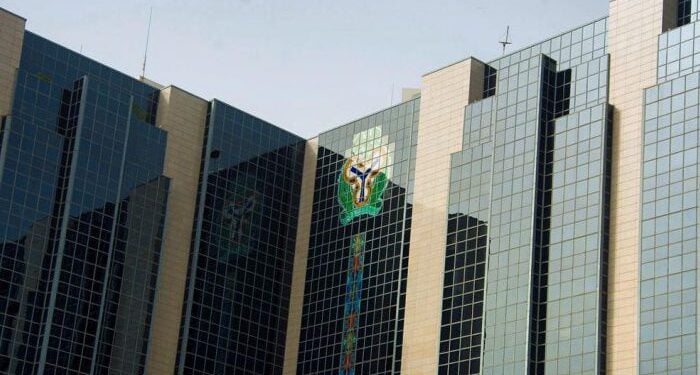
Credit to Nigeria’s private sector fell to ₦75.8 trillion in August 2025, down from ₦76.12 trillion in June, according to the latest figures released by the Central Bank of Nigeria (CBN). The data shows that lending to businesses and individuals has now declined five times this year. Credit levels peaked in April 2025 at ₦78.1 trillion before sliding again in subsequent months.
The downward trend began in February, when credit fell from ₦77.3 trillion in January to ₦76.3 trillion. It slipped further to ₦75.9 trillion in March, rebounded briefly in April, but resumed its decline in May and June. CBN did not release data for July.
Despite the monthly drops, year-on-year figures reflect modest growth, rising from ₦74.7 trillion in August 2024 to ₦75.8 trillion in August 2025.
Analysts say the repeated declines raise concerns over liquidity constraints, tighter bank lending, and weakening credit demand amid Nigeria’s tough economic environment.
In its January 2025 Economic Report, the CBN noted that services accounted for 54.87% of sectoral credit, industry for 40.02%, and agriculture for 5.11%—an improvement from 4.82% the previous month. While updated figures for August are yet to be published, manufacturing, commerce, and oil and gas remain the key beneficiaries of credit allocation.
The contraction coincides with the CBN’s hawkish monetary policy aimed at curbing inflation and stabilising the naira. Although the Monetary Policy Committee (MPC) cut the benchmark Monetary Policy Rate (MPR) by 50 basis points in September—bringing it down to 27%—analysts argue that borrowing costs remain high.
Dr. Paul Alaje, Chief Economist at SPM Professionals, said the apex bank must ease policy further to spur private investment and economic expansion. Similarly, RenMoney analyst Kitan Aloba noted that the elevated MPR has made credit “more expensive, thus reducing the private sector’s appetite for borrowing.”
The MPC also narrowed the asymmetric corridor around the MPR to +250/-250 basis points from +500/-100 basis points, while retaining the Cash Reserve Ratio at 45% for commercial banks and 16% for merchant banks.
Economists warn that the slowdown in private sector credit growth could weigh on investment, job creation, and overall GDP performance. Government initiatives, including the Nigerian Consumer Credit Corporation, have provided some relief but appear insufficient against the backdrop of monetary tightening.