







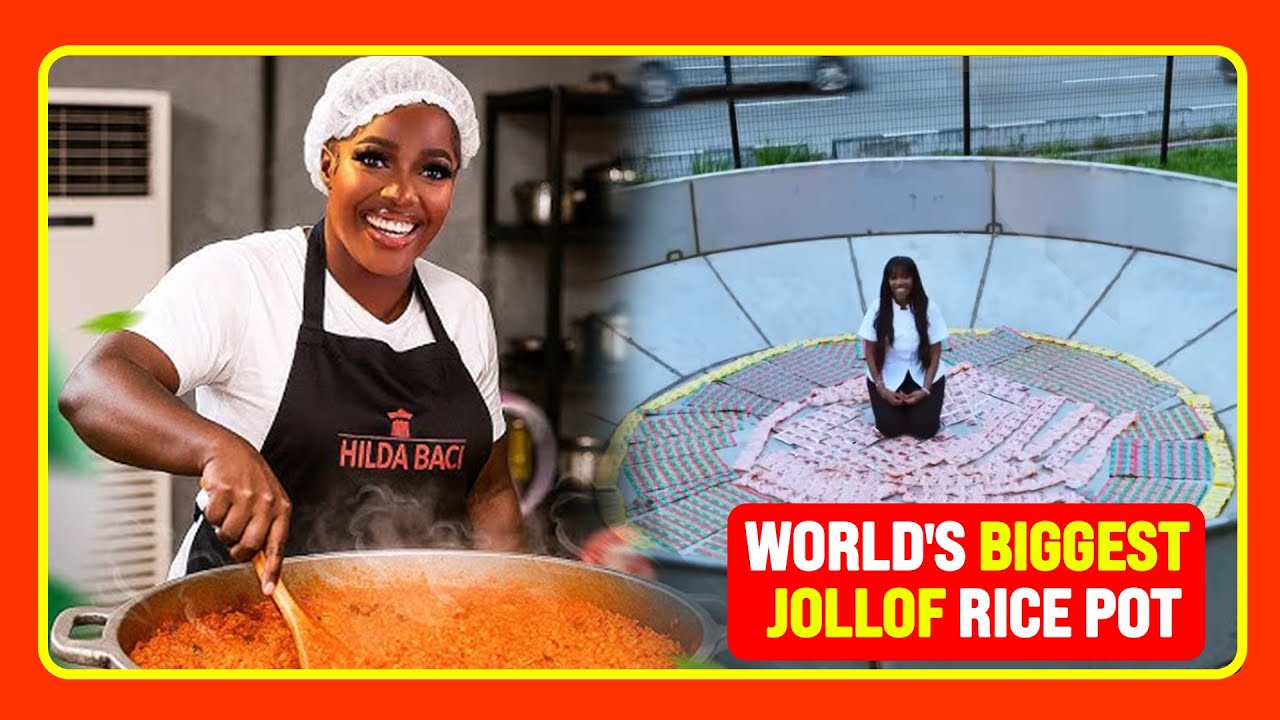
If you thought Hilda Baci’s 2023 cookathon was wild, wait till you hear what she’s about to pull off. On September 12, 2025, Lagos will host one of the boldest culinary spectacles ever attempted: the Gino World Jollof Festival. The stage? Muri Okunola Park in Victoria Island. The star? None other than Hilda Baci—the Guinness World Record holder who turned cooking into a full-blown marathon sport. This time, though, she’s not chasing endurance. She’s chasing scale. Massive scale.
Imagine a 6-meter by 6-meter pot—about the size of a small swimming pool—simmering away with the unmistakable aroma of Nigerian jollof. That’s the dream, and Hilda plans to fill it with nothing less than 250 bags of rice.
Why This Event Feels Different
Let’s be real: West Africans don’t joke with jollof rice. It’s more than food; it’s identity, rivalry, and nostalgia rolled into one pot. Lagos parties practically orbit around it. Weddings? Jollof. Naming ceremonies? Jollof. Even a random Saturday afternoon? Probably jollof.
So when Hilda—already a cultural icon after cooking for 100 hours straight in 2023—announced she’d cook the largest pot of Nigerian jollof rice ever made, the excitement was instant. It’s not just about breaking a record; it’s about writing jollof into global history.
And you know what? That’s the beauty of this festival. It’s not another stiff Guinness Record attempt—it’s a carnival. Food, music, culture, and community, all blending together with a tomato-red backdrop thanks to Gino Tomato Paste, the event’s main partner.
Breaking Down the Numbers (Because They’re Insane)
Hilda didn’t just wake up and throw rice in a pot. She’s approaching this with military-level precision.
- Rice: 250 bags, which translates to roughly 5,278 kg of raw basmati rice. That’s like cooking rice for a whole city.
- Tomato Paste: 1,583 kg of Gino tomato paste, balanced with pepper chicken paste and jollof paste. For context, that’s heavier than a small car.
- Pot Volume: A staggering 22,619 litres, though her plan is to fill about 75–80% of it.
And here’s the kicker: she’s not compromising flavor for size. Her Instagram reveal showed how she calculated ratios carefully to make sure this massive pot doesn’t just look good but actually tastes like the smoky, party-style jollof everyone craves.
What Fans Can Expect in Lagos
Here’s the thing—you don’t need to love food festivals to feel the pull of this event. It’s shaping up to be part record attempt, part cultural reunion.
- The Cooking Itself: A jaw-dropping spectacle—giant wooden paddles stirring rice, the scent of spice clouds wafting through the air.
- Cultural Celebration: From afrobeats performances to food stalls offering regional twists on jollof, it’s going to be a full-on West African showcase.
- Community Vibes: Entry is free with registration, and attendees won’t just be spectators—they’ll taste the jollof that could enter the history books.
- A Bit of History: For those who followed her 2023 cookathon, this feels like the sequel everyone’s been waiting for.
More Than Just Food—It’s Legacy
Why does this matter? Because food is storytelling. And Hilda isn’t just telling Nigeria’s story—she’s amplifying West Africa’s voice on a global stage. Think about it: Italian pasta has had its moment. Sushi has been celebrated worldwide. But jollof? It deserves that same recognition, and Lagos is about to serve it up in a pot so big it could make headlines from New York to Nairobi.
And for Gino Tomato Paste, this isn’t just brand sponsorship—it’s cultural partnership. They’re not just putting their logo on a banner; they’re cementing themselves as part of the jollof narrative.
Final Thoughts
So, will Hilda succeed? Will the pot hold? Will the rice come out fluffy instead of soggy? Those are the million-naira questions. But here’s what’s certain: September 12 won’t just be about a pot of rice. It’ll be about pride, about community, about a dish that has sparked debates and laughter across generations.
And when that first spoonful of smoky, tomato-rich, peppery jollof hits the crowd, Lagos will know it wasn’t just about cooking. It was about history in the making—one grain of rice at a time.