








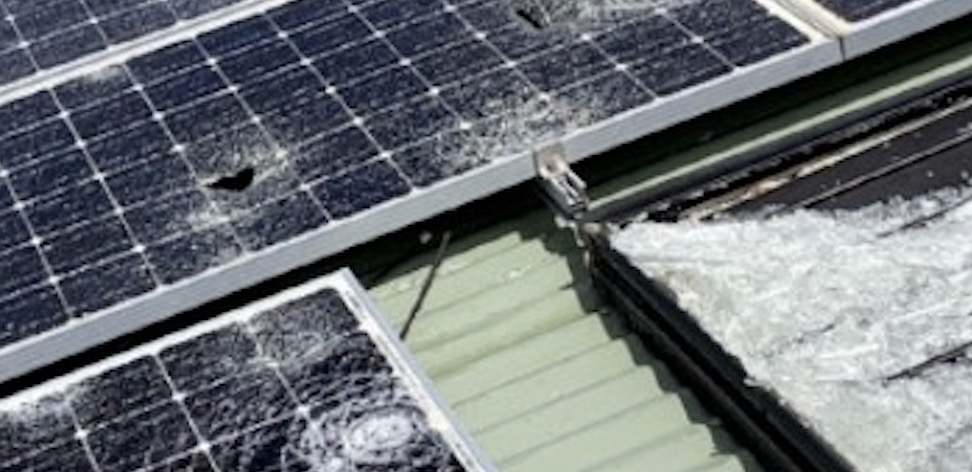
(And Why Many Systems Underperform Long Before They Fail)
Across Nigeria, the move toward solar is no longer a trend; it is a response to necessity. For many businesses, unreliable grid power and rising diesel costs have made alternative energy less of an option and more of a survival strategy. Solar, in this context, promises something incredibly valuable: stability, predictability, and long-term cost control.
But there is a quiet contradiction shaping the market.
Even as adoption grows, a significant number of solar systems are not delivering the value businesses expect. Some underperform within months. Others never fully meet operational demands. In more subtle cases, systems appear to be working, but are quietly inefficient, producing less energy, costing more to maintain, and failing to justify their initial investment.
This gap between expectation and reality is not accidental. It is the result of a pattern; repeated decisions, assumptions, and trade-offs that many businesses make when transitioning to solar.
Understanding these mistakes is what separates a system that simply exists from one that actually works.
1. Sizing the System Based on Budget Instead of Energy Reality
One of the most common and consequential mistakes businesses make is approaching solar from a financial starting point rather than an operational one. The conversation begins with, “What can we afford?” instead of “What do we actually need?”
This usually happens because solar requires a significant upfront investment. Faced with that reality, many decision-makers instinctively try to reduce the initial cost. The easiest way to do that is to reduce system size; fewer panels, smaller battery capacity, or a lower-rated inverter. On paper, this makes the project more “affordable.” In practice, it creates a system that is fundamentally misaligned with the business it is meant to support.
The result is predictable. The system cannot carry the full load. Critical equipment still depends on diesel. Energy availability becomes inconsistent. Over time, the business begins to experience solar not as a solution, but as a partial fix that never fully delivers.
What makes this mistake particularly costly is that it undermines the entire economics of solar. Instead of reducing operating costs, the business ends up running a hybrid of solar and diesel inefficiently, stretching out the return on investment and increasing long-term expenses.
Avoiding this requires a shift in thinking. Solar should be designed from an energy audit, not a budget constraint. Load profiles, peak usage periods, and operational priorities must define system size. Only after that should cost discussions begin. Anything else is simply designing a compromise.
2. Treating Solar as a Collection of Products Instead of a System
Another subtle but damaging mistake is viewing solar as a set of individual components rather than a fully integrated system. Panels are purchased from one source, batteries from another, inverters from somewhere else, often based on price or availability rather than compatibility.
This fragmented approach is usually driven by cost pressure or convenience. A cheaper battery here, a readily available inverter there, it all seems reasonable in isolation. But solar systems do not operate in isolation. Every component interacts with another, and those interactions determine overall performance.
When components are mismatched, the system may still function, but never optimally. Charging cycles become inefficient. Energy conversion losses increase. Batteries degrade faster than expected. Inverters struggle under loads they were not designed to manage in that specific configuration.
These are not always immediate failures. In many cases, the system appears to be working, but its efficiency is compromised from the start. Over time, that inefficiency translates into higher costs, more frequent maintenance, and reduced lifespan of critical components.
The only real way to avoid this is to treat solar as a designed ecosystem. Component selection must be guided by how each part interacts within the system, not just by individual specifications or price. Integration is not a luxury in solar. It is the foundation of performance.
3. Ignoring the “Invisible” Infrastructure That Holds the System Together
In most solar conversations, attention is focused on the visible and high-value components: panels, batteries, inverters. Very little thought is given to what connects and protects them: cables, breakers, connectors, and protection systems.
This neglect is understandable. These elements are not visible once installation is complete, and they do not carry the same perceived value as major components. As a result, they are often downgraded, undersized, or treated as an area where costs can be trimmed.
What businesses fail to realize is that these “invisible” components determine the safety and stability of the entire system.
Undersized cables, for instance, may not show immediate problems. But as current flows through them under load, they generate heat. Over time, this heat can degrade insulation, reduce efficiency, and in extreme cases, create serious safety risks. Poor protection systems can leave the entire installation vulnerable to surges or faults that could have been easily contained.
Unlike other mistakes, this one does not always manifest as underperformance; it can escalate into system damage or even hazard situations.
Avoiding it requires asking deeper questions during installation. Not just what is being installed, but how it is being connected, protected, and sized. The technical integrity of these unseen elements often determines whether a system remains reliable over time.
4. Designing for Ideal Conditions Instead of Real-World Usage
Solar systems are often designed based on theoretical performance: optimal sunlight, steady consumption patterns, and predictable usage. Reality, however, is far less controlled.
Cloud cover varies. Equipment usage fluctuates. Businesses grow, expand, or change operational patterns. When systems are designed without accounting for these variables, the gap between expected and actual performance becomes inevitable.
This mistake often originates from over-optimistic projections or insufficient site analysis. Installers may rely on generalized assumptions rather than deeply understanding how a specific business operates. The result is a system that looks good in design documents but struggles in real-world conditions.
For the business, this shows up as inconsistency. There are times when the system performs well, and times when it falls short often during critical periods of demand. This unpredictability reduces confidence in the system and forces continued reliance on backup power sources.
Designing for reality means incorporating variability into the system from the start. It means understanding not just average consumption, but peak demand. Not just sunlight availability, but seasonal changes. Not just current operations, but future expansion.
Solar systems that acknowledge real-world complexity perform consistently. Those that ignore it rarely do.
5. Assuming Installation Is the End of the Journey
Many businesses approach solar as a one-time project: install the system, switch it on, and move on. This assumption overlooks a critical truth—solar systems require ongoing visibility and management to maintain performance.
Without monitoring, it is difficult to know whether the system is operating at its expected capacity. A drop in performance may go unnoticed for months. Minor faults can evolve into major issues. Components may degrade faster than anticipated without anyone realizing it.
This is not always due to negligence. It is often due to a misunderstanding of how solar systems behave over time. Unlike diesel generators, which show obvious signs when they fail, solar systems can continue operating at reduced efficiency without clear warning signals.
The cost of this mistake is silent inefficiency. The system continues to function, but delivers less value than it should. Over time, this erodes the financial case for the investment.
Avoiding this requires a shift from installation to performance management. Monitoring tools, periodic maintenance, and clear performance benchmarks should be part of the system from the beginning. Solar delivers its full value only when it is actively observed and managed.
6. Expecting Solar to Immediately Replace Diesel
There is a strong temptation among businesses to view solar as an immediate replacement for diesel—something that can be switched on and instantly eliminate fuel dependency.
In practice, this expectation is rarely realistic.
Solar operates differently. It is dependent on sunlight cycles, storage capacity, and system design. Transitioning from diesel to solar is not a simple replacement. It is a restructuring of how energy is generated and consumed within the business.
When this transition is rushed, the consequences are immediate. Power gaps emerge. Critical operations may be affected. Businesses find themselves reverting to diesel in unplanned and inefficient ways, undermining the very savings they hoped to achieve.
A more effective approach is gradual. Solar should first reduce the most predictable and consistent energy loads—typically daytime operations. As the system proves reliable and is optimized, reliance on diesel can be reduced in stages.
This phased approach aligns expectations with reality and allows the system to deliver consistent value over time.
7. Choosing Vendors Based on Price Rather Than Capability
Perhaps the most defining mistake is how vendors are selected. In a cost-sensitive environment, it is natural to gravitate toward the lowest quote. But in solar, price often reflects deeper trade-offs—design quality, component selection, installation standards, and after-sales support.
A lower-cost vendor may achieve that pricing by cutting corners in ways that are not immediately visible. The system may look complete, but its foundation is compromised. When issues arise, support may be limited or nonexistent.
The true cost of this decision is not just financial. It is the loss of trust—not only in the vendor, but in solar as a solution.
Choosing the right partner requires a different lens. The key question is not “Who is cheapest?” but “Who is most capable of delivering a system that works over time?” That includes design expertise, transparency, documentation, and long-term support.
Solar is not a short-term purchase. It is a long-term relationship between a business and its energy system. The quality of that relationship is largely determined by the partner chosen at the beginning.
Bottom Line
The difference between a successful solar transition and a disappointing one rarely comes down to technology. The technology is already proven. What determines success is how decisions are made; how systems are designed, how compromises are handled, and how seriously long-term performance is taken. In Nigeria’s evolving energy landscape, the businesses that benefit most from solar will not simply be those who adopt it early, but those who approach it with the depth, discipline, and clarity it requires.