








Key points
- A magnitude 4.3 earthquake struck the Iranian capital, Tehran, at 11:46 pm on Tuesday, May 12, 2026.
- The U.S. Geological Survey (USGS) and Iranian state broadcaster IRIB provided varying magnitudes of 4.3 and 4.6 respectively.
- The tremor originated near the Pardis area, east of the capital, at a shallow depth of approximately 10 kilometres.
- Tremors were felt as far west as Karaj, roughly 40 kilometres from Tehran.
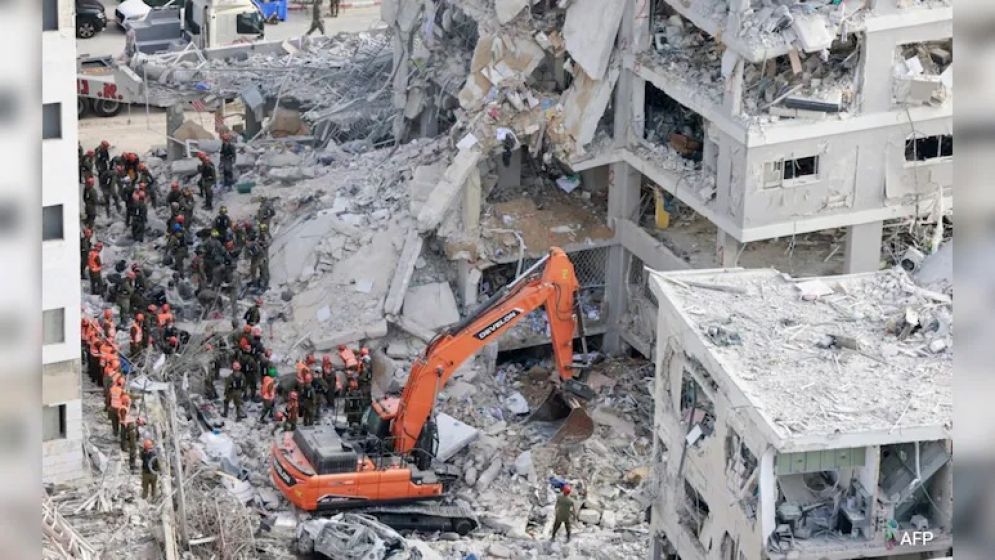
- There were no immediate reports of casualties or significant structural damage following the event.
Main Story
An earthquake struck the Iranian capital Tehran late on Tuesday, the U.S. Geological Survey (USGS) said. The USGS reported that the magnitude 4.3 quake occurred at 11:46 pm (2016 GMT).
However, Iranian state broadcaster IRIB put the magnitude at 4.6 and said it struck east of the capital in the Pardis area at a depth of around 10 kilometres.
While the tremor caused concern across the metropolitan area, there were no immediate reports of damage or injuries. IRIB noted that the tremor was also felt in the suburb of Karaj, located around 40 kilometres west of Tehran.
Iran is one of the world’s most seismically active countries, located at the complex convergence of the Arabian and Eurasian tectonic plates. The region frequently experiences high-magnitude earthquakes that result in significant casualties due to shallow epicenters and vulnerable infrastructure.
Historical precedents for such seismic activity include the 1990 Rudbar-Tarom magnitude 7.4 quake, which killed more than 40,000 people, and the 2003 Bam magnitude 6.6 quake, which resulted in over 26,000 deaths.
The Issues
- The shallow depth of the earthquake (10 km) increases the intensity of the shaking felt at the surface, even for moderate magnitudes like 4.3.
- Tehran’s dense population and varying infrastructure quality remain a point of concern for emergency planners during seismic events.
- Discrepancies between international (USGS) and local (IRIB) magnitude readings are common in the immediate aftermath of tectonic shifts.
What’s Next
- Seismologists will continue to monitor the Pardis area for potential aftershocks over the next 48 hours.
- Emergency services in Tehran and Karaj are expected to conduct routine inspections of critical infrastructure to ensure no hairline structural damage occurred.
- Local authorities may issue updated safety guidelines for residents living near the epicentral zone east of the capital.
Bottom Line
Despite causing widespread alarm in Tehran and its suburbs, the magnitude 4.3 earthquake resulted in no reported casualties, serving as a reminder of the city’s precarious position on active tectonic fault lines.









 said. The USGS reported that ...)