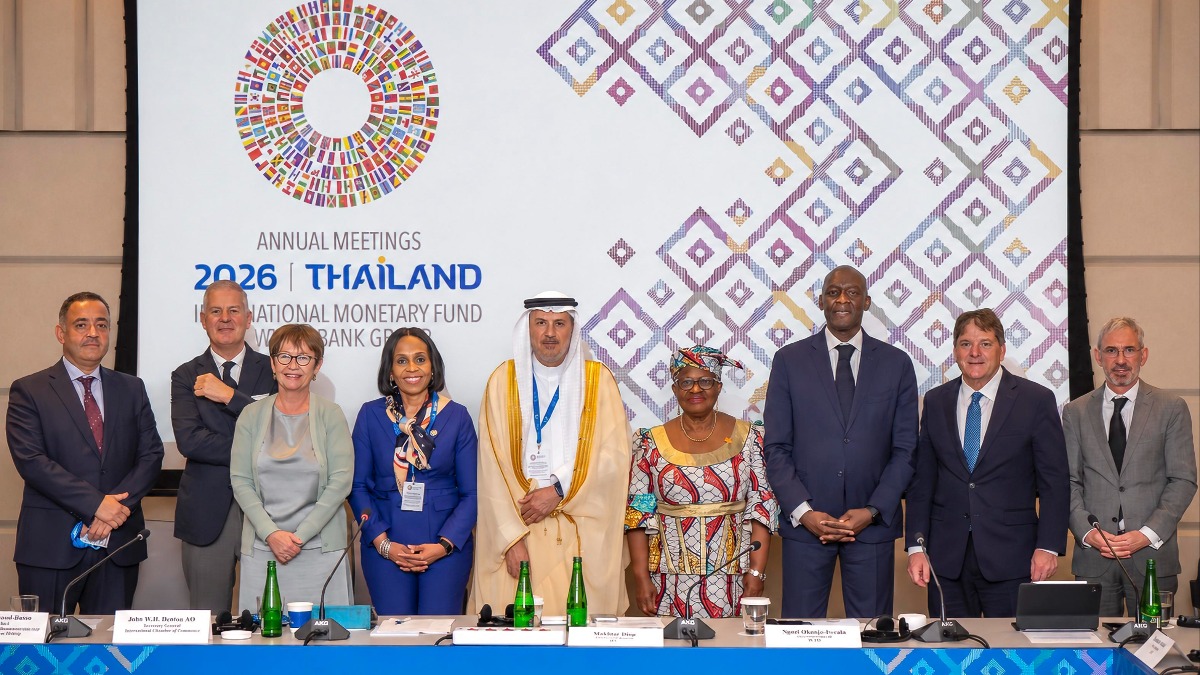
The World Trade Organization (WTO) and the International Finance Corporation (IFC) convened multilateral development banks (MDBs) and other international organisations in Bangkok, Thailand, on Friday, 16 October, to review progress on expanding supply chain finance in developing economies. According to the WTO, MDBs’ direct trade-related financing has risen to about USD 65 billion in 2026 from about USD 35 billion before COVID-19. Of this, about USD 10 billion is supply chain finance in developing economies, a two- to threefold increase from 2024.
The roundtable, held on the sidelines of the 2026 World Bank-International Monetary Fund (IMF) Annual Meetings, built on the commitments in the 2024 joint statement on Boosting Supply Chain Trade in Emerging Markets. Participants assessed developments since the initiative launched and examined how the current global trade and economic environment is affecting access to supply chain finance, particularly for small and medium-sized enterprises (SMEs) in low-income and vulnerable economies.
What has been done
Since 2024, the work has covered:
- expanding supply chain finance programmes
- strengthening legal and regulatory frameworks
- promoting market infrastructure
- building institutional capacity
- broadening the range of financing products available to businesses
Supply chain finance supports SME participation in trade by providing affordable financing that improves cash flow. The WTO says the growth in MDB financing benefits both low- and middle-income countries.
What comes next
Participants discussed how to draw in more private-sector investment and how to reach underserved markets. Measures on the table include local currency financing, product innovation, partnerships, capacity-building and financial product awareness, all aimed at improving SME resilience in supply chains.
The work runs through the Supply Chain Finance Task Force under the WTO’s MDB Working Group. The Task Force coordinates action across seven institutions:
- the IFC (World Bank Group)
- the European Bank for Reconstruction and Development (EBRD)
- the Asian Development Bank
- the African Development Bank (AfDB)
- Afreximbank
- the Inter-American Development Bank
- the Islamic Trade Finance Corporation (Islamic Development Bank Group)
The banks also coordinate with the WTO Secretariat and private-sector bodies, including the International Chamber of Commerce and FCI, the global representative body for the factoring and receivables finance industry. The Working Group agreed at the roundtable to keep coordinating efforts to expand financing in developing economies.
Why it matters for Nigeria
Nigeria is not named in the WTO release, but the Task Force includes two African lenders, the AfDB and Afreximbank, and the gap it is trying to close is large on the continent. The AfDB’s latest Trade Finance Report, released at its 2026 Annual Meetings in Brazzaville, puts Africa’s unmet demand for trade finance at between USD 74 billion and USD 92 billion in 2024, about 5.4 per cent of the continent’s merchandise trade. It warns that weaker currencies and tighter correspondent banking conditions could widen the gap to between USD 86.6 billion and USD 102.6 billion by 2027. The bank also flags the risk from disruption to shipping routes such as the Strait of Hormuz, a point that bears on Nigerian importers’ costs.
Commercial banks intermediated only 23 per cent of Africa’s trade between 2020 and 2024, down from 40 per cent in 2011-2019, which leaves development finance institutions carrying more of the load. The AfDB says these institutions facilitated about USD 32 billion in trade finance annually over 2020-2024.
For Nigerian firms, the question is who these programmes actually reach. The 2017 NBS/SMEDAN survey counted 73,081 small and medium enterprises against 41.47 million micro enterprises. The latest NBS figure, from the 2021 survey, puts total MSMEs at 39.65 million as of 2020. Supply chain finance products built around SME buyers and suppliers can only serve a very small share of that base.
What’s Being Said
WTO Director-General Ngozi Okonjo-Iweala, opening the meeting, said: “Expanding access to supply chain finance is essential to ensuring that smaller businesses can seize trade opportunities and contribute to economic growth. By working together, multilateral institutions can help address persistent financing gaps and support more inclusive participation in global trade.”
IFC Managing Director and Executive Vice President Makhtar Diop, who co-chaired the event, said: “Supply chain finance can have a transformative impact on trade flows and emerging market economies when the right elements come together: capital, legal infrastructure, digital platforms, and the market capacity to put it to work. Together, multilateral development banks (MDBs) are uniquely positioned to strengthen regulatory and market conditions and leverage our own capital to mobilize private investment at scale, channeling it to smaller businesses and markets where access to finance remains out of reach.”
Bottom Line
MDB lending into supply chain finance is clearly growing, but the gap it targets is still large and, on the AfDB’s projections, could widen. The WTO disclosed no data on how much of the USD 10 billion has reached SMEs in low-income economies, or on how much has gone to Nigeria. Without that split, Nigerian exporters cannot tell whether the growth is reaching them.