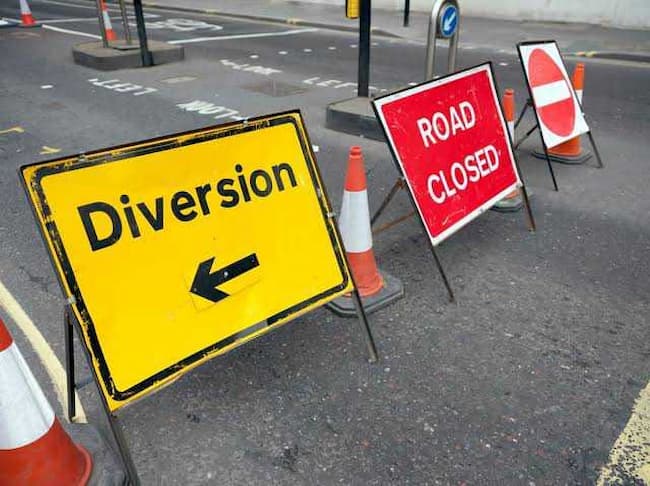
The Lagos State Government announced traffic diversion in areas of the state where the Lagos Rail Mass Transit, Red Line, between Oyingbo and Agbado, is being built.
The diversion, which begins on Wednesday, July 26, is set to continue 10 weeks in Murtala Muhammed Way, Yaba, Apapa Road, Oyingbo, and Ojuelegba Road, and 22 weeks in Kayode and Ogunmokun Streets in Mushin.
The state government also listed alternative routes to affected motorists.
See the full statement below:
LAGOS STATE GOVERNMENT MINISTRY OF TRANSPORTATION PRESS RELEASE
LASG ANNOUNCES TRAFFIC DIVERSIONS FOR LRMT RED LINE PROJECT; OYINGBO-AGBADO
In line with the ongoing construction of the Lagos Rail Mass Transit, Red Line (Oyingbo to Agbado), the Lagos State Government has announced traffic diversion at the following locations commencing from Wednesday, 26th July, 2023.
Muritala Mohammed Way, Yaba, Apapa Road, Oyingbo and Ojuelegba Road for a duration of 10 Weeks; Kayode and Ogunmokun Streets, in Mushin area for a duration of 22 weeks
The following alternative routes will be available for Motorists during the construction period; Motorists on Muritala Mohammed Way will be diverted from Abeokuta Street into Borno Way to link Coasts Street and access Muritala Mohammed Way or alternately use Cemetery Street to continue their journeys. OR Motorists may also use Ojuelegba/Tejuosho slip road from Muritala Mohammed Way to continue their journeys.
Motorists on Kayode Street moving towards Mushin will be diverted via Jibowu to Lagos-Abeokuta Expressway to link Ogunmokun Street; Motorists on Ogunmokun Street will be diverted to Lagos-Abeokuta Expressway, via Ilupeju Bypass to link Ikorodu Road.
ADVISORY
Motorists are implored to be patient as the lane closure is part of the traffic management plans for the construction of Mushin Overpass Phase 1 project.
E-signed;
Engr. Abdulhafiz Toriola Permanent Secretary, Ministry of Transportation.
Following a bullish run in the stock market in recent months, the Nigerian Exchange Limited (NGX) has announced the reclassification of Fidelity Bank Plc from small-price stock to medium-price stock.
The stock price of Fidelity Bank, among others listed banks, have benefited from the Central Bank of Nigeria (CBN) foreign exchange policies that has contributed to foreign and domestic investors’ surge demand.
A statement by the NGX said the reclassification became necessary because Fidelity Bank shares have been trading above the N5.00 mark since February 2023.
“Rule 15.29 of the Rulebook of The Exchange, 2015 (Dealing Members’ Rules) notes that equities priced above N5 per share for at least four of the most recent six months of trading, or new security listings priced above N5 per share at the time of listing on NGX are classified as medium price stock,” the statement said.
“According to NGX, Fidelity Bank. traded above the N5.00 mark on February 20, 2023 and has remained above the N5 mark up until close of business on June 30 , 2023.
“This indicates that FIDELITYBK has been trading above N5 for at least four (4) months in the last six months. Therefore, it should be reclassified from small price stock to medium price stock.”
How Fidelity Bank performed in recent times
The stock price of Fidelity Bank has appreciated by 79.77per cent Year-till-Date (YtD) from N4.35 per share it opened for trading in 2023 to N7.82 per share it closed for trading as of July 21, 2023.
So far, the stock price of Fidelity Bank has reached a peak of N9.82 per share high this year and N2.87 per share low.
The lender’s market capitalisation closed July 21, 2023 at N226.58 billion.
Analysts Expect Inflation Rate To Jump To 18.2% In May
Job losses and rising inflation are posing significant risk to the pension industry, Agusto & Co has disclosed.
The firm also predicted in a new report that pension assets would hit N19tn in 2024.
It revealed this in a new report titled, ‘The Nigerian pension industry – Unlocking potential amidst economic uncertainties.’
While noting growth in the sector, it said the growth could be impeded by increased emigration and more.
The firm stated that, “However, it is critical to recognize that increased emigration, job losses, and rising inflation may pose a significant risk to our projections.
“These factors have the potential to impede pension asset growth by delivering negative real returns on investments.”
According to the firm, pension assets are supposed to grow by 13 per cent year-on-year, and hit N19tn by the end of 2024, due to growth across certain verticals.
It said, “Going forward, Agusto & Co. foresees a 13 per cent year-on-year growth in the pension industry’s AuM, propelling the total pension assets to an impressive N19tn by the end of 2024.
“We envision that this growth will be supported by an anticipated increase in rates on fixed-income securities, specifically bank placements, and a continued upswing in the stock market.”
The firm disclosed that Nigeria had the second-largest pension industry on the continent with assets under management hitting N16.1tn ($34.9bn) as of May 13, 2023.
It stated that the 13.5 per cent growth witnessed in the value of assets under management was fueled by robust investment returns, and to a lesser extent, by additional contributions.
Commenting on the growth of the number of contributory pension members, the firm said, “As a result, the total membership of the Contributory Pension Scheme reached 9.9 million RSA enrollees as of 31 May 2023, reflecting a three per cent growth compared to the corresponding period.
“The upswing in the number of enrollees can be attributed to the commendable rise in compliance levels across both the private and public sectors, coupled with the intensified marketing activities undertaken by Pension Fund Administrators.
The French government and a Nigerian firm, JR Farms have signed a strategic partnership agreement that will offer African farmers industrial networking, global practices and access to stakeholders in business circles.
JR Farms is a multinational agribusiness company with operations in Nigeria, Rwanda and Zambia. It had over the years grown its operations across Africa and beyond through partnerships and commercial scale investments into various economies.
The company worked with various multilateral institutions, private sector and government across Africa and beyond.
The agreement which was sealed on Tuesday in Paris was facilitated by the French Embassy, Nigeria Agriculture Counsellor’s Office and the French Ministry of Agriculture.
According to the stakeholders, the agreement would expose agribusiness entrepreneurs to innovations, agribusiness partnership opportunities, access to French and European Union market standards and opportunities.
Beginning with the first cohort in February 2024, the training, to be hosted across three training institutes in France, would run for a period of eight weeks after which the participants would be issued certificates.
It covered areas of agribusiness, including livestock, value chain optimisation, winery, crop production, food production, food safety, farm waste management, product packaging and marketing among others.
The Senior Agriculture Counsellor of the French Embassy Nigeria/West Africa, Dr. Sonia Darracq, said France was committed to improvement of technical colleges of agriculture and the modernisation of curricula in Nigeria, with a dedicated grant from the French Ministry of Foreign Affairs, or via the French Development Agency.
Darracq said, “This executive training programme aims to bridge the knowledge gap, foster innovation and facilitate valuable networking opportunities for participants.
“Moreover, it serves as a testament to the strengthening of economic and diplomatic ties between France and Nigeria. We look forward to the inaugural cohort in February 2024 and we are confident that it will contribute to the growth and success of agribusiness in Nigeria and beyond.”
The Chief Executive Officer of JR Farms Global operations, Olawale Opeyemi, said the company considered the development as very important initiative between France and Africa.
He said while Africa had huge agribusiness potentials, knowledge gap had kept agribusiness development in the continent low.
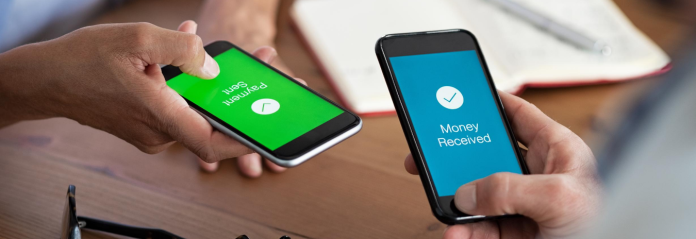
Electronic transfer levies have generated N80.86bn as revenue for the three tiers of government in the first six months of 2023.
This is according to data obtained from the Federation Account Allocation Committee communique for January to June 2023. It also followed a surge in electronic transfers that had been recorded in the country, in recent times.
Electronic money transfer levy was introduced as a source of government revenue in the Finance Act 2020, which amended the Stamp Duty Act to tap into the growth of electronic funds transfer in Nigeria.
The EMT levy is a singular and one-off charge of N50 on electronic receipt or transfer of money deposited in any deposit money bank or financial institution on any type of account on sums of N10,000 or more.
Since its introduction, it had been a steady source of income for the three tiers of government. The government made N13.8bn from electronic money transfer levies in January, N11.65bn in February, N14.49bn in March, N15.12bn in April 2023, N14.37bn in May, and N11.44bn in June.
The government was also moving to surpass its N137.03bn projection for 2023. In its 2023 – 2025 Medium Term Expenditure Framework and Fiscal Strategy Paper, the Budget Office of the Federation hoped to make N137.03bn from EMTL in 2023, N157.59bn in 2024, and N189.11bn in 2025.
“The Main Pool, VAT Pool, and Electronic Money Transfer Levy are projected at N4.89tn, N2.74tn, and N136.35bn, respectively, in 2023,” it said.
The office added that the government made N111.84bn from EMTL in 2021. E-payment transactions had recorded a surge in adoption since the onset of the pandemic in 2020.
According to data from the Nigeria Inter-Bank Settlement System portal, the total value of electronic transactions was N108.42tn in 2019. This grew to N162.89tn in 2020 and surged to N278.38tn in 2021. By 2022, cashless transactions jumped to N395.47tn.
The International Monetary Fund recently stated that the value of mobile money transactions in Nigeria grew to 9.72 per cent of the Gross Domestic Product in 2020 because of the COVID-19 pandemic.
Recently, the National President, Association of Mobile Money Agents in Nigeria, Victor Olojo, reported that the EMTL would continue to increase for the foreseeable future.
Financial services, First Bank of Nigeria Holdings Plc (FBN), has said it will raise fresh capital subject to the approval of shareholders at the group’s annual general meeting scheduled for next month.
This was contained in the group’s notice of its 11th annual general meeting issued to shareholders.
According to the notice, FBN planned to raise capital by way of a rights issue. The lender would raise funds via the creation of 8.974 billion Ordinary shares at 50 kobo each.
As of Monday, the shares of FBN Holdings closed trading at N19.85 on the Nigerian Exchange Limited.
Part of the notice said that shareholders would consider and approve “That the company’s issued share capital be and is hereby increased from NGN17.95bn made up of 35,895,292,792 ordinary shares of 50 Kobo each to N22.35bn by the creation of 8.973,823,198 ordinary shares of 50 Kobo each.
“That there shall be a capital raise. The capital raise transaction shall be by way rights issue, on such terms and conditions and on such dates as may be determined by the Directors, subject to obtaining the approvals of the relevant regulatory authorities.”
The group also announced the appointment of billionaire investor, Mr Femi Otedola as non-executive director subject to the approval of its shareholders at the upcoming AGM. Otedola was appointed on July 9, 2023.
Also, Samson Ariyibi, who was appointed the executive director, finance, Investment, Management and Oversight of the group on October 21, 2022, will be presented to the shareholders for approval of his appointment.
The Vice Chancellor of Lead City University (LCU), Ibadan, Oyo State, Prof. Kabiru Adeyemo, has said the Central Bank of Nigeria (CBN) needs leaders who can anticipate and respond to emerging challenges, leveraging technology and fostering a culture of continuous improvement.
Adeyemo said this while delivering his address at the 23rd annual public lecture of Lead City Voices in collaboration with the Institute of Chartered Secretaries and Administrators of Nigeria, at Lead City University, Ibadan.
Speaking on the theme, ‘The dynamics of leadership in fiscal and monetary policies: The Central Bank of Nigeria in perspectives’, Adeyemo stated, “The global economic landscape has been subject to various challenges and uncertainties, and in the face of such turbulence, the role of effective leadership in shaping fiscal and monetary cannot be overstated.
“The CBN is tasked with the critical responsibility of maintaining financial stability, promoting economic growth, and preserving the value of the national currency, the CBN must embrace forward-thinking policies that adapt to the realities of the global economy.”
These were complex tasks that demanded exceptional leadership skills and a deep understanding of the economic landscape,” he said.
Adeyemo added, “Transparency and accountability are two fundamental pillars that underpin effective leadership.
“In order to build trust and confidence, the CBN must be transparent in its decision-making processes and communicate its policies and actions clearly to the public.”
He said that accountability ensured that leaders were held responsible for their actions and decisions, fostering a culture of integrity and ethical conduct.
Speaking on monetary policy, particularly, regarding targeting inflation, Adeyemo suggested that government should continue to maintain an inflation-targeting framework to keep inflation within a predetermined range.
“This can help stabilise prices, promote economic stability, and provide a conducive environment for sustainable growth,” he said.
Operators in the insurance industry have said motorists are now entitled to more benefits under the new motor insurance contract.
They spoke as the industry implemented the new motor insurance premiums which took effect in 2023.
The National Insurance Commission, in its revised circular, stated that third party insurance for private motors new premium rate was now N15,000 while the claims limit is N3m; Own goods third party cover attracted N20,000 premium with N5m compensation; “Staff bus attracted N20,000 premium with N3m compensation.
“Commercial (trucks, general cartage) attracted N100,000 premium with N5m compensation; Special types attracted N20,000 premium with N3m compensation; Tricycle attracted N5,000 with N2m compensation; and motor cycle attracted N3,000 with N1m compensation.”
A Regional Manager at Linkage Assurance Plc, Mr Muyiwa Awodire, said the premiums were revised after 19 years.
He said, “The last time we had an increase in premium for third party motor insurance was in 2004. Now, if you consider the rate of inflation over the past 19 years, you will realise that the increase is long overdue.”
He added, “But beyond the hike, let us also consider the benefits. Until December 2022, the highest claim any one could make on third party motor insurance was N1m because that was the limit, but that has changed now.”
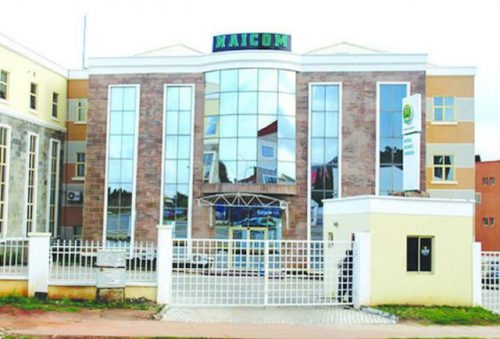
Also speaking on the benefit of the premium increase, NAICOM’s Head of Corporate Communications and Market Development, Mr Rasaaq Salami, noted that the ECOWAS Brown card had been captured in the new premium for third party motor insurance.
According to him, motorists driving within the West Africa sub-region would not need to get the ECOWAS Brown Card again once they had the third party insurance cover issued by Nigerian companies.
He stated that the brown card provided motorists complete guarantee for a prompt, fair and immediate compensation for any accident that may be caused by them outside their country of residence.
The Director-General, NECA, Adewale-Smatt Oyerinde, said, “In order to grow the economy, develop the industry and provide effective risk-mitigating services to the generality of Nigerians, it is our belief that a marginal adjustment in the current rate is desirable.”
While emphasizing the need for NAICOM to carry all stakeholders along in the implementation of the new policy, he said given the old rates had been operated for about 19 years while the cost of motor vehicles had increased exponentially, the rate adjustment was not out of order.
Sanlam Nigeria has began its campaign themed #ProudMoments, to deepen financial inclusion and boost insurance appreciation in the country.
The campaign, with visuals shot in location in Nigeria, centered on the need to protect the things that mattered through insurance.
A statement by the Senior Marketing Services Coordinator, Sanlam Life Insurance Nigeria Limited, Bankole Banjo, said it advocated resilience and grit as critical ingredients required to achieve success.
During the launch in Lagos, the Managing Director/Chief Executive Officer, Sanlam Life Insurance Nigeria, Mr Tunde Mimiko, restated the company’s commitment to promoting livings that encouraged success stories, and celebrated individuals who were constantly challenging themselves to promote a healthy, vibrant and secure future.
He said, “Success means different things to different people. For some, it is getting that new car, moving into a new home or even starting a business.
“With #ProudMoments, we are leading the conversation around putting adequate buffer, nay protection, around your success indicators.
“What we are promoting is a confident and secured future with diverse resources that covers all aspect of human living ranging from car, properties, health, education and to life itself.”
He added “Our #ProudMoments campaign therefore is an exciting creative endeavor that succinctly demonstrates how our most valuable achievements are worth protecting because they are a source of our pride, a testament to our commitment to live a more qualitative life.”
In his remarks, the Managing Director/Chief Executive Officer, Sanlam General Insurance, Mr Bode Opadokun, reiterated Sanlam Nigeria’s continuous efforts at celebrating individuals’ achievements and successes, connecting its drive to creating an environment that appreciates lasting impact and legacy through insurance.
He said, “Insurance is a promise; a promise to deliver stated support when pre-covered losses occur. So, for every individual who seeks success, our #ProudMoments campaign represents one of the ways by which we remind them to pitch their tent with the one insurance company that can confidently help them protect their successes come what may.”
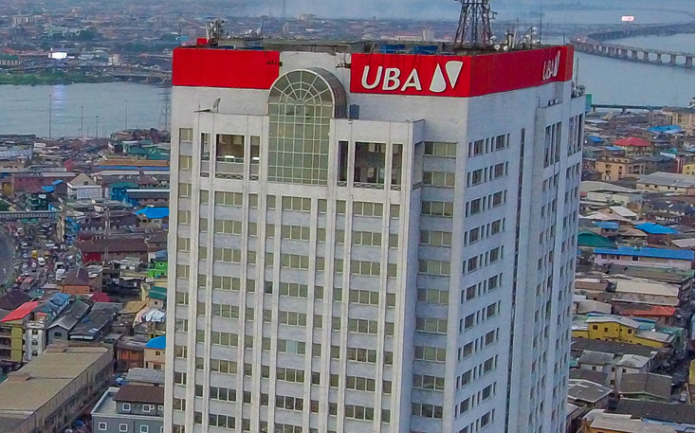
UBA Foundation, the corporate social responsibility arm of the United Bank for Africa (UBA) Plc, has once again taken a remarkable step towards promoting sustainability and fostering Africa’s green revolution.
Following the footsteps of the Chairman of UBA Plc, the foundation has reaffirmed its commitment to environmental preservation in line with global efforts to mitigate climate change and advance ecological conservation.
As part of activities to ensure the safety of the environment and in line with its environmental mandate, the Foundation on Thursday, flagged off its 2023 Tree Planting Campaign in partnership with the Lagos State Parks and Garden Agency (LASPARK), at the UBA Foundation Garden, Marina Lagos and the International Airport Setback Garden, Ikeja Lagos; and across all its locations in the 20 African countries with the theme: Shades of Hope: One Tree at a Time.
UBA’s Group Managing Director, Oliver Alawuba, who flagged off the campaign with a symbolic tree planting at the UBA Foundation Garden, Marina Lagos, said that the bank, through its Foundation actively engages in environmental conservation to safeguard the natural ecosystems that Africa depends on.
He explained that by partnering with stakeholders and government agencies, UBA Foundation supports programs that enhance biodiversity and ecosystem health and also serves as an inspiration for sustainable practices.
Alawuba said, “With the ongoing heatwave that has been reported across the United States, United Kingdom and China, we know that the issue of climate change has to be taken seriously now more than ever. We therefore have to act fast to save our planet for the future generations. There is the need to conserve our environment, and planting trees is one of the ways we can achieve this.
“To us as a bank, this is very symbolic as we are committed to saving our host communities. We are very strong on our Corporate Social Responsibilities, infact, as a bank, UBA devotes one percent of its annual profit to improve education, the environment, and to generally give back to the society where we operate.”
Earlier this month in London, the Group Chairman, UBA, Tony Elumelu, who is also the Founder of the Tony Elumelu Foundation joined King Charles III of the United Kingdom and US President Joe Biden at the Climate Finance Mobilisation Forum to help attract a new generation of capital to combat climate change
Elumelu, who has been in the forefront of sustainability efforts in Africa, and also one of Africa’s most prominent advocates for equitable climate finance, has been working with top world leaders towards creating sustainable climate solutions. According to Tony Elumelu, the world needs bold actions and innovative new partnerships between public, private, and philanthropic actors.
One of the key partners with UBA Foundation on its sustainability efforts is LASPARK. The General Manger, Mrs Adetoun Popoola, who was at the tree planting effort in Lagos, commended UBA for its efforts at planting over 1,000 trees, across all its branches in Africa, as she added that initiatives such as these compliment government efforts.
She said, “Collaborations such as these are important, and we do not fail to let people know that planting trees is very crucial to build a safer and sustainable environment which is important for us. So, we advise that people should learn to plant trees for special events, such as weddings, birthdays, anniversaries and others, you can plant at your balconies, gardens, rooftops galleries, anywhere.
UBA Foundation, the CSR arm of the UBA Group, is committed to the socio-economic betterment of the communities in which the bank operates, focusing on development in the areas of Education, Environment, Economic Empowerment and Special Projects. Distributed by APO Group on behalf of United Bank for Africa Plc (UBA).
Leading telecommunications network, Airtel Nigeria, has announced the successful completion of its employee promotion cycle for the financial year 2022/2023. The promotions, which took effect from April 1, 2023, and cuts across all the six regions of operations in the country, mark another milestone in the company’s commitment to recognizing and rewarding the exceptional contributions of employees.
As a frontrunner in the Nigerian telecommunications industry, Airtel Nigeria has said it places immense value on its employees and their career fulfilment, by maintaining a culture of consistently recognizing and rewarding high performing staff, while creating an enabling environment for employees to develop their skills and collaborate towards providing outstanding services to customers.
According to the company, promotions are done twice yearly, in July and December, and for the first batch of elevations done in 2023, no fewer than 20 employees moved into senior leadership roles, out of whom three are women. One staff member was also elevated to a vice president position.
Commenting on the announcement, Chief Executive Officer, Airtel Nigeria, Carl Cruz, noted that Airtel is thrilled to see its employees grow while being more instrumental to the growth of the organization.
“Airtel Nigeria is a world-class company which both implements global best practices throughout its divisions and regularly spotlights employees who live the values of excellence for which the company has become known. We are immensely proud to welcome these employees into their new roles and wish them more success in their careers.” Cruz said.
Also speaking on the announcement, Director, Human Resources & Administration, Adebimpe Ayo-Elias, said, “These employees have consistently met and exceeded expectations in their respective areas of work, delivering value to the organization. Our organization will continue to recognize and appreciate top performers as opportunities arise.”
The implementation of these promotion cycles serves as a testament to Airtel Nigeria’s commitment to fostering a culture of meritocracy, Cruz reiterated. “By providing opportunities for advancement within the organization, Airtel Nigeria aims to further motivate its employees, encouraging them to continue delivering outstanding results and contributing to the company’s overall success,” he said.
Recently, at the Nigeria2Equal Gender Leaders Awards, which held in Lagos a couple of weeks ago, Airtel Nigeria was recognised by the International Finance Corporation (IFC) for its outstanding initiatives in Women Empowerment and Leadership.
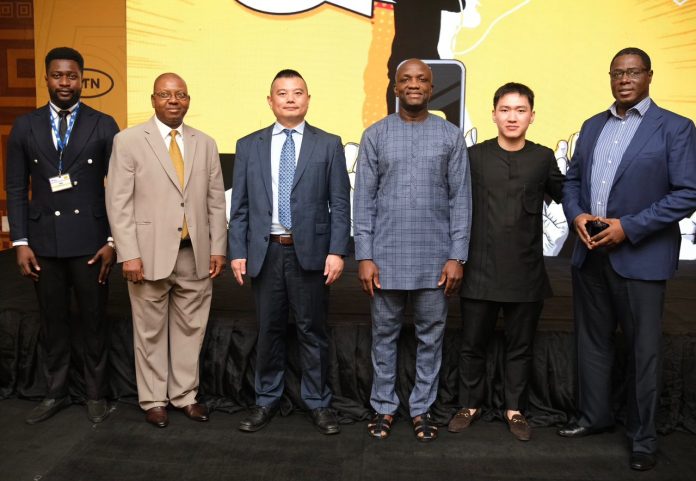
L-R: Chinedu Chidi, President, MTN Media Innovation Programme Cohort 2; Isaac Ogugua Ezechukwu, Director, Professional Education, Pan-Atlantic University; Aihao Yin, Director, Business Solutions, Service Experience & Consulting, Huawei; Funso Aina, Senior Manager, External Relations, MTN Nigeria; Bruce Jiang, Account Manager, Huawei and Dr Rotimi Olaniyan, Consultant, Nottingham Business School at the MTN Media Innovation Programme 5G Day sponsored by Huawei held at Oriental Hotels, Victoria Island, Lagos on July 19, 2023.
Huawei Technologies hosted the MTN Media Innovation Programme (MIP) Fellows to an exciting day of 5G demo experience and its penetration in Nigeria.
The session, held on 19th July 2023 at the Oriental Hotel in Victoria Island, Lagos, aimed at fostering knowledge exchange and inspiring innovation among the Fellows.
The MTN Media Innovation Programme is a fully funded 6-week long programme spread across six months for media practitioners in the Nigerian space. The second edition, which commenced in May 2023, has enlightened the Fellows on the necessary convergence between ICT and the Media, Sensationalism and Fake News, Advanced Media Reporting, Corporate communication strategies, Media laws & Taxation, Business Journalism, and Digital skills, among other subject matters, so far.
During the 5G event, Huawei’s technical team presented a series of enlightening use cases that explained the wide-ranging impact of 5G technology outside Nigeria, and the plans for expansion in the country. From healthcare to transportation to smart cities, the presentations highlighted the power of the technology in revolutionizing connectivity and enhancing everyday experiences.
Addressing the penetration of 5G technology, Aihao Yin, Director, Business Solutions and Service Experience, Huwaei said, “The 5G penetration in Nigeria is still low, but it has changed the society so far, especially with the use cases such as hologram from MTN, Internet of Things (IoT), AR/VR, etc. However, the main advantage is the speed, which is three times faster than 4G. Nigeria still has the potential for wider 5G connectivity.”
In the week’s learning experience, various facilitators discussed telecoms and the ICT landscape (evolution from 2G-5G), Internet of Things (IoT), Blockchain Technology, Business Revenue Models Technology, and 5G use cases in Nigeria.
These sessions have provided hands-on experience on the advancements enabled by 5G technology and its transformative potential across various industries. The Fellows were also awarded certificates on 5G Industry Progress and Use Cases Training by Huawei.
MTN’s collaboration with Huawei emphasizes its commitment to shared value initiatives for stakeholders through value-added business practices and solutions.
No fewer than 20 people lost their lives following a tanker explosion at Ore in Odigbo Local Government Area of Ondo State. The incident, which occurred Sunday evening, was as a result of a spark from a phone held by one of the persons who were scooping fuel that spilled from the tanker.
It was learnt that among the dead were three children and a pregnant woman with N100,000 to buy fuel.
An eye witness, who preferred anonymity, said the tanker fell and spilled its contents on the road and some persons rushed to scoop fuel despite being warned by a clergyman.
“We were inside the church when we heard that the tanker fell. The rain was also falling. People were taking fuel when fire started after a spark from a phone. Three children died and we counted over 15 bodies. A pregnant woman that wanted to buy the fuel also died. The money is still with her.”
The Police Public Relations Officer in the state, Funmilayo Odunlami-Omisanya, confirmed the incident but said she was yet to get details of the incident.
Meanwhile, the state chapter of the All Progressives Congress (APC) has mourned the untimely death of the victims of the incident.
The party, in a statement issued by its Publicity Secretary, Alex Kalejaye, said the incident came as a shocking news, describing it as an unfortunate and lamentable occurrence.
The party urges Nigerians to be more careful with explosive items, no matter the level of temptation, saying petroleum products give no notice before explosion.
The statement read: “Times are hard, no doubt, but we are very certain that the situation will begin to relax very soon. We need to stay safe, and in good health to keep hope alive. We deeply sympathize with the bereaved families, friends and the Ore community. We pray God to comfort them.”
MultiChoice Nigeria has issued guidelines for media outlets and influencers regarding Big Brother Naija’All Stars’ social media posts in order to preserve its intellectual property.
BBN’s ‘All Stars’ reality program premiered on Sunday, July 24, 2023, and has 20 participants, including Cee Cee, Kiddwaya, Pere, and Mercy who will compete for ₦120 million.
Let’s take a look at the guidelines for reporting/posting BBNaija content on social media.
Guidelines for reporting BBNaija on social media.
Media is not allowed to LIVE-stream the show on TV from any mobile phone or hand-held device directly or via any Social Media live application, including YouTube.
Media is not allowed to record and publish over 65 seconds of the show on any social media platform.
Media is prohibited from making any call for fans, viewers or followers to watch recorded footage. For non-media platforms, you must indicate that the page is a fan page.
Only images and text-based tweets are allowed in real-time. Media practitioners can source images from the Africa Magic website and all official Social Media pages of BigBrotherNaija, DStv, GOtv and AfricaMagic. You can also obtain images from the BBNaija media guide website and always credit image/video sources.
You are encouraged to use the official hashtag of the show #BBNaija and any other hashtag as communicated per time.
Retweets and reposts from the official social media pages of BigBrotherNaija, DStv, GOtv and AfricaMagic are allowed.
You can protect MultiChoice’s intellectual property by adhering to the guidelines when posting any BBNaija content.
Nigeria, one of the world’s fastest-growing economies, boasts a thriving business ecosystem characterised by its dynamism and resilience. Nigerian enterprises are widely recognised for their tenacity and relentless pursuit of global competitiveness.
A report by McKinsey reveals that responses to Covid-19 have sped up the adoption of digital technologies by several years. Companies have accelerated the digitisation of their customer and supply-chain interactions, and of their internal operations by three to four years.
In the current era of digital advancements, Nigerian businesses are acutely aware of the significance of embracing cutting-edge software solutions to optimise their operations and augment productivity. The pursuit of efficient and all-encompassing technological tools remains a paramount objective for these enterprises. Forward-thinking businesses recognise that investing in technological solutions is a strategic decision, pivotal to achieving sustained growth.
Zoho serves as a prominent exemplar, offering a diverse array of platforms that facilitate not only the digital transformation of business processes, but also the automation of operational workflows. Here is a compilation of the five preeminent Zoho platforms that Nigerian businesses are harnessing to propel their growth.
In the pursuit of business success, effective communication and collaboration are essential. Recognising the value of collaborative efforts and the importance of internal communication, enterprises are increasingly prioritising cost-effective technological solutions. According to a survey, 75% of employees consider teamwork and collaboration highly significant.
Zoho Workplace, a unified enterprise collaboration platform, offers Nigerian businesses the means to foster strong collaboration amongst internal teams and external stakeholders through its email (that can be shared), online office suite (word processor, spreadsheet, presentation and document management), video conferencing and webinar tool, and social intranet.
The recently-revamped word processor, Zoho Writer, presents a departure from the conventional Word-style interface, opting for a formatting sidebar that not only enhances visual appeal but also facilitates the creation of sophisticated and professional documents by offering AI-driven insights such as wordy phrases to improve writing quality.
With Zoho Workplace, users get a unified view of all their work. For improving productivity, it also offers drag-and-drop functionality across apps such as the ability to drag an email attachment and dropping it into a colleague’s chat to send it directly. The platform can be extended to third-party application widgets in case a company is using multiple productivity and collaboration apps.
Managing multiple software applications can pose significant challenges and high costs for Nigerian businesses. However, adopting a unified platform offers numerous advantages, including seamless contextual data flow, improved data analytics, an enhanced Management Information System (MIS), and better decision-making capabilities, all of which contribute to business growth and profitability.
Zoho One uniquely offers the most comprehensive, unified, and centralised platform for users to run their entire business in the cloud, eliminating the need for multiple, asynchronous business management applications that do not seamlessly integrate with one another. This eliminates the problem of data silos, multi-vendor contracts, and integration hassles. Zoho serves as a cohesive solution, empowering businesses to streamline their operations and maximize productivity. With approximately 45 integrated applications spanning critical domains such as CRM, project management, finance, and HR, Zoho One provides a cost-effective and customised solution tailored to meet the unique requirements of each customer.
The increasing adoption of Zoho One in Nigeria can be attributed to the growing need for enterprises to consolidate their technological infrastructure onto a unified platform. By leveraging Zoho One, businesses can transform their fragmented activities into a connected and agile organisation, establishing Zoho One as the operating system of choice for Nigerian businesses
APSIS reports that 68% of B2B companies encounter difficulties in generating leads. Effective customer relationship management (CRM) is vital for the growth of businesses, particularly in Nigeria’s highly competitive market. Zoho CRM empowers Nigerian enterprises by efficiently managing their sales, marketing, and customer support processes.
Zoho CRM offers a comprehensive range of features like lead management, sales automation, and analytics, enabling businesses to nurture leads, close deals, and enhance customer relationships. A well-considered CRM investment streamlines sales activities, improves lead conversion rates, and increases revenue. Integrating emerging technologies, like artificial intelligence, helps salespeople gain insights such as the best time to contact a lead.
Zoho CRM’s mobile app stands out with essential features, remote analytics access, AI-powered insights, and seamless collaboration for businesses on the move. It provides user-friendly contact and deal management, along with unique features like running macros and converting leads with associated accounts and deals.
Successful businesses comprehend the strategic significance of delivering exemplary customer service, as it plays a pivotal role in fostering repeat purchases, retaining customers, and ultimately augmenting revenue. Nigerian enterprises, cognizant of this fact, place paramount importance on providing exceptional customer support as a fundamental tenet of their approach to cultivating enduring customer loyalty.
Zoho Desk, a comprehensive customer support software, serves as a central hub for managing customer inquiries and enables businesses to deliver prompt and efficient support. With features such as customer support tickets, a dedicated support portal, contract management, and robust report creation capabilities, Zoho Desk empowers Nigerian businesses to provide unparalleled support experiences. By leveraging these powerful tools, businesses can elevate customer satisfaction levels, foster long-term customer retention, and ultimately drive business growth.
The post-COVID-19 landscape has witnessed significant shifts in job search and hiring practices. For Nigerian businesses striving to cultivate a productive workforce, effective human resource management has become paramount. Now, more than ever, businesses recognise the criticality of establishing an enabling work environment to mitigate employee turnover and foster long-term employee retention.
Zoho People, a cloud-based HR management platform, simplifies HR processes and improves employee management. With features, such as recruitment management, time tracking, leave management, and performance evaluations, Zoho People assists businesses, addresses HR challenges, and optimises HR operations.
In Nigeria’s dynamic business landscape, harnessing efficient software solutions is crucial for maintaining competitiveness and flourishing. Businesses require a comprehensive suite of integrated applications that offer customization and scalability, while also providing seamless access via cloud-based and mobile platforms. Affordability is a key consideration, alongside the ability to seamlessly integrate with third-party systems. Additionally, exceptional customer support plays a pivotal role in ensuring optimal utilization of these software solutions. By embracing these attributes, businesses can effectively navigate the digital era and establish a solid foundation for sustainable growth.
Following the growth in proceeds from the Federation Account Allocation Committee (FAAC) to the three tiers of government, money supply or M2 surged to an unprecedented N64.36 trillion last month, marking a significant 31.62 per cent year-on-year (YoY) increase from its previous value of N48.9 trillion in June 2022.
Analysis of numbers released by the Central Bank of Nigeria (CBN) revealed that M2 has gained 21.81per cent Year-till-Date (YtD) from when the CBN announced N52.84 trillion in January 2023.
From the beginning of 2023, the money supply, encompassing quasi-money, currency outside banks, and demand deposits, has maintained a consistent upward trend.
A breakdown of the Money and Credit Statistics data from the CBN published on its website showed that the money supply from the quasi-money assets that are highly liquid and can easily be converted to cash went up by 24.87 per cent YtD to N39.86 trillion in June 2023 compared to N31.92 trillion in January this year.
While currency outside banks increased significantly by 185.67 per cent YtD from N792.18 billion in January 2023 to N2.26 trillion in June 2023.
Further analysis of the CBN data showed that a substantial amount of naira notes, totalling N2.73 trillion, is being hoarded by the public outside the commercial banks’ vaults, indicating a persistent trend.
Additionally, demand deposits, which are funds held in bank accounts that can be withdrawn on demand without prior notice, saw a remarkable 11 per cent Year-to-Date (YtD) increase, reaching N22.23 trillion in June 2023 compared to N20.12 trillion in January.
Analysts believe the federal government spending has contributed to increasing M2 in the economy.
The Federation Account Allocation Committee (FAAC) in May disbursed the sum of N786.161 billion as Federation Account revenue to FG, States, Local governments (LGs) and in June 2023, FAAC shared N907billion
The money shared in May 2023, is an increase of N130.230 billion over the N655.93 billion shared in the April 2023.
The N907 billion disbursed is the second highest since January when a sum of N1.14 trillion was shared.
The Money and Credit Statistics of the CBN also disclosed that currency in circulation stood at N2.6 trillion in June 2023, a 87.77 per cent increase from N1.39 trillion in January.
Despite the slow growth in Nigeria’s economy, the CBN disclosed that credit to the private sector increased to N52.81 trilllion as of June 2023 from N41.54 trillion in January 2023.
The credit to the private sector gained 3.7 per cent or N1.5 trillion in first quarter (Q1) of 2023 as compared to 3.65 per cent or N1.28 trillion gained in Q1 2022.
Checks revealed that the reported N52.81trillion credit to private sector is all-time high and the figure is expected to increase further this year.
Nigeria’s economy in the first quarter of 2023 witnessed political tensions, scarcity of naira and fuel shortages that slowdown business activities.
As a result of slow economic activities in Q1 2023, business conditions in the country deteriorated at the sharpest pace, while price pressures climbed further in March 2023 and at the same time, borrowing costs were increased to a new record high.
Credit growth slowed slightly in January and February 2023, from the fourth quarter of 2022 and foreign direct investment plunged in 2022, hampered by the US dollar shortage, leading some companies to cancel their expansion plans.
The economy however rebound in second quarter, following a peaceful 2023 presidential elections.
Amid these challenges, credit to private sector has gained 27.13 per cent or N11.27 trillion YtD from N41.54 trillion to N52.8 trillion as of June 2023.
In our country Nigeria where everything is increasingly reliant on electricity, backup power solutions have become essential. Among all the options we have, two things have stood the test of time: petrol and diesel generators.
The debate over which is the superior choice has been ongoing for years, with passionate advocates on both sides. As we go further into the heart of this debate, we aim to discover which power source truly reigns supreme.
The Fighter Engines
Petrol and diesel generators operate on Different engines, each has its own set of advantages and drawbacks. Petrol generators, fueled by petrol, are known for their easy starting and stopping processes and smoother operations. These generators are typically smaller, making them an attractive option for portable applications or homes with limited space.
On the other hand, diesel generators use diesel fuel, which is less flammable and has a higher energy density than petrol. This leads to better fuel efficiency, meaning diesel generators deliver more power for a longer period, making them a favoured choice for industrial settings and prolonged power outages.
Output and Performance
Thinking about power output, diesel generators will be on top. They handle heavier loads and provide a more stable power supply, which is crucial for commercial and critical applications like hospitals, data centers, and manufacturing facilities. Petrol generators, while suitable for small-scale residential use, might struggle to cope with high-demand scenarios and may experience voltage fluctuations.
Fuel Efficiency and Environmental Impact
The most significant point of contention is fuel efficiency and environmental impact. Diesel engines are generally more fuel-efficient than his petrol brother, leading to lower operational costs. However, diesel fuel has a higher carbon footprint due to its higher carbon content, resulting in more greenhouse gas emissions.
Petrol, while it has a cleaner-burning, tends to consume alot more fuel for the same power output, leading to higher operational costs. This makes the choice between the two a complex decision, as environmental concerns clash with economic considerations.
Maintenance and Lifespan
Maintenance plays a very viral role in determining the lifespan of a generator. Diesel engines are renowned for their robustness and durability, often requiring less frequent maintenance intervals. Petrol engines, though reliable, may need more regular maintenance, especially when subjected to continuous heavy loads.
Noise and Vibration
Another factor that sets these generators apart is noise and vibration levels. Diesel generators, due to their robust construction, can be louder and produce more vibrations, potentially impacting nearby residents or sensitive equipment. Petrol generators, designed for quieter operation, offer a more pleasant acoustic experience.
Cost Considerations
Cost remains oneof the significant determinant in the decision-making process. Initially, petrol generators are less expensive than diesel alternatives. However, in the long run, diesel generators’ better fuel efficiency and lower maintenance costs might offset the initial price difference.
My Verdict
In the ultimate face-off between petrol and diesel generators, Deisel Gernerator Wins this battle hands down.
Your choice however depends on specific requirements, such as power needs, operational duration, environmental concerns, budget, and space availability.For residential use or small businesses with limited power needs, petrol generators offer a cost-effective and efficient solution on the short run , but diesel generators prove their worth because they show their strenght where reliable, continuous power is paramount.
In the end, it is crucial to carefully assess your power requirements, conduct a cost-benefit analysis, and consider your ecological footprint before choosing between these two powerhouses.
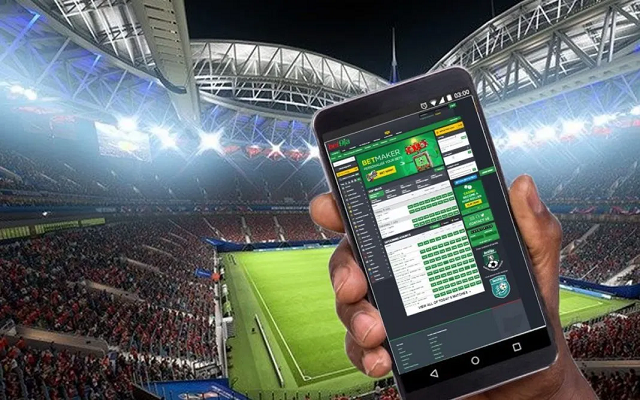
Most businesses are taking advantage of the Internet, and the betting industry is not left out. Nowadays, punters place bets on their favorite sports by accessing the Internet and visiting a bookmaker’s site. The popularity of the online betting sector in South Africa is intriguing. Over 80% of the gambling industry in Africa is found in South Africa. You can check Betting SA for more info.
Some of the most popular sports the South African bettors bet on are Rugby, Horse racing, Football, and Cricket. Due to the availability of several online betting sites, there is competition among them, and they offer mouthwatering incentives to attract punters. The National Gambling Board (NGB) regulates the activities of these betting sites.
Trends Of South African Online Betting Sites
The emergence of online punting in South Africa has witnessed different ups and downs before getting to the present stage.
At Beginning
It all started with the coming of the Internet. As many industries started taking advantage of the Internet, the South African betting industry started adopting it. Although, like many new inventions at the initial stage, punters were cautious with online betting as some felt they might be scammed.
However, as the popularity of online betting increased, more bettors started adopting it and the perks that come with it. The most noticeable advantage that draws most punters to it is the ease of accessibility. This makes it easier for them to gamble in the comfort of their house. As of 2019, the South African gambling sector is worth about $156 million. This figure increased drastically after the lockdown as most people are now exploring the online option to gamble on their favorite games and players.
What Does the Future Hold?
The future of the South African online betting sector looks promising because more bookies keep taking their businesses to the rainbow nation. This indicates that the industry’s future is promising and worth exploring. Also, this creates competition among the bookmakers. Due to this competition, more incentives are available for bettors, and they will have various options.
The adoption of cryptocurrencies as a means of making payments on most gambling sites solves the banking problems most punters might experience. Due to this, payments and withdrawals are even faster and more convenient than ever; hence it increases the adoption of online betting in South Africa.
Opportunities From Online Betting Sites In South Africa
There are numerous opportunities available to both bettors and the country in general. For the country as a whole, the taxes from the bookies contribute to the economy of the country. Also, even individuals that don’t necessarily participate in betting activities benefit from the online punting sector as it provides jobs for skilled individuals.
The majority of the opportunities are enjoyed by the individuals that take part in betting activities and sports enthusiasts. Some of the opportunities available to bettors are;
Competitive markets/odds
Due to varieties of options to choose from, gamblers can compare the markets and the odds offered by multiple platforms and choose the one that benefits them the most.
Makes Matched Betting Possible
Matched betting involves taking advantage of the bonus offers given by bookies to stake on games. The more bookies give incentives to attract punters to their platform, and the easier it gets for bettors to make use of these incentives to their advantage.
Live betting and streaming
This is one of the features online betting platforms incorporate on their platforms to attract users to their platform. This feature allows bettors to watch live matches from their site. Even non-betting individuals that are sports enthusiasts take advantage of this feature to watch their beloved sports.
Networking
Some online betting sites do give updates on international events relating to sports and punting. This brings togetherness and the opportunity to meet people that share the same interest with you online. You can network with them to share tips and ideas on betting or sports in general. You can do this all in the comfort of your house.
South African gamblers may improve their betting experience, raise their odds of winning, and perhaps make substantial gains by taking advantage of these options. However, in order to guarantee a pleasant and pleasurable gaming experience, safe gambling techniques should always be followed.
Conclusion
The South African gambling sector keeps growing yearly, though, like many other businesses, it experiences a setback during the lockdown. However, it bounced back and has been on an uptrend since the lockdown. Also, the opportunities available to individuals through the online betting industry cannot be overemphasized.
Elon Musk, Twitter’s owner, and its new CEO said on Sunday that the social media network would abandon its bird emblem, be rebranded as X, and move fast into payments, banking, and commerce.
BizWatch Nigeria reports that Twitter CEO Linda Yaccarino tweeted a photo of the company’s new logo — a white X on a black background — and stated, “X is here! Let’s get started.”
“X is the future state of unlimited interactivity – centered in audio, video, messaging, payments/banking – creating a global marketplace for ideas, goods, services, and opportunities,” Yaccarino tweeted.
Musk also changed his profile image to the company’s new logo, which he described as “minimalist art deco,” and his Twitter bio to “X.com,” which currently redirects to twitter.com late Sunday night.
Musk previously stated, “If a good enough X logo is posted tonight, we’ll make (it) go live worldwide tomorrow.”
Twitter’s new logo ‘X’
Musk had already designated Twitter’s parent business as the X Corporation, and had previously stated that his acquisition of the social media behemoth would be “an accelerant to creating X, the everything app” — a reference to the X.com company he created in 1999, a later version of which went on to become payments giant PayPal.
Linda also said that “It’s an exceptionally rare thing – in life or in business – that you get a second chance to make another big impression. Twitter made one massive impression and changed the way we communicate. Now, X will go further, transforming the global town square.”
Governor Godwin Obaseki has defended the road on which his convoy got trapped at the outdated and flooded RCC intersection on the Benin-Sapele-Warri highway, which has become a nightmare for motorists.
The governor stated that the contradicting Federal Government positions on federal roads in states had made it impossible for his administration to repair deteriorating federal highways throughout the state.
BizWatch Nigeria analyzed a viral video showing the Obaseki’s convoy trying to maneuver a bad road which the governor claimed to be a federal road.
Bad governance no dey fear anyone. Governor Godwin Obaseki’s convoy trapped in flood in Edo State. E go touch everybody. pic.twitter.com/Jl5nsaKPW5
“The governor is inside the vehicle, but it has stopped moving,” the background (male) voice remarked. “He is unable to leave his vehicle because he is embarrassed.”
“The position and location of Edo, particularly Benin City, which has been a blessing is now becoming a curse. A blessing because we are very centrally located in Nigeria and we are one state where all major federal trunks pass through.
“We are a transport hub, so you have the dual carriage coming from the West, one coming from the East, one coming from the South-South and one is supposed to be going to the North.
“And a federal policy relating to its roads is very confusing. In the past, we could go as a state, rehabilitate and give the Federal Government the bill for refund. At one point, they said states can apply to take over those roads but I am yet to see one state that they have given a federal road to.
“The Auchi-Ibillo Road was so bad that some of our contractors couldn’t go to their quarry site. We appealed to the Federal Government to do palliative work on that road but they refused, saying the road is under contract.
“If I want to do the same to Benin-Sapele Road, I am not allowed to because first, it is not our road and second, the Federal Government said it had already given it out to a contractor. So, I cannot do anything on that road. So, we are in a very difficult situation in Edo.
“It is like our hands and our legs are tied and they say we should run because the only government people know is their state government.
“I am not here to criticise the Federal Government but I am here to say that we are all Nigerians and it is only fair and proper that the Federal Government, which has 52 per cent of our revenue allocation should treat Nigerians as human beings and that they all come from this country.
“You don’t have to vote for a Federal Government for the government to care about you but it is like there is nobody to talk to. Nobody cares about us in Abuja.”