Enza, the acclaimed new disruptor in the African payments market today announced its strategic partnership with Nigeria’s most innovative bank, Wema Bank. Through this partnership, enza will engineer its innovative payment orchestration solution to expand Wema’s ecommerce payment capabilities, thereby improving the quality of service to merchants, enhancing payments security, increasing service reliability, and significantly reducing operating costs through transaction optimization.
Wema Bank, renowned for its forward-thinking approach and commitment to innovation, will leverage enza’s payment orchestration capability to further enhance the bank’s existing ecommerce payment services. Wema Bank is the pioneer of Africa’s first fully digital bank, ALAT, and is also one of Nigeria’s most renowned banks. This alliance is a further step in the bank’s digital transformation journey, reinforcing their position at the forefront of payment innovation in Nigeria.
The enza payment orchestration service will offer an array of benefits to Wema customer businesses and individuals alike merchants will gain access to an improved suite of payment processing features, enabling them to accept a wider range of payment options, including all payment cards, e-wallets, and more. The streamlined and resilient payment processes will ensure quick and hassle-free transactions, enhancing the overall customer experience for those making and accepting payments.
enza has been creating ripples in the industry since its inception late last year. “Our mission is to simplify payments across the region, thereby enabling seamless and secure transactions across the Middle East and Africa,” said Hany Fekry, the CEO of enza. “This new partnership with a premier Nigerian bank further accelerates our progress towards that goal.”
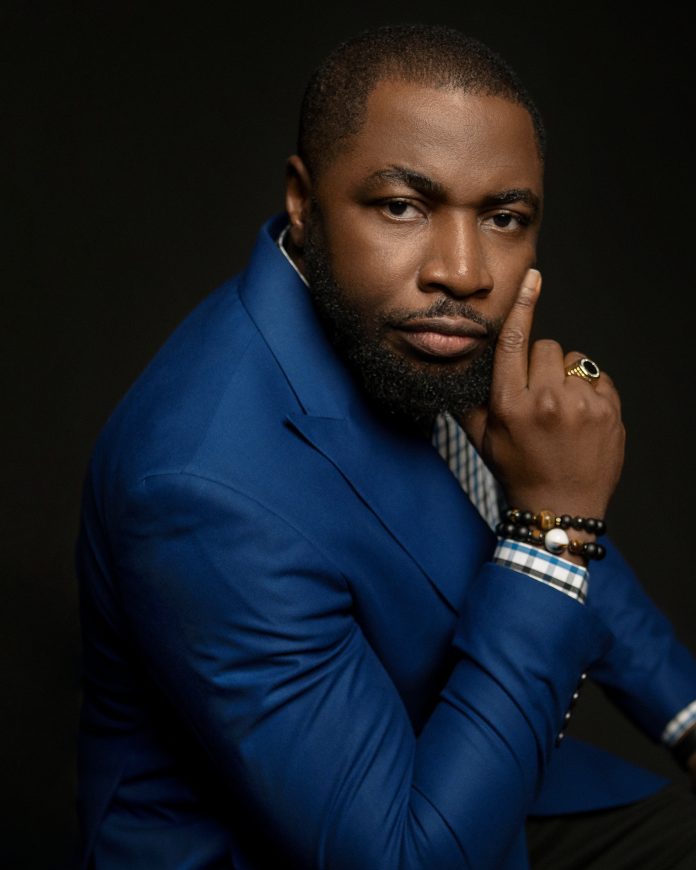
Wema Bank’s Executive Director of Retail and Digital Business, Tunde Mabawonku, says the innovation will empower the Bank’s clientele to embrace a wider spectrum of payment alternatives, encompassing diverse payment cards, e-wallets, and more. In his view, the streamlined and resilient payment processes will ensure the swift and hassle-free completion of transactions, thereby enriching the holistic customer experience for both payment initiators and recipients.
Divisional Head, Payment Business, Wema Bank, Damola Bolodeoku, emphasizes the harmonious alignment between this partnership and the Bank’s overarching strategy of continual innovation and service enhancement. Bolodeoku affirms, “As an establishment that takes pride in its role as a digital frontrunner within the banking sector, we are enthralled to synergize with enza Group to introduce a revolutionary ecommerce payment gateway solution. Through this synergy, we ardently anticipate amplifying our ecommerce payment capacities and delivering heightened value to our customers through all avenues.”
In a region where digital payment technologies are rapidly evolving, this partnership provides both enza and Wema Bank a platform to redefine the ecommerce payment landscape. The bank and their customers will benefit from increased security, top-tier service reliability, and most importantly, significantly reduced costs.
The A78 is built to deliver seamless and smooth performance for up to four years. Enhancing this exceptional performance is a visually stunning Ultra-Slim Retro Design with an industry-first Diamond Matrix Design on the back cover, making the phone an absolute standout in style and functionality.
Lightning-fast and reliable charging with a longer-lasting battery
With the composition of the super-fast 67W SUPERVOOCTM Flash Charge and a large 5000mAh battery, the OPPO A78 offers one of the fastest flash charging speeds on any smartphone in its price range. The A78 can be fully charged in just 44 minutes. With this incredible charging speed, it’s even possible to charge the phone to last an entire flight with a quick, last-minute charge before boarding a plane. When fully charged, the long-lasting 5,000mAh battery can provide 27.4 days of standby (flight mode) or 16.37 hours of YouTube video, so it can easily last an entire day of average use.
OPPO has also introduced a series of exclusive technologies designed to enhance charging safety and reliability on the A78. OPPO’s Battery Health Engine helps to extend the A78’s battery lifespan to as many as 1,600 charge and discharge cycles, which is enough to keep the battery working in a good condition for up to four years. Optimized All-Day Charging intelligently learns users’ daily charging habits and adjusts the charging speed accordingly.
For office workers who often leave their phones connected to a charger throughout the day, Optimized All-Day Charging can automatically stop charging the battery when it reaches 80% capacity and then resume charging to 100% just in time for the end of work. This reduces constant charging of the battery to improve safety and overall battery longevity. On top of this, 5-Layer Charging Protection returns to the A78 to improve end-to-end safety across the entire charging process.
A more immersive audio-visual experience
The OPPO A78 is the first OPPO A series phone to feature an FHD+ AMOLED screen that can be rarely seen in its price range. The 6.4” screen has a 90Hz refresh rate and up to 180Hz touch sampling rate to provide enhanced smoothness and responsiveness. With up to 600 nits’ overall brightness, the screen delivers incredible detail even in direct sunlight, while the smart adaptive backlight helps provide the most comfortable visual experience in different environments to reduce visual fatigue from prolonged viewing.
The display also includes the first In-Display Fingerprint Unlock on a smartphone at this price range, offering a better balance between aesthetic design and efficiency.
Alongside the fantastic visual experience, the A78 provides more immersive and crystal-clear surround sound through its Dual Stereo Speakers and Real HD Sound 3.0, delivering optimal sound adjusted for different scenarios such as music, video, and gaming. For users who like to turn things up a notch, Ultra Volume Mode can boost sound volume by as much as 200%, making it easier to hear music or the phone ringing in even the noisiest of places.
When making voice calls, the earpiece volume can be further increased by 3dB without impacting audio quality, so users can clearly hear their conversations at all times.
In terms of camera, the A78 is equipped with a camera system including a 50MP main camera and a series of new features that make it easier than ever to capture stunning photos and videos. For example, Dual-View Video can be used to shoot from both the front and rear cameras simultaneously and combine the footage into a single frame, unlocking new perspectives in shooting creative vlogs.
Stay smooth for up to four years
The A78 is powered by the Snapdragon® 680 Mobile Platform, delivering powerful performance with optimized power consumption built for everyday tasks. The phone features an 8GB RAM + 128/256GB ROM configuration with up to 1TB of additional storage through the SD card slot. It also includes OPPO’s RAM Expansion technology, which can be used to temporarily convert free ROM space into a maximum of 8GB of RAM to keep the phone running smoothly during heavy-load scenarios.
At the system level, OPPO’s self-developed Dynamic Computing Engine uses parallel computing technology to optimize the scheduling and recovery of computing resources to boost overall speed and stability. On the A78, the Dynamic Computing Engine can increase app opening speeds by as much as 1.42%. It also helps to keep up to 19 apps running in the background at the same time without any noticeable lag.
Thanks to all these optimizations, the A78 provides silky-smooth performance for up to four years, ensuring users can enjoy a longer-lasting smooth experience compared with other smartphones at a similar price point.
An enhanced Ultra-slim Retro body with industry-first Diamond Matrix Design
The A78 is available in two fresh, trendy color finishes – Aqua Green and Mist Black. Inspired by water, the Aqua Green A78 uses a double-layer process to superimpose an industry-first Diamond Matrix Design atop a water green base layer. The result is a vibrant, energetic color that sparkles like diamonds floating on a delicate surface of jade water to create a uniquely exquisite appearance. Mist Black meanwhile adds a touch of yellow-green to a pure black color base to introduce a sense of dimensionality to the phone.
The A78 inherits the same iconic Ultra-Slim Retro Design as previous models in the OPPO A series with the introduction of several new upgrades. The 2.5D right-angled middle frame and smoothed edges give the phone an integrated sleek and lightweight appearance while also making it more comfortable to hold. Even with its large 5000mAh battery, the A78 continues the same slim and lightweight design of the Reno series, measuring as little as 7.93 mm in thickness and weighing only 180 g to make it the thinnest phone with a 5000mAh battery in its price range.
Alongside these design upgrades, the A78 also features enhanced quality and durability. The phone has been put through some of the most rigorous durability tests in OPPO’s lab to make sure that it is ready to stand up to the challenges of everyday life. It is also rated IP54 waterproof, meaning it won’t be phased by regular splashes and spills.
A smarter and more private ColorOS 13.1
ColorOS 13.1 on the A78 is designed for enhanced convenience and privacy. Among the new features in the latest ColorOS is Screen Translate, which uses Google Lens to translate the content of an entire screen with just one click from the sidebar. With support for intelligent translation between 105 languages, Screen Translate can even be used to translate image-based text. Auto Pixelate can automatically recognize and pixelate sensitive information like profile photos and names on chat screenshots with just one click.
Further to this, ColorOS 13.1 includes an updated Private Safe that has been upgraded with the Advanced Encryption Standard (AES) to keep private files encrypted and stored in a private directory with a higher level of security. 5-Grade Access Control has also been added to give users complete control over who can see their data and when.
OPPO A78 device is available for purchase at authorized retail stores across the country from N188,000. OPPO A series has developed a reputation over the years for offering great features at accessible price points and this Qualcomm CPU-powered device is not different.
Payment is a critical part of human existence. It is an important trade enabler, so far as humans continue to exchange goods and service at a value. In today’s rapidly evolving payment landscape, the role of technology in reshaping payment services cannot be overstated. Fintech companies have emerged as key players, disrupting and innovating the way we carry out transactions.
Amidst this transformative journey is the need for industry players to come together and collaborate to remain profitable as well as grow the ecosystem. However, with payment being an integral part of every business, critical players across the verticals should be cultivated with the intent to increase profitability, ensure sustainability, grow the payment ecosystem and consequently grow the economy.
Our current realities across the business operating landscapes and the economy in general, calls for a reimagining of how industry players view themselves. In the digital payment space, critical players such as banks, fintechs, technology companies and even telcos should deliberately edge towards collaboration rather than competing.
At the second edition of the Nigeria Fintech Forum held recently, industry players drawn from banks, fintechs, micro-finance banks, telcos and other financial institution gathered to discuss how to strengthen the digital payment landscape.
Emerging trends discussed included cross border payments, embedded finance, lending, regulation etc, however, a key trend identified and reiterated was the need for co-opting instead of competing. Collaboration was identified as a key driver to achieving the financial inclusion goals.
While it was the norm for players offering similar services within an industry to see themselves as competitors, we are increasingly witnessing similar service providers partnering to provide solutions that meet their customers’ growing needs. An example of such partnership is the recent First Bank Plc and Opay partnership, where both organisations are integrating their APIs onto each other’s platform to enable their customers transact faster and more conveniently.
There is also the example of players across the verticals partnering to develop solutions that are driving innovation in the industry. Recently, a quartet of Interswitch Group, Mastercard, Thales and Providus Bank came together to introduce an innovative payment solution into the Nigeria market.
The solution called tokenisation allows Providus Bank customers to make fast, secure, and convenient in-store payments by tapping their NFC enabled smart device at any contactless-enabled payment terminal.
The solution enables a connected device such as a smartphone or wearable device to act as a physical card, eliminating the need for a card or physical wallet. With the tokenization technology, Primary Account Numbers (PANs) are replaced with tokens thereby rendering card numbers useless to fraudsters. This single solution eliminates physical card, physical wallet, and card fraud.
Moreover, the investment required to deliver modern and cutting-edge digital payment solutions is humongous and capital intensive for individual banks, fintech or technology companies to take on solely. These investments can come in the form of cost of research, infrastructure, product development and human resources.
With each player providing any or all of this requisite investment, the rate of growth will be slow, and the services and products will remain in silos, keeping the market fragmented while also making it difficult to scale such products and solutions across board.
However, leveraging collaboration to bring more players together, there will be economies of scale whereas cost will be shared, diverse knowledge and expertise will be leveraged, products and services will be scaled faster across the market and growth will be quickly realized than envisioned.
Steve Jobs captured it succinctly when he opined that “Great things in business are never done by one person; they’re done by a team of people.” This statement further reiterates why all hands must be on deck to help build sustainable businesses and transform the payment landscape.
The need for collaboration cannot be overemphasized. However, the collaborating partners should look beyond avenues for mutual growth and explore opportunities to design innovative products that cater to the growing needs of the customers, enhance user experience as well as grow the ecosystem for all the players. In the final analysis of the matter, the bigger the pie, the larger the share for everyone.
The Socio-Economic Rights and Accountability Project (SERAP) has announced that it will sue Senate President Godswill Akpabio over the payment of “holiday allowances” to senators by the Clerk of the National Assembly.
This divisive move comes at a time when nearly 70% of Nigerians are facing serious economic hardships.
SERAP declared via its official X (formerly known as Twitter) handle that it was suing the Senate President who made the blunder announcement during plenary on Monday.
BREAKING: We’re suing the Senate President Godswill Akpabio over the alleged payments of “holiday allowances” by the Clerk of the National Assembly into the “various accounts” of senators while some 137 million poor Nigerians face severe economic hardship.
SERAP via its handle said ““We’re suing the Senate President Godswill Akpabio over the alleged payments of “holiday allowances” by the Clerk of the National Assembly into the “various accounts” of senators while some 137 million poor Nigerians face severe economic hardship.”
Akpabio’s blunder sparked outrage across the country, raising concerns about the authenticity and timing of such money transfers. Critics contend that such concessions are both unreasonable and disrespectful while a major percentage of the country’s population is experiencing economic difficulty.
The specifics of the complaint, including the petitioners and the charges, have yet to be revealed. However, the decision reflects increased strain and scrutiny over the handling of public monies, particularly in light of the current economic context.
Holiday allowances
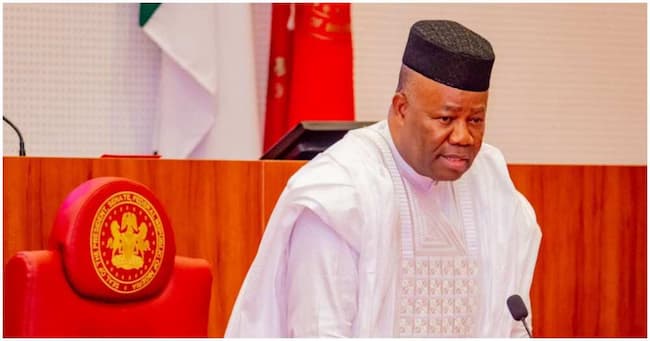
Godswill Akpabio, President of the Nigerian Senate, made an error during plenary when he stated that money had been handed to senators to ‘enjoy’ their recess.
A video of Mr Akpabio making the gaffe has gone popular on social media.
The video was released on Wednesday.
The event allegedly occurred on Monday, following the conclusion of the senators’ vetting and ratification of President Bola Tinubu’s ministerial candidates.
The senators then postponed plenary until September 26, 2023.
Akpabio, who had forgotten that the proceedings were being aired live, began to address his colleagues before the adjournment motion was raised at the end of the Senate’s ministerial screening.
“In order to enable all of us to enjoy our holidays, a token has been sent to our various accounts by the Clerk of the National Assembly,” he said.
The Senate President was promptly told by his colleagues that he would be appearing on live television.
When he realized the significance of his words, he swiftly announced their retraction.
“I withdraw that statement,” he said.
“In order to allow you to enjoy your holiday, the senate president has sent prayers to your mailboxes to assist you to go on a safe journey and return,” Mr Akpabio rephrased the comment, apparently to correct what was considered an embarrassment.
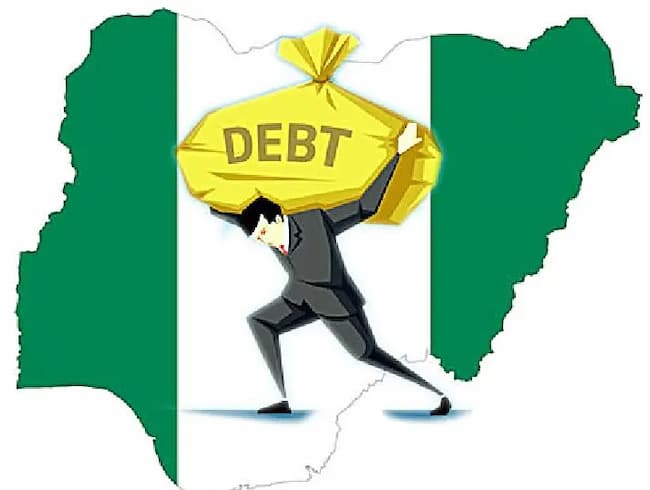
Between 2023 and 2027, President Bola Tinubu’s government is expected to spend around N341.23 billion on judgment debt settlement. The judgment debts were classified as promissory notes in the Debt Management Office’s ‘Schedule of Promissory Notes Issued by Category as of September 30, 2022’ document.
A promissory note is a debt instrument that contains a written commitment by one party (the note’s issuer or maker) to pay another party (the note’s payee) a defined quantity of money, either on demand or at a predetermined future date, according to Investopedia.com.
According to Section 4 of the Government Promissory Notes Act, government promissory notes are paid from the federation’s general revenue and assets.
It read in part, “The principal sums and interest represented or secured by any government promissory notes are hereby charged upon and shall be payable out of the general revenue and assets of the federation.”
Out of the 21 promissory notes related to judgment creditors, 12 would be settled during the four-year tenure of the current administration. While two are dominated in naira, the rest will be settled in dollars.
The two naira-dominated judgment debts would cost about N39.07bn while the rest in dollar would cost $393.89m (about N302.61bn, using the exchange rate of the Central Bank of Nigeria of N768.27/$).
The government said the mediation proceedings were under the alternative dispute resolution framework of the International Chamber of Commerce led by Phillip Howell-Richardson.
Olu Daramola (SAN) from Afe Babalola’s Chambers, who spoke with The PUNCH recently, said the government was not in the habit of defending cases.
He stated, “Most cases against the government are due to negligence and poor handling, leading to judgment against the government even where there could have been no judgment because it has been poorly defended. But unfortunately, the tragedy is that when you file a case against the government, they may not bother until you get a judgment.
“When you already have a judgment, negotiations become difficult because if you win your case in court and the person is now negotiating with you to take a smaller sum than the one that was awarded in court, definitely you won’t be willing.”
The SAN added that the careless signing of contracts was creating problems for the government.
On his part, Prof Sam Erugo (SAN) said it should be disturbing to citizens that the Federal Government continuously faces threats and imminent penalties or liabilities for alleged breaches of construction contracts.
A senior legal practitioner, Matthew Burkaa, said, “Nobody will be happy to see that funds that are supposed to be used for other things are being used for settlement of litigation expenses.”
According to the USA, Chinese loans have the capacity to influence the Nigerian government. This is noted in the US Department of State’s Integrated Country Strategies paper.
The document was accepted on April 6, 2022, however it was revised and amended on June 23, 2023. According to the paper, China provided subprime funding for a variety of infrastructure projects around the country. A subprime loan, according to the Corporate Finance Institute, is one that is issued to persons who do not qualify for conventional loans at an interest rate higher than prime.
The document read in part, “Meanwhile, China offers sub-prime financing for a range of infrastructure projects, with the potential to add unnecessarily to Nigeria’s debt burden and increase Chinese influence over the Nigerian government.”
Nigeria owed the Exim Bank of China $4.34bn as of March 2023. In January 2022 that a Chinese company, Chinese Civil Engineering Construction Corporation, handled the majority of railway projects in Nigeria worth over $25.51bn (N10.5tn), according to the United States-based Fitch Solutions’ latest report on Nigeria’s railway system.
The report, titled ‘Nigeria Rail: Near-term focus on Northern region with long-term upside for Southern projects’, said Chinese financing had enabled CCECC to handle most rail projects in the country. The report, however, listed other companies that were major players in the Nigerian railway sector.
It read in part, “China Civil Engineering Construction Corporation has dominated the railway construction sector in Nigeria, supported by Chinese financing.” The authorized Lagos-Calabar coastal railway project totaling 1402km was granted to the Chinese business for $11.10 billion, according to a breakdown of the major rail projects managed by CCECC.
In addition, the Abuja-Itakpe-Warri rail line project, worth $3.90 billion and supported by China Railway Construction Corporation and EXIM Bank of China, was given to CCECC, Julius Berger, and Sinohydro Corporation, together with General Electric. The project is currently in its early stages.
The Federal Government has requested financial arrangements from Chinese lenders in order to carry out a number of infrastructure projects, including standard gauge rail lines.
In a document titled, ‘Status of Chinese loans as at September 30, 2021’, the DMO disclosed that 15 projects were funded with Chinese loans. Four of the 15 projects were rail-related. The US, in its Integrated Country Strategies document, also faulted the political and economic system in the country.
The document read, “Nigeria’s fundamental problem is patronage-based political and economic decision making, with little to no coordination between relevant ministries, and a disempowered civil service that does not sufficiently advise the Federal Government or sustain policy objectives over multiple administrations.
“Political and economic elites lobby for policy decisions that favour their short-term personal interests rather than the longer-term stability and unity of the state.”
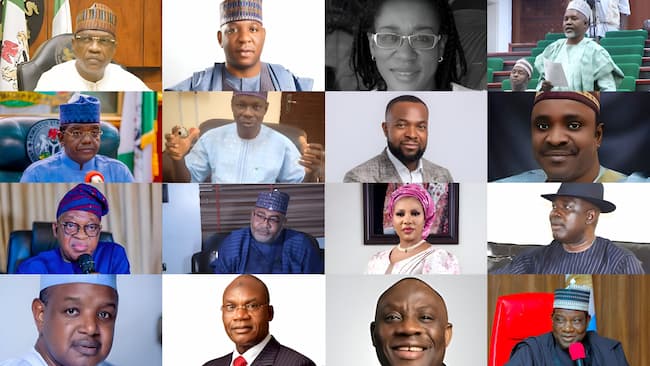
On August 7, the Senate approved 45 of President Bola Tinubu’s 48 ministerial nominees. However, it delayed the approval of three nominees due to security clearance difficulties.
Below is the full list and profile of the 45 confirmed ministerial nominees
1. Abubakar Kyari
Abubakar Kyari born 15 January 1963, was the senator representing Borno North Senatorial District of Borno State at the 9th National Assembly from 2015 until his resignation in April 2022.
From 2015 until his resignation in April 2022, he was the senator for Borno North Senatorial District of Borno State in the Ninth National Assembly. He is a member of the ruling All Progressives Congress and the former acting national chairman.
2. Abubakar Momoh
Abubakar Momoh hails from Etsako East LGA of Edo state. He is a Civil engineer by professional training.
Momoh was a two-time member of the House of Reps.
He dumped APC for PDP in 2019 and flew the party’s ticket in the Edo North senatorial election and lost. Thereafter, he returned to the APC.
3. Nyesom Wike
Nyesom Wike, the immediate past governor of Rivers State, was born December 13, 1967.
The Ikwerre-born lawyer turned politician was a two-time Executive Chairman of Obio Akpor Local Government Area from 1999 to 2007.
He obtained his Bachelor of Law from the Rivers State University of Science and Technology before proceeding to Law School in 1997.
Wike is a member of the People’s Democratic Party (PDP) and was educated at Rivers State University of Science and Technology.
4. Joseph Utsev
Joseph Utsev is a civil engineer and former Rector of federal polytechnic, Wanune, Tarka LGA of Benue state.
He was an associate Professor at the University of Agriculture, Makurdi.
Utsev, from Buruku LGA, was a commissioner in the Samuel Ortom government. He is Tiv, the dominant ethnic group in Benue state.
5. John Owan Enoh
John Enoh served as a Senator of the Federal Republic of Nigeria in the 8th Assembly of the Senate in 2015, representing the Central Senatorial District of Cross River State.[3]
He was a People’s Democratic Party (PDP) member until May 2017, when he defected to the ruling All Progressive Congress (APC)[4] and ran for governor, losing to incumbent governor Ben Ayade.
6. Bello Muhammad Goronyo
From 2007 to 2015, Bello Muhammad Goronyo was elected to the Sokoto State House of Assembly to represent the Goronyo Constituency. In 2014, he was appointed interim organising secretary of the party in Sokoto State, and Goronyo local government campaign coordinator for the 2015 general elections. In 2015, he was appointed Secretary APC legal committee election petitions.
Barrister Bello Muhammed Goronyo was appointed as Commissioner Ministry of Solid Minerals and Natural Resources Development, Sokoto State, in appreciation of his political acumen. from 2015 to 2017, deployed as Commissioner Ministry of Energy Development, Sokoto State in 2017-2018, and then as Commissioner Ministry of Information, Sokoto State, a position he held from 2018 to 2019, before resigning voluntarily after serving meritoriously in all the Ministries he served as Commissioner.
7. Mohammed Badaru Abubakar
From 2015 to 2023, Mohammed Badaru Abubakar MON was the governor of Jigawa State in Nigeria. He chairs the Presidential Committee on Fertilizers as well as the Presidential Committee on Non-Oil Revenue. He also owns the Talamiz group of industries.
8. Yusuf Maitama Tuggar
Tuggar, born 12 March 1967 was appointed the Nigerian Ambassador to Germany by President Muhammadu Buhari.
He was a member of the Nigerian House of Representatives from 2007 to 2011 representing Gamawa; and he ran twice for Governor of Bauchi State.
Tuggar represented Gamawa from Bauchi State in the Nigerian House of Representatives from 2007 to 2011.
9. Uju Kennedy Ohanenye
Married with four children, Kennedy-Ohanenye is a businesswoman with stakes in real estate and education. Her foray into the last All Progressives Congress (APC)’s male-dominated presidential primary was, for her, a necessity.
Not intimidated by the array of male aspirants, Kennedy-Ohanenye waded in the murky waters of her party’s electoral process until she ‘smartly’ announced her withdrawal from the race at the party’s special convention, and also mobilised support for the former Lagos State governor, Asiwaju Bola Tinubu.
10. Festus Keyamo
Festus Egwarewa Keyamo SAN is a human rights activist, columnist, and lawyer. Keyamo was selected as the Director of Strategic Communications for President Buhari’s 2019 re-election campaign in April 2018.
11. Abubakar Audu
Mr Audu is the son of the first civilian governor of Kogi State, Abubakar Audu, who governed the state from 1992 to 2003. He is an Executive Director at the Stanbic IBTC Bank where he has worked for 20 years. He has both Corporate and Investment Banking as well as Asset Management experience.
12. Uba Maigari Ahmadu
Ahmadu served as Deputy Governor of Taraba State for the Peoples Democratic Party (PDP). He was impeached shortly after the 2003 elections under contentious circumstances. Between 1999 through 2007, he was Taraba State’s deputy governor under Jolly Nyame of the PDP.
13. Zephaniah Jisalo
Jisalo is the first indigene of the Federal Capital Territory (Abuja) to be nominated by an elected president for a cabinet position. A ministerial appointment would build on a public service career that has already seen him elected twice to the House of Representatives and twice as chairman of the Abuja Municipal Area Council, which houses the three branches of the Nigerian government.
14. Tahir Mamman
Tahir Mamman ventured into politics in 2014, following his time as the Director-General of the Nigerian Law School, and contested in the APC governorship primary in Adamawa State that December. In June 2020, the APC appointed him to the party’s National Caretaker/Extraordinary Convention Planning Committee (CECPC) as interim national vice chairman for the northeast. He served on the committee until it was disbanded in 2022.
15. Lola Ade-John
Lola Ade-John is an experienced Information and Technology professional who has led the design, integration, deployment, and management of critical systems for major banking organizations. She attended the University of Ibadan and majored in computer science. She has previously worked with Access Bank, United Bank of Africa, Ecobank, and Novateur Business Technology.
16. Dr Tunji Alausa
Dr. Tunji Alausa is an American nephrologist and the founder of the Kidney Care Center.
Dr. Tunji graduated from the University of Lagos in 1993 with a Bachelor of Medicine and Surgery and has subsequently become a board-certified nephrologist.
Between 1997 to 2001, he completed his Internal Medicine residency at Cook County Hospital in Chicago, where he served as Chief Medical Resident, supervising training programs for interns and residents as well as acting as an Attending Physician.
17. Dr Iziaq Salako
Dr. Salako is the Co-ordinator of the Ogun West Stakeholders Forum. He is a physician and the former Commissioner for Health of Ogun State. In April 1990, he received his Fellowship from the West African College of Physicians after completing his residency at UCH’s Department of Medicine.
18. Dr Mariya Mahmoud Bunkure
If the Senate confirms her appointment, she will be the second woman from northern Nigeria’s most populous state to be appointed as a minister since 1999.
Mrs Mahmud succeeded another lady and schoolmate, Maryam Shettima, as one of Kano State’s two nominees.
Mrs Mahmud belongs to various women’s organizations and has spoken for the importance of education for girls and women. She is also a role model for Kano State’s young women.
19. Olatunbosun Tijani
Tijani is a Nigerian-British entrepreneur who co-founded and serves as CEO of Co-Creation Hub (CcHUB), a prominent Pan-African innovation and technology hub.
Tijani is widely recognized as a pioneer and industry leader in the African technology ecosystem, and New Africa Magazine named him one of the 100 Most Influential People on the continent. In August 2016, he organized Mark Zuckerberg’s first visit to Nigeria as part of his attempts to put Africa on the global technological map.
He has also welcomed several global technology executives in Nigeria, including former Twitter CEO Jack Dorsey in 2019 and, most recently, Microsoft founder and co-Chair of the Bill and Melinda Gates Foundation, Bill Gates, in June 2023.
20. Abdullahi Tijjani Muhammad Gwarzo
Abdullahi Tijjani Muhammad Gwarzo, a former Deputy Governor of Kano State and previous Gubernatorial candidate of the Action Congress of Nigeria (ACN), was born on September 23, 1960, in Koyar Getso, Kano State.
21. Simon Bako Lalong
At the end of May, Simon Lalong completed his second consecutive tenure as governor of Plateau State. He was the APC presidential campaign council’s director-general when Mr Tinubu was elected president. He was also the head of the Northern Governors Forum, whose members in the APC were crucial in re-electing a southern contender as the APC’s presidential candidate in 2022.
22. Adegboyega Oyetola
Adegboyega Oyetola was governor of Osun State for one term, from 2018 to 2022. In 2022, he sought for reelection as the All Progressives Congress (APC) candidate, but was defeated by Ademola Adeleke of the Peoples Democratic Party (PDP).
23. Bello Matawalle
Bello Matawalle was appointed governor of Zamfara by chance in 2019, however he resigned after only one term. He had run as the candidate of the opposition PDP, but INEC declared Muktar Idris of the APC the winner. However, the Supreme Court eventually ruled that the APC did not properly nominate all of its candidates in the state for the elections and ordered INEC to return Mr Matawalle and the candidates who garnered the most votes in the other polls after the APC candidates’ votes were annulled.
24. Atiku Bagudu
Atiku Bagudu served as governor of Kebbi State for two terms, from 2015 until 2023, on the APC platform. Prior to that, he won a bye-election on the platform of the PDP for the Kebbi Central Senatorial seat, which became vacant in 2008 with the appointment of Adamu Aliero as Minister of the FCT. Mr Bagudu moved to the APC in the run-up to the 2015 general election, was elected governor, and was re-elected in 2019.
25. Tanko Sununu
Tanko Sununu is a member of the Yauri/Shanga/Ngaski Federal Constituency in the House of Representatives. He has been an obstetrician and gynecologist, as well as a Minimal Access Surgeon, at the Federal Medical Centre in Birnin Kebbi since October 2012.
He directs the Laparoscopic Surgical Unit. Mr Sununu also worked as the governor of Kebbi State’s personal physician at Government House Clinic Birnin Kebbi from May 2003 to April 2005, and as a Medical Officer at General Hospital Argungu from January 2000 to March 2003.
26. Sa’idu Ahmed Alkali
Sa’idu Ahmed Alkali is a four-term senator from Gombe State who will be in office until 2023. He was initially elected to the Senate in 2010 in a byelection after the incumbent, Kawu Dukku, died, leaving the Gombe North seat vacant. Mr. Alkali won the race as the PDP’s candidate and was re-elected in 2011. He joined the APC in 2015 and was re-elected to the seat the following year and in 2019.
27. Heineken Lokpobiri
Lokpobiri served in the Senate for two terms until being named minister by President Muhammadu Buhari in 2015, shortly after defecting from the PDP to the APC.
He had previously served in the Bayelsa State House of Assembly from 1999 to 2003, serving as Speaker from June 1999 to May 2001.
28. Aliyu Sabi Abdullahi
Abdullahi served two terms in the Senate between 2015 and 2023, representing the Niger North District on the platform of the APC.
In 2019, Mr Abdullahi sponsored the controversial National Commission for the Prohibition of Hate Speech bill, which critics feared was an attempt to gag the press and restrict free speech in Nigeria. The bill created lots of reactions across the country, particularly the death penalty clause, which Mr Abdullahi promised would be amended during consideration by the Senate.
29. Ibrahim Gaidam
Gaidam served as governor of Yobe State for ten years, from January 2009 to May 2019. He was elected to the Senate in 2023 to represent the Yobe East district. He is the second longest-serving senator among Mr Tinubu’s 48 ministerial nominations, following David Umahi of Ebonyi State.
30. Hannatu Musawa
Hannatu Musawa is a lawyer, politician, and author. She is the daughter of legendary politician Alhaji Musa Musawa and is from Katsina state in Northern Nigeria.
Hannatu is a certified solicitor in England and Wales, as well as a barrister and solicitor of Nigeria’s Supreme Court. She is now the deputy spokesman for the All Progressives Congress (APC).
31. Rt. Hon. Ekperikpe Ekpo
Rt. Hon. Ekperikpe Ekpo is a former member of the House of Representatives and the All Progressives Congress Senatorial contender for Akwa Ibom North West Senatorial District in June 2022.
32. Lateef Fagbemi
Lateef Fagbemi SAN is a well-known lawyer, jurist, and Senior Advocate of Nigeria (SAN) who has contributed significantly to the advancement of law and justice in Nigeria. He has been involved in numerous landmark cases and is generally known in the legal industry for his competence and professionalism.
33. Doris Anite-Uzoka
Doris Anite-Uzoka’s rise to political prominence is inevitable given her lofty achievements as a competent banker, an intelligent manager of human and material resources, and Imo state finance commissioner.
34. Prof. Ali Pate
Ali Pate CON, was born on 6th September 1968. He is a physician and a Professor of the Practice of Public Health Leadership in the Department of Global Health and Population at Harvard University.
He formerly served as the Global Director for Health, Nutrition and Population and Director of the Global Financing Facility for Women, Children and Adolescents (GFF) at the World Bank Group. Pate was also the former Minister of State for Health in Nigeria.
Pate was born in the Misau local government area of Bauchi State in Nigeria. Pate graduated from high school to enter the Ahmadu Bello University (ABU) medical school in Kaduna State, Nigeria.
He graduated from ABU and moved to Gambia where he worked in rural hospitals for a few years.
35. Mohammed Idris
Mohammed Idris is a politician, publisher, and public relations expert. He is the publisher and founder of Blueprint newspaper. He is also the chairman of Kings Broadcasting Limited, which owns WE 106.5 FM in Abuja, Nigeria.
36. Adebayo Adelabu
Adebayo Adelabu, born on 28th of September 1970, is a former Deputy Governor, Operations of the Central Bank of Nigeria and 2019 Oyo State gubernatorial candidate for the All Progressives Congress.
Adelabu received a first class degree in Accounting from Obafemi Awolowo University, Ile-Ife.
He is a Fellow of the Institute of Chartered Accountants of Nigeria (ICAN), a Fellow of Chartered Institute of Bankers of Nigeria and an Associate Member of the Institute of Directors of Nigeria and the United Kingdom.
Adelabu has also taken up professional courses in various business schools, including Harvard, Stanford, Wharton, Columbia, Kelloggs, Euromoney, and the University of London.
Adebayo was appointed by former President Goodluck Ebele Jonathan in February 2014 as Deputy Governor, Operations of the Central Bank of Nigeria (CBN).
37. Dele Alake
Henry Dele Alake is the Special Adviser to President Bola Tinubu on Special Duties, Communications, and Strategy.
The Ekiti State-born politician was commissioner for Information and Strategy in Lagos State under the government of Bola Ahmed Tinubu between 1999 and 2007.
The University of Lagos Political Science graduate worked at MKO Concord Press as Editor of the National Concord from 1995 to June 1999.
Alake is a former vice President of the Nigerian Guild of Editors. He belongs to several national, regional, and international professional bodies, such as the Nigeria Union of Journalists (NUJ) and the West African Union of Journalists.
38. Uche Nnaji
Uche Nnaji was the governorship candidate of the All Progressive Congress in Enugu State.
Nnaji hails from Akpugo in Nkanu West Local Government Area of the state.
The guber candidate came to the limelight in 1999 when he won the senatorial ticket of the then Alliance for Democracy, AD. He was later to step down for Chief Jim Nwobodo, who was eventually elected senator for the senatorial district.
Uche Nnaji is a brother to Hon Nnoli Nnaji of Nkanu East and West Federal Constituency in the House of Representatives.
39. Ahmed Dangiwa
Before taking over as the Managing Director/Chief Executive Officer of the Federal Mortgage Bank of Nigeria, Dangiwa, an architect, had been managing partner of AM Design Consults, an architectural and real estate development consultancy firm, since 1996.
Dangiwa had his first and second degrees in architecture from Ahmadu Bello University, Zaria, where he also earned an MBA. He is an alumnus of the prestigious Wharton University Pennsylvania, U.S.A. and has attended numerous training courses.
40. Olawale Edun
Olawale Edun is a seasoned financial expert with extensive experience in the banking sector.
He possesses a strong background in economics, public finance, international finance, merchant banking, and corporate finance at national and international levels.
Edun served as the Honourable Commissioner for Finance in Lagos State for two unprecedented terms (1999-2007) during Tinubu’s tenure.
He completed his Bachelor’s Degree in Economics at the University of London and earned a Master’s Degree in Economics from the University of Sussex, England. Although specific details about his early life and education are not publicly available, his expertise and accomplishments speak for themselves.
Throughout his career, Wale Edun achieved remarkable success in the financial sector nationally and internationally.
41. David Umahi
Umahi was a two-term Governor of Ebonyi State between 2015 and 2023.
The former Governor participated in the APC presidential primaries where he polled 38 votes to come a distant sixth in the election won by President Bola Tinubu.
After a prolonged battle in various courts, INEC recognised Umahi as the candidate for the district, from where he was subsequently elected as a first-timer at the 10th Senate.
42. Imaan Sulaiman-Ibrahim
Imaan Sulaiman-Ibrahim was formerly the director-general of National Agency for the Prohibition of Trafficking in Persons (NAPTIP) from 1 December 2020 till 27 May 2021, when former President, Muhammadu Buhari announced a swap and she was redeployed as the Honourable Federal Commissioner of the National Commission for Refugees, Migrants, and Internally Displaced Persons.
At 19, she graduated from University of Abuja with a degree in sociology. At 21, she received two master’s degrees from Webster University, an MBA and MA.
Sulaiman-Ibrahim was born in Jos, Plateau, but she hails from Keffi, Nasarawa State.
43. Dr. Betta Edu
Dr. Edu, born on 27th of October 1986, hails from Ibalebo village in Abi local government Area, Cross River State.
Betta completed her secondary education at Federal Government Girls College, Calabar, she is a graduate of medicine and surgery from the University of Calabar.
She is a Harvard certified, Fellow of the Royal Society for Public Health, United Kingdom, and untill recently, the Cross River State Commissioner for Health and National Chairman of Nigeria Health Commissioners Forum.
In 2022, she emerged as the youngest female to become the National Women Leader of the All Progressives Congress.
44. Nkeiruka Onyejeocha
Nkeiruka Onyejeocha is a politician and a ranking lawmaker in Nigeria’s Federal House of Representatives. She represents Isuikwuato/Umunneochi Federal Constituency of Abia State.
45. Olubunmi Tunji-Ojo
Olubunmi Tunji-Ojo, born 1st of May 1982, is is a lawmaker from the Akoko North East/Akoko North West Federal Constituency of Ondo State.
In 1999, he gained admission into Obafemi Awolowo University, Ile-Ife to study Electrical and Electronics Engineering.
In 2002, while in his third year at the Obafemi Awolowo University, he proceeded to the University of North London (now London Metropolitan University) where he studied Electronics and Communication Engineering and graduated in 2005.
He obtained a master’s degree in Digital Communication and Networking from the same institution in 2006.
He holds certifications in eighteen professional qualifications in ICT including the prestigious title of being one of the first set of certified ethical hackers from Royal Britannia IT Training Academy in the United Kingdom before he turned 24 years.
Liquidity in the banking sector strengthened ahead of the Central Bank of Nigeria’s (CBN) midweek main market auction Treasury bills rollover. The CBN is expected to roll over maturing treasury notes worth N153.99 billion on Wednesday, amid persistent optimism that rates pricing will improve despite the financial system’s solid liquidity circumstances.
The rollover amount would be divided into three installments: 91-day bills worth N4.52 billion, 182-day bills worth N1.31 billion, and 364-day bills for N148.15 billion. Following its continuous monetary policy tightening, the CBN repriced Treasury notes at higher spot rates during its midweek primary market auction in July.
The CBN offered instruments worth N264.33 billion for subscription during the auction. The fact that liquidity levels increased yesterday in the market raises concern about spot rates pricing at the auction sales.
Short-term benchmark rates dropped strongly in the absence of pressures in the market. System liquidity increased to ₦296.99 billion on Tuesday from ₦199.54 billion, according to market data. As a result, the open repo rate (OPR) crashed by 315 basis points to 2.75%. Also, the overnight lending rate (OVN) declined by 520 basis points to 400 basis points to 2%.
In its market update, Cordros Capital said trading activities in the secondary market ended with bearish sentiments as the average yield expanded by 30 basis points to 7.3% on Tuesday.
“The Treasury Bills market traded on a mildly bullish note despite the PMA auction scheduled for tomorrow with the demand skewed to the 25-July-24 bill with trades consummated at 9.00% levels”, Futureview said in its update.
Across the curve, fixed income market analysts said the average yield was unchanged at the short and mid segments but expanded at the long (+27bps) end, as participants sold off the 338-day to maturity (+10.19ppts) bill.
Similarly, activities in the Federal Government of Nigeria (FGN) bond secondary market were bearish, as the average yield expanded by 13bps to 13.5%. Across the benchmark curve, the average yield increased at the short (+20bps), mid (+17bps), and long (+8bps) segments due to selling pressures on the MAR-2025 (+110bps), APR-2032 (+37bps) and JAN-2042 (+47bps) bonds, respectively.
As investors take positions, shares of GSK Plc traded on the Nigerian Exchange have grown more costly. GSK shares rose 20% last week as investors sought to profit from the announcement. Alpha hunters bought into the pharmaceutical company’s more than 1.195 billion shares on the local stock exchange.
GSK’s share price increased by 20% to N8.90 from N7.40 the previous week due to the bargain hunting. On Monday, it soared to N9.75, and yesterday, the company’s market worth reached N10 billion after it gained 9.74% to settle at N10.7 per share.
According to the company’s financial statements, Nigerian stockholders control 53.6% of the GSK shares, while UK businesses Setfirst Limited and SmithklineBeecham Limited possess 46.4%.
The rise, which was purposely targeted by alpha hunters, would raise the company’s exit costs while the market awaited next-in-line action. Following a drop in sales due to massive foreign exchange losses, GSK Plc announced its decision to exit the Nigerian market, citing uncertainty about the company’s capacity to continue.
According to analysts, most firms with large import expenses would face a similar threat. Companies in the fast-moving consumer sector have faced significant profit declines as a result of foreign exchange pressures caused by the volatility of the Nigerian naira. GSK’s exposure to foreign currency transactions deteriorated as a result of the devaluation, and its FX losses soared, draining an already meager profit.
According to its unaudited financial statement, its unrealised FX loss grew to N10.932 billion from N16.5 million. The company has already realized a forex loss of N14.217 million in the period. GSK informed the Nigerian Exchange that it will shut its Nigerian operations due to a difficult economic climate that had resulted in losses for the pharmaceutical business.
Its UK Group informed GSK Consumer Nigeria of its plan to discontinue the sale of its prescription medicines and vaccines in Nigeria through local operating firms and shift to a third-party direct distribution strategy for its pharmaceutical goods. The Haleon Group has also separately notified the Board of its intention to terminate its distribution arrangement in the coming months and select a third-party distributor in Nigeria to sell its consumer healthcare goods, according to the statement.
“For the above reasons, and having, together with GSK UK, evaluated various other options, the Board of GlaxoSmithKline Consumer Nigeria Plc has concluded that there is no alternative but to cease operations.
“Today we are briefing our employees whom we will treat fairly, respectfully, and with care, meeting all applicable legal and consultation requirements”, the company said in a statement.
The group said, “The Board is conscious that shareholders will have many questions; we have been working assiduously with our professional advisors to agree on next steps and we will be shortly submitting to the Securities and Exchange Commission a draft Scheme of Arrangement”.
It said this may, if approved, see shareholders other than GSK UK, receive an accelerated cash distribution and return of capital. The Board acknowledged the support of the GSK Group in its intentions to make this possible, full details of which we hope to publish shortly.
“In the meantime, however, we cannot give you assurance of the final terms of any scheme, or that any scheme will be approved by the SEC or by shareholders.
In the second quarter of 2023, its result showed that revenue declined to N3.731 billion from N7.451 billion 12 months earlier. In the period, the company’s profit surged to about N185 million, an increase of N30 million when compared with about N155 million recorded in the comparable period in 2022.
The profit was propelled by a strong decline in selling and distribution spending in the period. This came in addition to a significant increase in finance income which settled at N192.3 million. The positive vibe was reduced by a surge in other losses, rising from N7.3 million to more than N28 million. Comparing its half-year results, GSK sales fell by about 100%, from N14.811 billion in the first half of 2022 to N7.75 billion at the end of the first half in 2023.
Its profit performance also declined to about N340 billion in the same period from N349.3 billion in the comparable period despite deliberate efforts to significantly reduce selling and distribution costs. GlaxoSmithKline Consumer Nigeria Plc has posted N771.146 million annual profit for the financial year 2022. The amount came as the company’s revenue jumped to N25.382 billion from N22.449 billion in 2021.
In 2021, the company went home with N658.811 million annual profit, representing a 17.05% year-on-year growth to N771.146 million in 2022. Its costs of sales spiked by 13.4% to N18.452 billion in 2022 amidst an increase in the general price level in its Nigerian market. In 2021, the company reported its costs of sales printed at N16.270 billion.
Though selling and distribution costs declined, its administrative spending surged while operating profit grew, supported by healthy top-line growth in 2022. Due to a high interest rate environment in Nigeria, GSK boosted revenue from short-term investment placement. Its finance income grew by about 242% to N319.508 million from N93.545 million in 2021. The consumer goods company reported that impairment costs moderated significantly in 2022 to N5.917 million from more than N24 million booked in 2021.
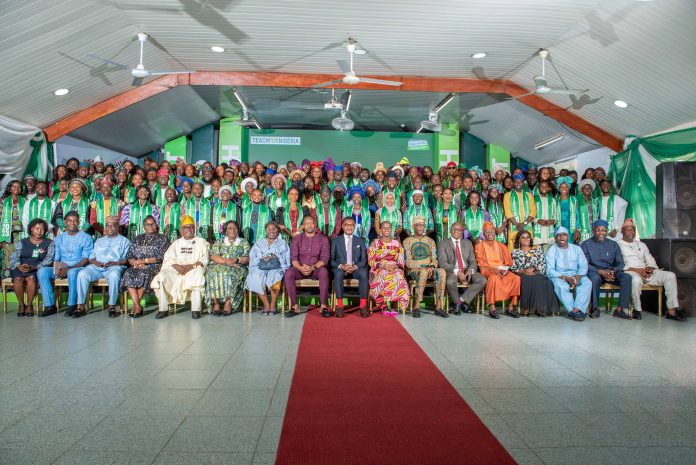
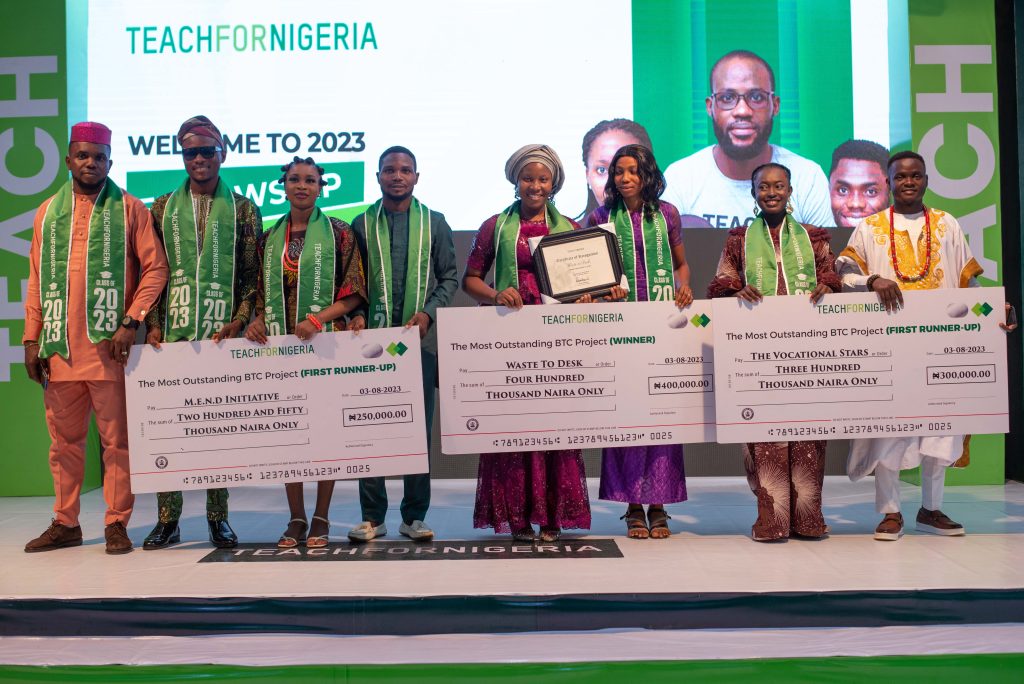
Teach For Nigeria (TFN), a non-profit organisation focused on enlisting Nigeria’s most promising future leaders to improve foundational learning outcomes and expanding life opportunities for low-income children across Nigeria, on Thursday, 3rd August, graduated its fifth cohort of 197 outstanding change makers.
The 2023 graduating class implemented 87 “Be The Change” projects which are social innovation projects aimed at addressing some of the systemic challenges affecting quality education delivery in their schools and communities.
The graduation ceremony, which took place in Lekki, Lagos State had policymakers, industry experts, partners, alumni, and stakeholders in attendance. Frank Nweke, Chairman of ONTV Nigeria Limited, Loi Koiki, Chairman of Greensprings Educational Services Limited, Evang. Joshua Olalekan Ifede, Ogun State TESCOM Chairman, Prof. Abayomi Arigbagbu, Fmr. Commissioner for Education and Special Adviser to the Ogun State Governor.
Speaking at the ceremony, Chief Executive Officer of TFN, Folawe Omikunle, expressed her gratitude to the graduating class for their commitment to various community development projects. “Through 87 impactful Be the Change Projects, they’ve tackled educational challenges, fought for equity, protected the environment, promoted peace, ignited creativity, and fostered innovation for a more sustainable future,” said Folawe. While reacting to Teach for Nigeria’s remarkable impact in improving foundational literacy and numeracy, she highlighted that students in Teach For Nigeria classes made between 2-3 months of additional learning gains in literacy and 2-5 months in numeracy compared to other students.
Frank Nweke Jnr, Fmr. Federal Minister and Fmr. Chairman of the Nigeria Economic Summit Group, during his commencement speech, expressed dismay at the quality of education in Nigeria. He however, expressed optimism about the Teach For Nigeria Fellowship program and its potential to address educational inequity challenges in Nigeria. According to him, “The template created here at Teach For Nigeria clearly shows that transforming Nigeria’s education is possible under purposeful leadership.”
Susan Benjamin, a graduating fellow, while recounting her fellowship experience, said, “Through the Teach For Nigeria Fellowship, I have enhanced my leadership skills by implementing various projects in my placement community. I am now an ambassador for Social Emotional Learning”With the skills and opportunities I have been exposed to, I have rediscovered my sense of purpose and I remain dedicated to becoming a driving force for positive change in the African educational sector.”
The graduating cohort served in 121 schools across Lagos, Ogun, and Oyo states, impacting over 50,000 students in underserved communities. Graduating fellows without any teaching qualification pursued a Professional Diploma in Education at Teach for Nigeria partner school, Sikiru Adetona College of Education, Science and Technology Omu – Ajose, formerly Tai Solarin College of Education, through a fully funded scholarship. They were inducted into the teaching profession by the Teachers Registration Council of Nigeria (TRCN) before the end of their fellowship.
The 2021 cohort will join the Teach for Nigeria 641 alumni network and continue to deepen their impact on Nigeria’s education based on their deeper understanding of the systemic issues affecting education equity and excellence in Nigeria.
Stanbic IBTC Bank PLC, a subsidiary of Stanbic IBTC Holdings PLC recently participated in an Export Capacity Building Programme for registered exporters organised by the Nigerian Export Promotion Council.
The event took place at the prestigious Lagos Travel Inn and served as a platform for industry experts to discuss and shed light on the various benefits of trade export and financing.
The programme was graced by distinguished speakers who shared their insights and expertise in the field and took the stage to impart valuable knowledge and information to a captivated audience.
Olatunde Oladejo, Manager, Trade Finance, Stanbic IBTC Bank delivered an enlightening speech on the immense benefits that trade export and financing can bring to businesses. He discussed how effective trade export strategies can open doors to new markets, drive revenue growth, and strengthen business relationships.
He also highlighted the comprehensive suite of trade finance solutions offered by Stanbic IBTC Bank, designed to provide exporters with the financial support and expertise to successfully navigate the global trade landscape.
According to Olatunde, “Despite the challenges faced by the export sector, the non-oil export sector has emerged as a significant propeller of the Nigerian economy. Considering this trend, Stanbic IBTC Bank has a spectrum of measures to meet exporters’ needs. These proactive steps acknowledge and tackle the varied obstacles encountered by exporters, including issues like inadequate transportation infrastructure and a scarcity of export funding.
Moreover, Stanbic IBTC Bank has cultivated a dynamic community of exporters through its specialised Trade Club. This platform serves as a nexus for global exporters, facilitating connections among them, bridging potential buyers and sellers, and empowering them to harness the untapped potential within non-oil exports.
Henry Oradiegwu, Relationship Manager, Africa China Banking, Stanbic IBTC Bank emphasised the significance of trade relations and partnership between Africa and China.
He shed light on the immense opportunities for Nigerian businesses to tap into the Chinese market and Stanbic IBTC Bank’s role in facilitating these connections through its extensive Africa-China Banking platform and the Africa China Trade Soluton (ACTS). Through his speech, Henry called on exporters to explore new avenues and capitalise on the growing trade opportunities between Africa and China.
Akintunde Folorunso, Regional Coordinator, Nigerian Export Promotion Council (NEPC) Southwest Regional Office, Lagos, provided valuable insights into the policies and initiatives put forth by the NEPC to support and promote exports from Nigeria.
He underlined the need for collaboration between financial institutions like Stanbic IBTC Bank and government agencies to drive economic growth through export development. Akintunde’s speech showcased NEPC’s commitment to facilitating a conducive environment for exporters to thrive.
Stanbic IBTC Bank’s participation in the Export Capacity Building Programme underscores its dedication to empowering Nigerian businesses, supporting trade ventures, and promoting economic growth. As a leading financial institution, Stanbic IBTC Bank is pivotal in facilitating trade finance solutions, enabling businesses to seize opportunities, and fostering collaborations between Nigeria and the international market.
The Lagos State Government (LASG) has announced the temporary closure of the entry to CMD Road and the Access Road to Isheri-Olowora on the Shagamu bound lane while work on the Lagos-Ibadan Expressway continues.
Abdulahfiz Toriola, Permanent Secretary, Ministry of Transportation, announced on Tuesday that the CMD entry would be blocked for three days beginning Wednesday, August 9, for the construction of the final wearing course.
Toriola also stated that the access route to Isheri-Olowora on the Shagamu bound carriageway, via the pedestrian Bridge at Berger Bus Stop, will be closed for three days beginning Thursday, August 10.
However, it was reported that preliminary work would begin on Wednesday to allow for the repair of the remaining half of the carriageway’s outer lane.
See the full statement below:
LAGOS STATE GOVERNMENT
MINISTRY OF TRANSPORTATION
PRESS RELEASE
LASG ANNOUNCES TEMPORARY CLOSURE OF THE ENTRANCE INTO CMD ROAD AND THE ACCESS ROAD TO ISHERI-OLOWORA ON THE SHAGAMU BOUND CARRIAGEWAY FOR 3 DAYS.
In line with the Lagos-Ibadan Expressway project by the Federal Government, the Lagos State Government has announced the temporary closure of the entrance into CMD Road, and the Access Road to Isheri-Olowora on the Shagamu bound carriageway.
According to the notification, the CMD entrance will be closed for 3 days for the laying of the final wearing course, commencing from Wednesday 9th August, 2023, while the Access Road to Isheri-Olowora on the Shagamu bound carriageway, by the pedestrian Bridge at Berger bus stop will be closed from Thursday 10th August, 2023 also for 3 days, with preparatory works commencing on Wednesday, 9th August, 2023, to enable the reconstruction of the remaining half of the outer lane of the carriageway.
The following traffic management plan has been earmarked for the duration of the construction works. From Thursday, 10th August, 2023, all traffic from the expressway en-route CMD Road will have these alternative routes;
Motorists on Ojota Interchange will connect CMD Road through the access road after the FMW weighbridge to continue their journeys.
Motorists on Dr. Nurudeen Olowopopo will connect CMD road by Otedola Estate
For Motorists that are Isheri-Olowora bound, intending to exit the expressway via the access before the Pedestrian Bridge at Berger bus stop, will make use of the next exit by New Garage to connect Isheri-Olowora.
Motorists are urged to cooperate with the Traffic Management Personnel deployed to guide them through their desired destinations.
E-signed Engr. Abdulahfiz Toriola Permanent Secretary, Ministry of Transportation.
Seerbit, a Pan-African payment solutions provider, has unveiled Alpha, a white-label product that makes it easier for financial institutions, travel and hospitality companies, online marketplaces and other businesses to drive growth and expedite the penetration of digital payments in Africa by seamlessly launching their own digital financial technology solutions.
Despite the growing trend of digital commerce on the continent, only 5 to 7 per cent of all payment transactions are made via electronic and digital channels. Most transactions are still happening offline which means the majority of consumers are burdened with the inefficiencies of cash-based transactions.
This also means there is a significant amount of untapped value as consumers are unable to effectively access credit and other financial services because their cash-based transactions do not give financial institutions enough insight into their spending behaviours to provide the services they deserve.
At the same time, across multiple industries, there are already countless businesses that regularly interface with consumers across the continent and have visibility into these spending behaviours but either have limited access to digital payment solutions or do not have the capacity to build what they need for themselves. Most end up transacting with cash because it is what they are used to, or they settle for off-the-shelf digital payment solutions that only offer generic services.
SeerBit Alpha takes the hassle out of businesses having their own personalised fintech solutions to deliver the services customers want and need, powering them to not only drive growth but add value to their customers by providing easier access to game changing digital financial services.
Businesses simply need to plug SeerBit Alpha into their existing platform and they will be enabled to seamlessly offer credit, operate their own payment gateway to facilitate reliable collection of payments from customers, launch digital banking services such as account opening, fund transfers and other banking services, as well as international money transfers, catering to the needs of customers that offer cross-border payment needs.
Businesses can also leverage SeerBit Alpha to sell mobile phone credits and billing services, enabling their customers to purchase mobile phone credits directly through their platforms, expanding their service offerings and opening additional revenue streams.
According to Omoniyi Kolade, CEO and Founder of Seerbit, “Our mission at SeerBit is to make it as easy as possible for businesses to leverage digital payments to drive growth and SeerBit Alpha is one of the products that helps us to achieve this.
“We are taking away the complexity of having to build your own solutions and giving businesses the opportunity to take advantage of our tried and tested innovation. By leveraging our cutting-edge technology, businesses can unlock new opportunities, drive growth, and establish themselves as leaders in the evolving fintech landscape.”
SeerBit is building a unified payment ecosystem that removes the complexity and fragmentation from the digital payment process in Africa, enabling businesses to seamlessly accept multiple payment methods and streamline online and offline transactions.
The company has operations in 10 African countries with a wide range of solutions developed to drive the adoption of digital payments across the continent and enable better payment experiences that positively impact businesses bottom lines. Its partners include The British Council, United Bank for Africa, WiX and other prominent local and international companies.
According to the Federal Government, the financial value of direct economic damage caused by floods in Nigeria in 2022 is $7 billion.
The administration also announced on Tuesday that over 600 people died as a result of the calamity. It was described as the worst consequence of climate change in Nigeria.
Vice President Kashim Shettima made the announcement at a United Nations Framework Convention on Climate Change event in Abuja. Ibrahim Hassan, his Deputy Chief of Staff, read his address.
He said, “We are all living witnesses to the ravaging floods of last year (2022), which held the country to a standstill for days. The World Bank’s Global Rapid post-disaster damage estimation assessment put the total direct economic damage to infrastructure to be about $7bn.
“This is equivalent to 1.6 per cent of Nigeria’s estimated 2021 Gross Domestic Product, not including the loss of over 600 lives. For Nigeria, that was climate change at its worst.” Shettima said climate change was the biggest challenge facing humanity today.
He said, “Even as a developing nation in the global south, Nigeria is gravely impacted by the negative effects of climate change. For instance, Nigeria is ranked as one of the 10 most vulnerable countries to the impacts of climate change in the world.
“This is despite our negligible contribution to overall global carbon emissions responsible for climate change. In fact, Africa as a whole, accounts for less than four per cent of total global carbon emissions.”
The Vice President said a lot of people from the North-Eastern part of Nigeria, including himself, bore the scars of climate change effects, and had to live with its impacts.
He outlined some of the impacts to include drought and desertification, disruption of rainfall patterns, leading to sandstorms, severe floods, destruction of farmlands, infrastructure and human settlements.
Airports are bustling hubs of activity, where travellers navigate through check-ins, security lines, and crowded terminals. Amidst the chaos, finding moments of serenity and relaxation can seem like an elusive task.
However, with a bit of insider knowledge and strategic planning, you can transform your airport experience into a calming and rejuvenating journey. In this guide, we’ll reveal top tips and hidden gems to help you unwind and find tranquillity in Murtala Muhammad International Airport.
1. Arrive Early – The Foundation of a Relaxed Journey:
Allow yourself ample time at the airport to avoid rushing through the pre-flight procedures. Early arrival grants you the freedom to explore, discover cosy spots, and experience the airport at a more leisurely pace. Avoid the stress of running late, and use this time to settle in with a positive mindset.
2. Read a Book or Listen to Music:
Escape into the world of literature or music to create a calming personal retreat. Carry a book you’ve been meaning to read or tune into your favourite playlist using noise-cancelling headphones. These simple acts can help drown out the airport noise and provide a serene escape.
3. Indulge in Spa Treatments:
Treat yourself to a pampering experience by visiting airport spas. Many international airports now house a variety of wellness centres offering massages, facials, and other relaxing treatments. A spa session before your flight can leave you feeling refreshed and ready to take on the journey ahead.
4. Seek Out Airport Lounges:
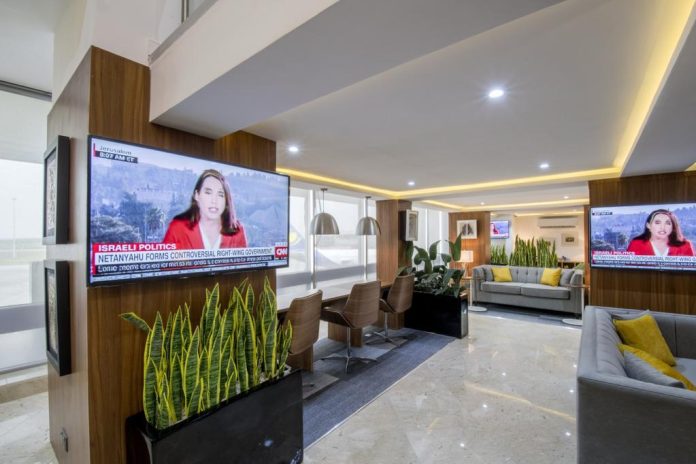
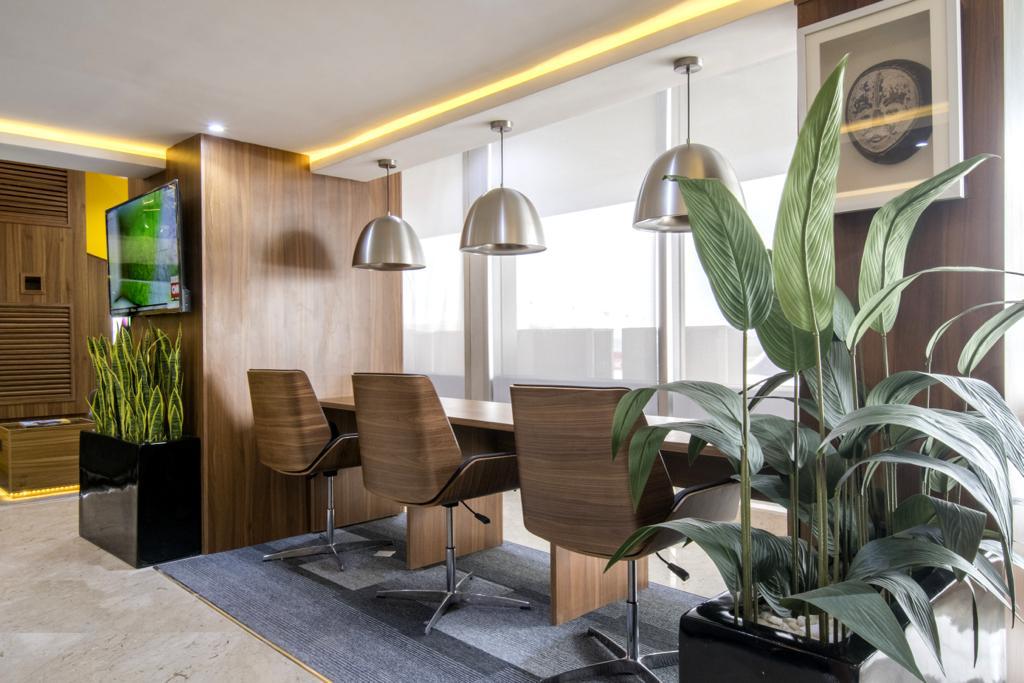
Airport lounges are tranquil oases within the bustling terminals. Accessible through various means, such as premium tickets or membership programs, lounges offer comfortable seating, complimentary snacks, beverages, and sometimes even spa services. If you are an MTN Prestige member, you have access to the MTN Prestige Lounge located at the E-Wing of the Airport. The exquisite lounge offers guests ultra-high-speed internet (MTN 5G), exquisite meals and snacks, full bar and premium dining options, play areas for kids, in-house restrooms, workstations and so much more.
Relish in the quieter ambiance, away from the hustle of the general airport areas.
5. Mindfulness and Meditation Spaces:
An increasing number of airports recognize the importance of mental well-being for travellers. Some offer dedicated spaces for meditation, prayer, or mindfulness exercises. Embrace these opportunities to find inner peace and alleviate pre-flight jitters.
6. Savour Local Cuisine:
Turn your airport layover into a culinary exploration. Seek out restaurants or cafes that serve local dishes, providing an opportunity to indulge in authentic flavours. Delight your taste buds while enjoying a moment of tranquillity before your next flight.
With a bit of thoughtful planning and a willingness to explore, every airport can become a sanctuary of relaxation amidst the chaos. From reading a book to indulging in spa treatments, and seeking out lounges, these insider tips will help you discover moments of serenity during your travels.
As supply side pressure lessened, market participants in the investors’ and exporters’ foreign exchange window exchanged US dollars at N757.51. According to FMDQ data, the Naira strengthened versus the US dollar on Tuesday, trading at N757.51 in the Investors and Exporters window.
According to dealers’ notes, the Nigerian local currency gained 2.23 percent on Tuesday vs N774.78 when traded for the US dollar on Monday. The official FX rate fluctuation has been primarily volatile.
According to statistics from the over-the-counter FX market, the open indicative rate ended at N782.59 to the dollar on Tuesday. It was noticed that the highest spot exchange rate recorded during the day was N799.90 to the greenback.
During the day’s trade, the Naira fell as low as N700 to the dollar. On Tuesday, 45.98 million dollars were exchanged in the investors and exporters window. The official market faced fx supply constraints in July, delaying convergence with open market rates. The difference between the official and parallel markets has widened to N100 as users reported increased demand on the open market.
According to the July FMDQ FX report, inflows into the Investors and Exporters window increased by around 66%. According to Cordros Capital Limited’s analysis, FX inflows from local investors fell 60.6% to US$561.00 million in July from US$1.42 billion in June due to a slowdown across all local categories.
It was noted that supply from the CBN fell 70.0% in the month, Individual supply was 51.2% below the record level seen in June and non-bank corporates were down by 65.6% while Exporters receipts declined 63.9%.
In the same vein, inflows from foreign sources remained underwhelming, decelerating by 86.5% in July to US$47.00 million from US$347.30 million recorded in June as foreign investors remained cautious about returning in their droves.
The Nigerian authorities have used FX and import restrictions extensively to manage external pressures in recent years, resulting in severe foreign currency (FCY) shortages plaguing the private sector.
In its update, Fitch Ratings said such shortages have delayed Nigerian banks sourcing foreign currency from the CBN on behalf of importing customers to meet their trade-finance obligations to correspondent banks.
This has led to significant delays in Nigerian banks providing foreign currency to international correspondent banks, the global rating agency said. Nigerian banks have responded by encouraging customers to source forex themselves, and by utilising their own resources as an interim measure to close letters of credit pending the receipt of foreign currency from the CBN.
A market-determined exchange rate and the market-friendly reforms being pursued are both conducive to capital inflows. This should help to reduce FCY shortages and the difficulties banks and importers are experiencing in conducting trade-finance business. However, the extent and timing of such benefits remain to be seen.
On Tuesday, the Nigerian Exchange’s (NGX) stocks sector fell as shareholders clicked enough sell buttons to reverse the previous day’s advance. Alpha Morgan Capital stockbrokers noted that the local market was high at lunchtime owing to solid positioning in banking equities.
However, before the trading session ended, the market reversed and bumped, leading the stock market’s year-to-date return to fall. According to data from the local exchange, key indicators fell by 0.04%.
According to local bourse trade records, the All-Share Index fell by 27.06 basis points, or -0.04%, to settle at 65,309.65. The market then returned to 27.43% after a day loss of roughly $15 billion.
Market activity, on the other hand, was mixed. The total value traded climbed by +14.91% while the total volume traded decreased by -4.94%. Atlass Portfolios Limited said that in 6,376 transactions, roughly 317.81 million units valued at $4,471.66 million were exchanged.
ACCESSCORP was the most traded stock by volume, accounting for 15.55% of total transaction activity. The Nigerian largest bank was followed on the volume list by STERLINGNG (13.81%), UNIVINSURE (9.10%), FCMB (5.71%), and FBNH (4.51%).
Stockbrokers indicated in their market updates that ACCESSCORP was also the most traded stock in terms of value, accounting for 19.27% of all deals on the exchange. GUINNESS, on the other hand, led the advancers’ list today with a price increase of 10.00 percent.
The brewer company was trailed by GLAXOSMITH (9.74%), CHELLARAM (+9.73%), TIP (+9.72%), UNIVINSURE (+9.09%), and twenty-three others. Twenty-four stocks depreciated. Trading data showed that NSLTECH was the top loser, with a price depreciation of -10.00%, to close at ₦0.27.
Towing the same line, NNFM dropped by 9.89%. JOHNHOLT lost 9.52%, TANTALIZER went down by 8.33%, GEREGU declined by 6.38% and CADBURY gave up 6.16% of its market valuation.
On Tuesday, the market breadth closed positive, recording 28 gainers and 24 losers. But the market sector performance closed negative.
Trading records from the local exchange showed that four of the five major market sectors were down, led by the Oil & Gas sector (-0.25%), followed by the Insurance sector (-0.18%), then the Industrial and Consumer goods sectors that dropped by (-0.05%) each, while the Banking sector Grew by +0.61%.
Overall, the equities market capitalisation declined by ₦14.72 billion, representing a drop of -0.04%, to close at ₦35,540.48 trillion from ₦35,555.20 trillion yesterday.
inDrive, the innovative global mobility and urban services platform, announces the launch of its ride-hailing service in Port Harcourt, marking the company’s continued expansion in Nigeria.
This move follows the successful mass launch in 15 Nigerian cities including Kano, Kaduna, Benin City, Nnewi, Aba, Onitsha, Jos, Enugu, Warri, Abeokuta, Akure, Owerri, Calabar, Ado, Ekiti, and Uyo. Port Harcourt thus becomes the 20th Nigerian city, in addition to Lagos, Ibadan, and Abuja, to have inDrive presence since its inaugural launch in 2019.
Distinct from other ride-hailing apps, inDrive empowers drivers and passengers to negotiate their own fares, instead of adhering to algorithm-dictated prices.
Passengers outline the details of their desired trip and propose a fare. Drivers can accept, decline or counter-propose without any penalty for refusal. Passengers are then free to select from the available options based on considerations like fare, car model, estimated arrival time, and driver ratings. In turn, drivers can choose requests that they consider profitable and convenient.
How the App works:
A registered passenger opens the iInDriver app and enters their pickup and drop-off locations.
Drivers who are nearby and have verified car documents receive a notification containing the passenger’s pickup location and the proposed fare.
The driver has the option to either accept the proposed fare or make a counteroffer. Notably, the passenger can view the drop-off location (Point B) before accepting the offer.
Once both parties agree on the fare, the driver proceeds to pick up the passenger, and the ride continues as usual.
After the ride, both the passenger and the driver have the opportunity to rate each other and provide valuable feedback to the iInDriver platform, which helps improve the overall service quality.
Adding to its uniqueness, inDrive typically charges a much lower service fee compared to other mobility apps. In Port Harcourt, the service fee has been completely eliminated, enabling drivers to keep 100% of their earnings. This zero service fee offer will be valid for a period of 6 months, after which the regular fee will be reinstated.
Safety remains paramount for inDrive. Drivers are required to undergo thorough background checks, including verification of necessary documents, licenses, and permits. Passengers are urged to rate their rides, thus providing valuable feedback on driver conduct and service quality.
The app also incorporates safety features such as real-time GPS tracking during rides, enabling passengers to share their trip details with loved ones. An in-app emergency button allows for swift contact with authorities, supported by a 24/7 dedicated support team.
Timothy Oladimeji, Business Development Representative at inDrive, Nigeria, believes the timing is perfect for launching in Port Harcourt. He said, “The recent driver strikes underscore the demand for a fresh approach to ride-hailing.
“That’s where inDrive steps in; our unique model enables both drivers and passengers to negotiate a fair price, rather than being constrained by an algorithm. We’re confident that this approach offers a credible solution to many of the current challenges faced by the ride-hailing sector in Nigeria.”
The World Trade Organization (WTO) director-general, Ngozi Okonjo-Iweala, says President Bola Tinubu is devoted to improving Nigerians’ lives.
Okonjo-Iweala spoke after meeting with Tinubu at the Aso Villa in Abuja on Tuesday.
The former finance minister, who underlined that her visit was not in her function as WTO DG, stated that she and the president pledged their readiness to improve citizens’ well-being.
She went on to say that her conversation with the president was centered on developing strategies to boost job creation, empower women, and boost digital trade within the country’s economy.
“So, this was not really an official WTO mission, but we were able to engage with Mr President to talk about what are the kinds of programmes that we could put in place,” Okonjo-Iweala said.
“We had a conversation on trying to look at the community and grassroots programmes that can be put in place to create jobs for young people, trying to support women and children who are those bearing the brunt of some of the sufferings in the country.
“We also talked about the what type of support the World Trade Organisation can bring.”
Okonjo-Iweala stated that the WTO is already working to increase women’s economic empowerment in Nigeria.
“We are already working in Nigeria with women in particular, who own small and medium enterprises to try to help them upgrade the quality of their products, whether it’s in the agricultural area, textiles, and in other areas so that they can sell more internationally,” she said.
“We’re trying to help them with digital trade. The wave of the future is digital trade. So, how do we train and empower Nigerian women and small and medium enterprises throughout the country, to create more jobs?
“That’s what’s needed now in Nigeria to alleviate these difficult conditions that they are in. So, that is what we discussed with Mr President and as the director general of the World Trade Organization, we’re going to try to do the most we can to support Nigerians at this particular time.”
The United Nations (UN) stated that the shutdown of Niger Republic’s borders and airspace has cut off supplies of medicine and food to the landlocked country.
The military junta of Niger has cautioned civilians to brace themselves for difficult weeks and months ahead as soldiers maintain their position to defend the country from prospective attacks.
BizWatch Nigeria recalls that on Sunday, the junta closed the country’s airspace as part of its defense measures.
Louise Aubin, the UN humanitarian chief in Niger, reacted to the decision on Tuesday, saying any humanitarian cuts would be disastrous in Niger.
The country has one of the highest rates of child mortality in the world, and its rural villages have been ravaged by a vicious Islamist insurgency.
Before the coup that deposed President Mohamed Bazoum, the UN had previously planned to offer emergency aid to almost four million people.
“The risk is that we start running out of assistance materials to be able to help out people – I’m talking about simple things that are so life-saving,” Aubin said.
Concerns raised by the UN official included food, immunizations, and cash.
“The people of Niger are likely to suffer more and so we need to be able to respond very, very strongly,” Aubin added.