





Home Blog Page 3309

MEDIA JOBS | Content Writers at Madivas.com

Madivas.com is an online portal that curates interesting and engaging content for the ladies in Africa. We are looking to expand into other categories and as such we are looking for OND graduates with a flair for blogging and social media to work with us.

We are recruiting to fill the position of:

Job Title: Content Writer

Location: Nationwide

Duties

  • This post should be well researched and properly align with the interest of target readers.
  • This post should be self written and not 100% copied from any online source. The pictures however can be copied.
  • Topics for the content would be around music and jokes.
  • Would work directly with the editor to submit articles daily

Requirements

  • Writer must reside in Lagos with proximity to Yaba.
  • Writers with a laptop would have added advantage.
  • Writer must be computer literate

Salary
N25,000 per month.

Application Closing Date
Not Specified.

How to Apply
Interested and qualified candidate should APPLY
OIL & GAS JOBS | Manager – Logistic at JAGAL Group

JAGAL Group is a leading Nigerian conglomerate with operations in the Oil & Gas, Construction and Manufacturing industries. The company has been growing successfully over the past 40 years, and has become a valuable and respected contributor to the development of the country’s economy.

Jagal offers diverse career opportunities across all its business activities. The Group’s broad range of industries and services offer rewarding prospects for various professional backgrounds and can satisfy ambitions for a successful future career.

We are recruiting to fill the position below:

Job Title: Manager – Logistic

Job ID: 576
Location: Lagos
Reporting to: Manager-Materials

Purpose/Role

  • The purpose of this role is to manage, organise, and develop the team in order to provide logistics services to projects and other stakeholders, by monitoring the supply chain from Purchase Order placement up to delivery at final destinations – e.g. required storage or fabrication facilities, on Snake Island or dedicated locations ‘off site’.
  • To provide a safe plant and equipment service to user departments for the Logistics delivery; with the team to develop planning and control systems to effectively manage conflicting demands for cranes, trucks and related equipment;
  • To manage and control labour and costs; to be able to justify priorities of tasks and present a flexible yet credible image to stakeholders, customers and management.
  • To operate and manage operations safely and effectively; to inspire and train staff, with particular interest in developing local expertise.
  • To demonstrate management responsibility for Logistics operations in all aspects for both corporate and project.
  • With the Materials & Logistics Manager to establish and maintain a strong relationship with Logistics partners, particularly with regard to our freight forwarders,  shipping Lines, and other sections within Nigerdock Supply Chain Team.

Key Aims and Objectives

  • To promote a safe culture throughout the team and its operations, observing and developing operational performance in close relationship and compliance with the Nigerdock Management System & HSE Department.
  • To operate at all times in a safe and environmentally responsible manner
  • To provide sufficient labour and equipment team support to satisfy the demands of stakeholders.
  • To plan, implement and execute all Nigerdock Snake Island Logistics requirements to meet stakeholder demand.
  • To effectively manage freight forwarders, clearing agents, vendors and sub-contractors and there costs.
  • To manage internal labour costs, reducing manpower requirements, including overtime, wherever possible.
  • With partner interests develop process controls which improve Logistics performance and service levels, manage HSE, costs, and develop deliverables towards best practice solutions.

Prime Responsibilities

  • To effectively manage staff / labour, plant and equipment in a safe and effective environment.
  • To control costs: demurrage, refund claims, waivers, quick returns of empty, overtime, project contract rate, time-sheet, equipment and truck supply to projects.
  • To take supply chain management objectives into the implementation phase.
  • Manage Inbound Logistics, Outbound Logistics and internal distributions on Snake Island; the shipping lines, freight forwarder, haulage, terminal operators
  • To consolidate and develop procedures, processes and control, for logistics operations.
  • Attend necessary meetings: HSE, M & L meeting, projects meetings, clients meeting, subcontractors meetings / freight forwarder / haulage sub-contractors.
  • Support Projects and Commercial in contract bidding/development in the areas of Logistics concern and applicable charges.

Other Duties:

  • Cost and Management reports.
  • Staff and Labour reviews.

Key Interfaces:

  • To Procurement, Material Control, Warehousing within the SCM Department, Marine/Transport, and Commercial, Finance, SIMCO, Security, Shipyard, Safety, various Projects and departments all operational stakeholders.
  • To Clients, Freight Forwarders, Clearing Agents, Project Clients, Shipping Lines, Airlines, Customs, Vendors and Sub-contractors.

Job Requirements

Person:

  • Should have technical, management experience with evidence(s), ability to coordinate with plant operators and labour;
  • Possess a flexible approach to tasks but be capable of being definitive; safety conscious with a good operating and service knowledge of cranes, trucks, container handlers, fork lifts and similar equipment.
  • The suitable candidate shall have a University Degree (or accepted equivalent training and experience) with a minimum of 10 years of experience in Logistics, Shipping & freight forwarding including a minimum of 3-5 years in a management position in freight / logistics/shipping or multimodal transport logistics organisation(s).
  • Good negotiation skills, being organised as a good coordinator and communicator.
  • Competency in handling international trade (import and export), shipping, logistics (sea, air and road freight), Project cargo, Liner & Tramp shipping, Customs, NAFDAC, Inspection Agents, Insurance, Bank-Letter of Credit, Freight Forwarder, Freight-negotiation, Chartering, Contract-development, Safety, Shipping lines and Terminal operators’ matters, procedure(s) and process(es) and Control management.

Application Closing Date
Not Specified.

How to Apply
Interested and qualified candidates should APPLY

POLITICS & GOVERNMENT JOBS | Graduate Customer Service Officers at British Council Nigeria

The British Council is the world’s leading cultural relations organization and creates opportunities for people in the UK and worldwide to understand each other, to work together and learn from one another. We see this as crucial to building secure, more prosperous and sustainable futures for us all. We build trust and understanding between different countries and cultures and develop strong international links that are of benefit to people in Britain and the rest of the world.

We are recruiting to fill the below position of:

Job Title: Customer Service Officer

Location: Abuja
Region: Sub Saharan Africa
Department: Exams, Nigeria
Job Category: Customer Services
Pay Band: 4

Purpose of Job

  • To support the achievement of country plan objectives in Abuja and all Nigeria by delivering customer services.
  • To maintain them at the highest professional standards as set out in the British Council’s EQS (Examination Quality Standards) and by the IELTS Partners.

Context and Environment

  • Customers and enquirers engage with the British Council Nigeria for a number of purposes with the majority being for examinations. Nigeria is the largest British Council exams business in the Sub Saharan Africa region. It administers exams in four subject areas: Schools, Professional/Vocational, and Educational on behalf of UK institutions and IELTS. In 2013-14 we will deliver roughly 75,000 exams to 25,000 candidates. The Nigerian team comprises 23 people; 15 are based in Lagos with 6 in Abuja and 5 in Port Harcourt.
  • The SSA region delivers exams in over 20 countries from its offices in 16 of these countries. In 2010, we delivered a quarter of a million exams to over 120k candidates. Growth in the region is robust, but our challenges are many. Nevertheless, Exams teams are making solid gains in our 4 strategic priority areas, namely: improving business performance, improving quality, improving financial compliance and increasing impact.
  • The post holder will be part of the team of 6 who administer the growing Exams business in Abuja ensuring quality and compliance as well as control of income and expenditure to deliver on target.

Accountabilities and Responsibilities
(including people management and finance):

  • As Customer Services Officer the post holder will be line managed by the Exams Services Manager in Abuja
  • Quality: to deliver a high standard of customer service to our customers, schools and exams candidates. Performance is measured by our own Exams Quality Standards
  • All administrative procedures are in full compliance with examination board regulations and EQS standards.
  • Finance: all British Council standards for managing finances are met with relation to managing Purchase Orders, managing contracts and procurement.

Main Duties
To provide services that support all British Council customers and implement action points in the Nigeria Customer Service improvement strategy. This involves ensuring that:

  • Front desk is always manned during operational hours
  • Visitors are attended to immediately and appropriately
  • Phone enquiries answered within 45 seconds of first ring
  • Email enquiries are attended to promptly and escalated from regional email centre as per agreed service level agreement
  • Daily / weekly balanced reconciliations are completed and “parked” on the financial system and spreadsheet.
  • Complaints, comments and feedback are dealt with in accordance with corporate policy and the Exams Quality Standards.
  • Provide support/assistance to the Exams Team on all aspects of Customer Service
  • Use the E-Africa website as the single authoritative source of information for all enquiry handling
  • To provide administrative support in the delivery of workshops, seminars and any other project related services in line with Exams Quality Standards (EQS)
  • All service registration procedures (e.g. Exams, Certification and other programme registration) are fully understood and implemented to agreed standards.
  • Information about the full range of British Council products and services is clearly and confidently articulated to customers, encouraging customer engagement and cross-selling
  • To regularly attend staff meetings to both gain and impart knowledge about our customers, products and services
  • Regular communication and working is maintained with back-of-house teams

Equal opportunity and Diversity:

  • To ensure that planning, delivery and implementation of managed projects are executed in line with the standards of EO&D

Information Knowledge Management:

  • Manage information created and received in compliance with British Council’s information management standards, policies, the UK data protection principles and local legislation

Stock keeping of materials:

  • Maintaining logs of preparation materials

Venue Staff and Clerical Markers Management:

  • Assist in recruitment, training, monitoring of venue staff to board and EQS standards.

Exams Marketing:

  • To assist Centre Manager in collecting qualitative and quantitative marketing data.

Finance:

  • Ensure that payments are collected, receipts issued and accurately posted on the system

Deputising/sickness or holiday cover:

  • To deputise, by agreement, for other examination colleagues in Abuja office.

Other Duties

  • To discharge other centre-related duties and activities as directed by the Centre Manager

Key Relationships

  • Internal: Abuja Exams team, Lagos team, Port Harcourt team, Country Exams Manager, Deputy Country Exams Manager
  • External: Venue Staff, IELTS Examiners, Enquirers, Candidates, Customer Service staff

Person Specification

Behaviours
Essential:

  • Connecting with others (essential): Making regular opportunities to understand others better.
  • Working together (essential): Establishing a genuinely common goal with others.
  • Being Accountable (more demanding)
  • Shaping the future (essential):
  • Look for ways in which we can do things better.
  • Creating Shared Purpose (essential)
  • Making it happen (essential):

Assessment Stage:
These behaviours will be needed to successfully carry out the role, but will not be assessed for recruitment purposes.

Skills and Knowledge

Essential:

  • Marketing and Customer Service – Level 1
  • Computer Skills – Level 1
  • English Language proficiency to IELTS band 7.5 in all areas (or equivalent).

Desirable:

  • Knowledge of the education and qualification systems in the UK and Nigeria

Assessment Stage
Short listing & Interview:

Experience

Essential:

  • Dealing with customers and enquiries in a service environment.
  • Providing and monitoring service within quality standards.
  • Working quickly and accurately to tight deadlines.
  • Experience of handling and reporting on payments from customers.

Desirable:

  • Experience of delivering examinations in a timely and secure manner.
  • Managing and training casual staff

Qualifications

Essential:

  • Education to degree level or equivalent

Application Closing Date
5th February, 2016.

Start Date
As Soon As Possible (ASAP).

How to Apply
Interested and qualified candidates should APPLY

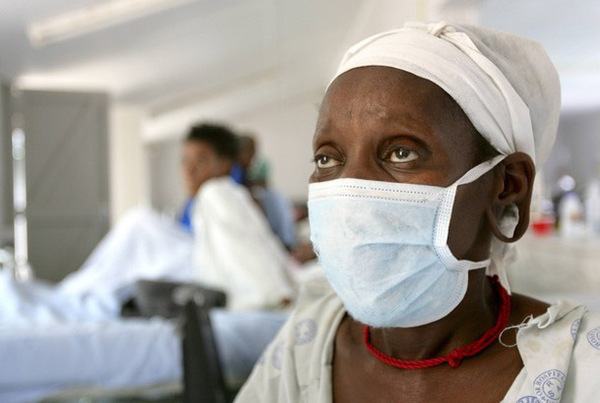
Over 90,000 Nigerians Infected with Tuberculosis Annually

Due to the several instances of unreported cases of tuberculosis in the country, it has been reported that around 91,534 Nigerians are infected with the disease annually.  Nigeria has also been ranked among 22 high tuberculosis burden countries in the world with 322 new persons estimated among 100,000 patients and 44 persons out of 100,000.

Dr Mustapha Gidado, the country representative of Royal Dutch Tuberculosis Foundation revealed this during a sensitisation media workshop on the disease.

“Tuberculosis is a major threat to the existence of HIV and it is very important that both are treated simultaneously as already, 91,534 were notified of it in 2014, 85,891 adults, 5,643 children and 16,066 HIV positive individuals.”

He also stated that there are over 6,000 health facilities across the 774 local governments in Nigeria providing tuberculosis services and they include private, faith-based, tertiary, secondary as well as primary healthcare centres.

The disease could develop into a stage of drug resistant tuberculosis which takes 20 months for drugs intake and eight months of daily injections. Meanwhile, research is on-going globally to reduce the drug intake to a lesser period for effective treatment. The 2016 World Tuberculosis Day is expected to be commemorated on the 24th of March.

Dalori Attack: NEMA Confirms 85 Dead in Borno

The National Emergency Management Agency (NEMA) has said that 85 people were killed following an attack on Dalori, a village in Borno State in Nigeria’s volatile northeast region, by the dreaded Boko Haram sect.

Sixty-two other people sustained injuries and are receiving treatment at the General Hospital in Maiduguri the capital  of the state.

Most of those affected were fleeing women and children who ran into suicide bombers in a nearby village, an official of the National Emergency Management Agency said.

According to witness reports, the attack occurred at night, with the militants coming in through the bush, some of them riding on motorcycles and some in cars, unleashing mayhem on the village.

People ran helter skelter for safety, some crossed the river behind the village, but the terrorists were there to plunder the village, killing people and destroying homes and property.

Those who ran were lured to death by some suicide bombers who pretended to be residents and called them with touch lights, urging them to come to where they called ‘safe haven’, only to detonate their explosive devices, killing many of them.

The town has been torn apart and thrown into agony.

FG Plans to Issue First Non-interest Sovereign Bond in 2016

The Federal Government is making plans to issue Nigeria’s maiden sovereign non-interest bond this year as part of efforts to deepen and make the domestic capital market more inclusive and diversified.

Non-interest bond, otherwise known as Sukuk bond, makes returns to the investors through sharing of profit or cash flow from the underlying asset with them in addition to redemption of the principal upon maturity.

Nigeria currently has only one sub-national Sukuk bond issued by the Osun State Government. Two other states, Kebbi and Sokoto states have indicated interests in issuing Sukuk bonds.

The absence of a sovereign Sukuk bond to serve as benchmark for other government and corporate Sukuk issuance has been cited globally as a drawback for the growth of non-interest Sukuk bond market. Standard & Poor’s Rating Services (S & P) estimated that global Sukuk issuance could reach up to $55 billion in 2016.

The two frontal government agencies in charge of bond issuance, the Debt Management Office (DMO), which oversees government’s debt issuance progamme, and Securities and Exchange Commission (SEC), the apex capital market regulator, said they would work together to realise the long-standing goal of issuing Nigeria’s first sovereign Sukuk bond this year.

At their second interactive session in less than three months, both SEC and DMO reiterated their commitments to deepening the domestic debt market by developing the non-interest debt market.

Director General, Debt Management Office (DMO), Abraham Nwankwo said the DMO attaches importance to the development of non-interest products in the Nigerian capital market noting that sovereign Sukuk issuance has been part of the agency’s strategic plan drawn three years ago.

He solicited support from the SEC, especially in the area of capacity building in order to realize the goal of issuing Nigeria’s first sovereign Sukuk within this year.


First Bank, GTB, UBA, Zenith Make Top 500 Global Banks Index

According to the 2016 Top 500 banking brands ranking published in the February edition of The Banker magazine, Financial Times Group in conjunction with Brand Finance, London, United Kingdom, First Bank jumped 16 places from 336 position in 2015 to 320 this year.

A press release from the Country Representative of The Banker magazine in Nigeria, Mr. Kunle Ogedengbe, added that three other Nigerian banks also made the ranking.

They are Guaranty Trust Bank which moved to 389 in the world from 417 in 2015, Zenith Bank that dropped from 388 in 2015 to 392 in 2016, and United Bank for Africa that returned to the ranking in 447. Access Bank that made the ranking at 496 in 2015 dropped from the 2016 ranking.

First Bank’s brand value, which is the licensing rate that a third-party would need to pay to use the bank’s brand increased to $322 million in 2016 from $300 million in 2015 while that of Guaranty Trust Bank also increased to $243 million from $213 million.

The 2016 brand value of Zenith Bank increased to $238 million from $235 in 2015 while United Bank for Africa that made a return to the ranking since 2012 has a brand value of $198 million. UBA’s brand value in 2012 was $121 million.

Of the five countries in Africa that made the ranking, Nigeria has the highest brand value increase of $249 million. Egypt moved up by $239 million; Togo gained $134 million while South Africa and Morocco lost $878 million and $213 million respectively.

Globally, Wells Fargo of the United States of America retains the number one banking brand in the world for the fourth consecutive year and was followed by banks in China and United Kingdom in the first ten. Wells Fargo’s brand value for 2016 is $44.1billion from $34.9 billion in 2015.


“Nigeria May Lose 37% of GDP to Corruption” – PWC

A report by PricewaterhouseCoopers, PwC,has indicated that Corruption could cost Nigeria about 37 per cent of its Gross Domestic Product (GDP) if left unchecked. This translates to about N185.37billion of current GDP.

The report, titled: ‘Impact of Corruption on Nigeria’s Economy,’ which was received by Vice President Yemi Osinbajo over the weekend, focused on the ways corruption had impacted the Nigerian economy over time with evidence and impetus for its reduction.

PWC Country and Regional Senior Partner West Market Area, Uyi Akpata, who led the team that presented the report, said: “The results of the study showed that corruption in Nigeria could cost up to 37 per cent of GDP by 2030 if it’s not dealt with immediately. This cost is equated to around $1,000 per person in 2014 and nearly $2,000 per person by 2030.

“The boost in average income that we estimate, given the per capita income, can significantly improve the lives of many in Nigeria.”

Akpata said five steps were used in the report to estimate Nigeria’s cost of corruption, saying the first step was to examine over 30 studies to understand the way corruption affects GDP in the country.

He said the study was obtained from International organisations, including the Organisation for Economic Cooperation and Development (OECD), International Monetary Fund (IMF), Department For International Development (DfID), Transparency International (TI) and in-house studies assessing the health of the economy such as the World in 2050 publication. The IMF study was selected to estimate the impact of corruption on economic growth.

The second step, Akpata stated, was to identify the impact of corruption on economic growth using the IMF study, adding that the study estimated that the impact of one point change in the corruption index results in a 1.2 percentage point change in economic growth per annum.

He said TI’s Corruption Perceptions Index (CPI) was also used as a proxy for corruption. This data set, Akpata said, defines corruption as the ‘abuse of public office for private gain’ and the index was categorised into three parts; Grand corruption, Petty corruption and Political corruption.

The fourth step in the report created three scenarios that show the lower levels of corruption that could have been achieved in the past and can achieve in the future while the fifth step calculated the impact of corruption on economic growth and output for each scenario.


Nigerian International Debt Fund Set to Pay Investors Dividends This Week

Nigerian International Debt Fund (NIDF), a mutual fund listed on the Nigerian Stock Exchange (NSE) would distribute dividend for the 2015 business year to its investors this week.

Investors in the mutual fund would receive N49 per note as the Fund Managers, Afrinvest Asset Management Limited, begin payment of final coupon for the 2015 financial year on February 3, 2016.

This represents the 36th coupon in the life of the Fund since its inception in 1997.

Managing Director, Afrinvest Asset Management Limited, Ola Belgore, said a total of N27. 17 million would be distributed among note holders on the register of the NIDF as of December 31, 2015 at N49 per note.

He noted that the second coupon payment was in line with the structure of the NIDF, which is designed to pay distributions twice a year, having paid an interim coupon of N38.21 in July 2015.

“NIDF offers investors safety, capital preservation, steady returns, diversification and value, and has a consistent dividend history making it quite attractive for both individual and institutional investors such as Pension Fund Administrators (PFAs), insurance companies, asset managers and gratuity funds,” Belgore said.

He pointed out that in 2015, the NIDF was rated “A-” by Global Credit Rating Company (GCR), which is currently among the best for mutual funds in the market.

Afrinvest Asset Management Limited is a subsidiary of Afrinvest West Africa Limited, a wealth advisory firm involved in investment banking, securities trading, asset management and investment research with a focus on West Africa.

Dangote Signs Deal with Black Rhino on $5billion Energy Project

The Dangote Group has signed a joint venture agreement with the Black Rhino Group to develop a $5 billion (about N1 trillion) energy infrastructure in Africa.

Black Rhino is a subsidiary of the Black Stone Group, the world’s current largest Private Equity and Asset Management Company.

The President of Dangote Group, Aliko Dangote, made the announcement Friday, January 29 while delivering the 38th Pre-Convocation Lecture titled: The Role of Entrepreneurship in National Development: The Story of the Dangote Group.

Expressing delight that the Chairman of the Black Rhino Group is the present Emir of Kano, Alhaji Muhammadu Sanusi II, Dangote announced that the joint venture agreement was already looking into setting up power plants in Kano and Abuja, in Nigeria.

“Elsewhere in the continent we are already exploring opportunities in Togo and Zimbabwe, and most of these plants will be coal-based, as we have developed expertise and capacity through the provision of captive power to all our factories,” he said.

The industrialist said their reliance on captive power was based on their conviction that “it has been a key factor in our success as our cost of power is 4 cents/kWh on average, compared to 15 cents/kWh average for residential users.

He said the Dangote Group would be investing a total of over $19 billion across its various businesses to facilitate consolidating in some of them, growing others and venturing into new fields and enterprises.

NSE Index Spikes by 1.34% on Sustained Bullish Trend

Trading activities on the floor of theNigerian Stock Exchange, NSE, sustained its positive momentum as All-Share Index climbed further on Friday, January 29 by 1.34% to 23,916.15 points, compared with the appreciation of 1.14% recorded on Thursday, January 28.

Week-on-week, the Index appreciated by 0.38%, while Year-to-date (YTD), it depreciated by 16.50%.

Likewise, the Market Capitalization appreciated by 1.34% to close at N8.23trn, compared with the appreciation of 1.14% recorded yesterday to close at N8.20trn.

The appreciation recorded in the share prices of GT Bank, Guinness, Stanbic IBTC, Nestle and Zenith Bank were mainly responsible for the rise in the value of the Index.

The total value of stocks traded on the floors of The NSE today was N2bn, up by 17.47% from N1.70bn traded yesterday. The total volume of stocks traded was 241.37mn in 3,270 deals.

The three most actively traded stocks were: FCMB (32.18mn), Diamond Bank (31.93mn) and Access Bank (29.65mn). The most actively traded sectors were: Financial Services (203.60mn), Conglomerates (9.93mn) and Consumer Goods (8.92mn).

Nigeria’s 119 Foreign Missions to Spend N32.5billion in 2016

Nigeria’s 119 foreign missions have been allocated the sum of N32.571 billion for the 2016 fiscal year, the budget proposal document reveals.

The document indicated that out of the N49.526 billion allocated to the foreign affairs ministry, the 119 missions have the lion share of N32.571 billion.

In September, President Muhammadu Buhari, had after a meeting with the permanent secretary ministry of foreign affairs, said the country would review the number of such missions, with a view to shutting down non-essential ones.

The President had said at the time that there was no point for Nigeria to operate missions all over the world “with dilapidated facilities and demoralized staff.”

But the budget estimate of the ministry shows that only fifteen missions out of the 119 have explicit allocations of funds for the execution of capital projects. It shows that allocations for the 114 other missions would be spent on personnel, overhead and other recurrent areas.

Nigeria’s foreign mission in New York (PM) in United States (US), where six foreign offices operate, has the highest allocation of N1.461 billion, followed by London office with N1.081 billion.

On the other hand, Tel Aviv Christian Pilgrims mission has the lowest allocation of N14.875 million, followed by NEPAD mission, Pretoria, South Africa with N56.023 million.

The main ministry of foreign affairs has an allocation of N13.424 billion, while other five agencies under the ministry have a cumulative budgetary allocation of N3.721 billion for the 2016 fiscal year.

Meanwhile, allocation for the research and development department of the federal ministry of defence will consume N12.411 billion in 2016 budget.

According to the budget’s document, the ministry of defence and its departments and agencies, which include army, navy, air force and others, have been allocated N429.098 billion.

But the main ministry office alone has a total of N35.658 billion, out of which acquisition of non-tangible assets – research and development & monitoring and evaluation – have an allocation of N12.615 billion.

Out of that, research and development receive N12.411 billion while monitoring & evaluation has N203.678 million.


“Nigerian Stock Market to Face Hard Times in 2016” – United Capital Predicts

The Nigerian stock market in 2016 will be plagued by poor stock performances due to the poor condition of the naira against dollar as well as the dwindling oil prices,United Capital Plc has predicted.

United Capital Plc in its 2016 outlook titled ‘a slippery path to recovery, finding the new equilibrium’ said the dominance of foreign participation in the last 4 years has led to the market’s seamless reaction to global shocks.

Group Chief Executive Officer of United Capital Plc, Oluwatoyin Sanni, said Nigerian equities is in dire need of increased local participation.

According to her, market volatility and sell pressure has been majorly driven by capital flight, buttressing the need for increased local participation to insulate the domestic market from external shocks and currency volatilities.

She believed that the Central Bank of Nigeria’s disposition to foreign investors will be a key driver of equities movement in 2016 as uncertainty around foreign exchange will continue to impact market sentiment.

Sanni stressed that oil price trajectory will remain a key driver of equity market direction, saying “we expect crude oil prices to trade lower in 2016, portending a downside to Nigerian equities.”

Fixed Income Market Leaps by 33%

FMDQ OTC provider of Over- The-Counter trading platform for fixed income in Nigeria saw its turnover leap from N103.60 trillion in 2014 to N137.40 trillion in 2015, a growth rate of 33 per cent year-on-year.

This growth came in spite of the challenges the market faced in 2015.

In the first half of 2015, the dealing members achieved an overall OTC market turnover of N58.60 trillion and by December 2015, this rose significantly by 134 per cent to close at N137.40 trillion.

This figure saw the forecast of N125 trillion turnover for 2015 surpassed by 10 per cent.

According to FMDQ OTC, the most actively traded products were Treasury Bills (T.bills), accounting for the largest share of the market turnover at 35 per cent, followed by foreign exchange (including FX derivatives) with a share of 25 per cent and Repurchase Agreements (Repos)/Buy-Backs at 23 per cent.

Unsecured Placements/Takings and Federal Government of Nigeria (FGN) bonds, on the other hand, had a smaller share of the market, accounting for 9 per cent and 8 per cent respectively.

The turnover represents trades executed between dealing members, dealing members & clients, and dealing members & the Central Bank of Nigeria (CBN).

FMDQ, like in 2015, is optimistic about the year ahead, albeit with caution, considering the expected challenges the financial markets will likely face, and remains committed to initiating and engaging in initiatives that will develop and make the FMDQ markets globally competitive by improving liquidity, transparency, governance and efficiency in the Nigerian capital market.

To achieve success in its objectives, FMDQ will continue to work collaboratively with and garner the support of its stakeholders.


Importation of Petroleum Product Gulps N16trilllion in Six Years

The National Bureau of Statistics, NBS, in a report released over the weekend showed that Nigeria spent N1.80trn on importation of petroleum products in 2010, N3.19trn in 2011, N2.89 trillion in 2012 and N3.04 trillion in 2013.

The report revealed that the country spent N3.20trn on petroleum product imports in 2014 and N1.88trn in 2015.

Analysis of the values based on products showed that import of Premium Motor Spirit (PMS), also known as petrol, gulped N12.54trn over the six-year period.

A breakdown of the values showed that Nigeria spent N1.5trn, N2.71 trillion, N2.19trn, N2.33trn, N2.35trn and N1.45trn on petrol import in 2010, 2011, 2012, 2013, 2014 and 2015 respectively.

Over the period under consideration, the import of Automotive Gas and Oils (AGO) amounted to N2.17trn while Household Kerosene (HHK) import amounted to N1.27trn.

The report showed that AGO import cost Nigeria N290.496bn, N475.23bn, N318.24bn, N328.69bn, N452.64bn and N305.29bn in 2010, 2011, 2012, 2013, 2014 and last year respectively.
Reacting to the massive sums, the Director Institute of Petroleum Studies (IPS), University of Port Harcourt, Prof Mike

Onyekonwu said the country has not done the right thing wasting such huge monies.

“It is a waste when you carry your raw product and send out, you don’t add value to it and you turn around and import it. We could have liberalized the sector a long time ago,” he said.

The Director, Centre for Petroleum, Energy Economics and Law, Prof Adeola Adenikinju said the sums is a reflection of the country’s unseriousness as a nation.

“You can imagine what we could do with N16trn; how many refineries we could build, how many jobs would have been created and the negative impact it has had on our foreign reserves. Now that the data is out, what is the government doing to ensure that we don’t run into this problem again?” he said.

Acorn Petroleum Plans to Lift Share Capital by 200%

Shareholders of Acorn Petroleum Plc have approved the increase in share capital of the company by 200 per cent at an Extra-Ordinary General Meeting (EGM) from N1,500,000,000 (One billion, five hundred Million Naira) to N4,500,000,000 .

The approval by the shareholders for a raise in share capital of Acorn Plc by 200 per cent by the creation and addition thereto of 6,000,000,000 (six billion) ordinary shares of 50kobo each to the company’s existing share capital will help to reposition the company for strong competition in the downstream sector of the oil and gas industry.

Acting Company Secretary of Acorn Plc, Deoye Ajidahun, who spoke at the meeting said “The new shares is to rank parri passu with the company’s existing ordinary shares.


FG Seeks $3.5billion Emergency Loans from W/Bank, ADB to Bridge Budget Deficit

The federal government has sought the World Bank and African Development Bank for $3.5bn in emergency loans to bridge the widening gap in its budget, the Financial Times of London has reported.

The request from President Muhammadu Buhari’s government is intended to help fund a $15bn state deficit, which has been worsened by a huge increase in public spending.

Finance minister Kemi Adeosun told the Financial Times recently that she was planning Nigeria’s first return to bond markets since 2013.

However, Nigeria’s likely borrowing costs have been rising alongside its budget deficit. A projected deficit of $11bn, or 2.2 per cent of gross domestic product, had already risen to $15bn, or 3 per cent, as a result of the recent turmoil in oil markets.

The $2.5bn loan from the World Bank and a parallel $1bn loan from the ADB, which would enjoy below-market rates, must still be approved by both banks’ boards. Under World Bank rules its loan would be subject to an IMF endorsement of the government’s economic policies and bank officials say they would have to be confident the Nigerian government was undertaking significant structural reforms.

But both loans would carry far fewer conditions than one from the IMF, which does not believe Nigeria needs a fully fledged international bailout at this point.

“I think we all agree that Nigeria is facing significant external and fiscal accounts challenges from the sharp fall in…oil prices, as of course are all oil exporters,” Gene Leon, the IMF’s representative in Nigeria, told the Financial Times.


“50 Per Cent of Domestic Flights Cancelled in Two Weeks” – Operators

The Airline Operators of Nigeria, AON, has disclosed that fifty per cent of domestic flights have been cancelled by Nigerian airlines in the last two weeks due to harmattan haze.

According to the operators, the cancellation had not only been a cost to them but to the Nigerian economy since a lot of businesses had been affected across the country.

Chairman of AON, Capt. Noggie Meggison, disclosed this in a chat with Aviation Correspondents at the Murtala Mohammed Airport in Lagos.

He added that over 80 per cent of flights were delayed as a result of the poor visibility occasioned by weather condition.

Meggison however said weather would not have been a challenge if the country had put in place appropriate take-off and landing facilities.

He said:“Navigational facilities at most of the airports are not working. It is very shameful that we close airports over little weather situations, whereas in Europe and other places, aircraft take off with zero visibility.

AfDB to Inject $50billion into Africa’s Energy Sector


The African Development Bank has expressed readiness to invest between $40 and $50 billion in the energy sector across the continent.

AfDB President Akinwumi Adesina said this in Addis Ababa, Ethiopia, over the weekend at the 31st Session of the New Partnership for Africa’s Development Heads of State and Government Orientation Committee.

Adesina said the AfDB plans to invest $12 billion in the energy sector over the next five years.

He said the bank would also triple its climate finance to Africa to $5 billion per year by 2020 in order to support climate change adaptation and mitigation efforts on the continent.

He said the bank had already worked with the African Ministerial Conference on the Environment and the African Union with strong support from the G7, especially Germany and France, to develop and launch the Africa Renewable Energy Initiative at the COP 21 in Paris.

The AfDB chief said while over 645 million Africans lacked access to electricity, 700 million did not have access to clean cooking gas.

He said: “Regular supply of power, which is taken for granted in developed countries, is a luxury in Africa in the 21st Century. Some 137 years after Thomas Edison developed the light bulb, Africa is still in the dark. Today, over 645 million Africans do not have access to electricity, and 700 million go without access to clean cooking energy; with 600,000 dying each year from indoor pollution from reliance on biomass for cooking.

“Africa is simply tired of being in the dark. It is time to take decisive action and turn around this narrative: to light up and power Africa – and accelerate the pace of economic transformation, unlock the potential of businesses, and drive much needed industrialization to create jobs.

“The African Development Bank has developed the New Deal on Energy for Africa and launched the Transformative Partnership on Energy for Africa, to help light up and power Africa.”

He said the New Deal on Energy for Africa was aimed at accelerating universal access to electricity in Africa by 2025.

“The goal is to add 160 GW of new generation capacity via the grid, deliver 130 million new grid connections and 75 million off-grid connections.”


Micro-finance Bank Loses N8.2million Investment in Kwara State

The Managing Director of Iyeru Okin Micro Finance Bank, in Share, Kwara State, Alh Fasasi Balogun, has told the Judicial Commission of Inquiry that the bank lost N8.2million investments to the communal clash.

Balogun explained that he has been operating the branch of the micro finance bank in Share for about eight years before the clash on December 15, 2015.

He said that before the destruction, the bank had in no small measure improved the business and commercial activities in Share based on the high level of patronage of the people of the town.

While noting that the owner of the building which houses the micro finance bank is a native of Share, he also said that it would not be out of place to accuse the people of Tsaragi of looting the bank and then setting the office and building ablaze.

The chairman of the judicial commission, Justice Akanbi, adjourn the sitting till next monday for further hearing