



Home Blog Page 3247

“Manufacturing Sector to Grow by 5% in Four Years” – MAN”

The Manufacturers Association of Nigeria, MAN, has stated that the Nigerian manufacturing sector is capable of growing by 5 percent per annum within the next four years.

MAN is currently collaborating with Manufacturing Partnerships for African Development (MPAD) to hold an Expo in Lagos,March,2016, where it hopes to meet thousands of industry experts as a way of realizing that dream.

The Chairman Economic Policy Committee (EPC) of Manufacturers Association of Nigeria, MAN, Reginald Odiah, who made this disclosure, stated that “My vision is to see a Nigerian manufacturing sector that is developing and achieving a GDP growth of 5% per annum for the next four years”.

The Association however called for a massive investment to take the Nigerian manufacturing sector to the next level, adding that they hope “that the expected investment will come from two fronts – internally from local investors who will take advantage of new government policies and support via the Central Bank of Nigeria, CBN and Bank of Industry, BOI to expand their existing businesses and move into new areas of manufacturing.

Ddiah said:“And then foreign investors who will want to take advantage of the new government policies and the investment climate.”

“Moreover, thousands of Nigeria’s leading manufacturing experts will meet for the third annual MPAD & inaugural Nigeria Manufacturing Expo (MAN Expo) in Lagos from 15-17 March, which will be launched in response to the government’s commitment to industrialization and Nigeria’s need to diversify.”

However, he added that the country is full of business opportunities that investors can tap to offset the current economic crash.

Flour Mills Boosts Profit with N24billion Gain on Disposed Stock

Flour Mills of Nigeria (FMN) Plc escaped a loss of about N3.9 billion in its nine months results period ended December 31, 2015 following the 23.7 billion gain realised from the sale of its remaining 15 per cent stake in United Cement Company of Nigeria (UCC) Limited

However, the company ended the period with a profit after tax of N19 billion, compared with N3.3 billion profit in the corresponding period of 2014.

The unaudited report made available by the Nigerian Stock Exchange (NSE) on Wednesday showed that FMN’s operations was negatively impacted by the challenging operating environment.

Revenue grew by 8.2 per cent from N244 billion in 2014 to N264 billion in 2015.Cost of sale rose by 7.8 per cent from N219 billion to N236 billion, while marketing, distribution and administrative expenses soared by 43 per cent to N15.2 billion, from N10.6 billion. Similarly, net finance cost jumped by 38 per cent from N11.9 billion to N16.4 billion.

The company made a profit of N23.7 billion from its remaining investment in UCCN. Consequently, it ended the nine months with a profit of N19 billion.

According to FMN, despite the pressure on top line sales, coupled with operational and logistics issues in Apapa, the group and company succeeded in growing revenues by eight per cent year-on-year. The improved top line growth was impacted by devaluation of the Naira which led to rising input costs. In addition, the decline in profit before tax was partly driven by higher financing costs. It is pleasing to note that a gain of N23.7 billion realized on sale of the remaining 15 per cent of the group’s investment in UCCN was a big boost to the group’s bottom line.”

However, commenting on the third quarter(September-December 2015) performance, FBN Capital said FMN recorded pre-tax and after tax losses of N4.3 billion and N5.2 billion respectively.

“The losses compare with pre-tax and after tax losses of N2.1billion and N1.3 billion in Q2. Although sales grew by nine per cent year-on-year(y/y) to N86.1 billion, gross margin expanded by 153bps y/y to 11 per cent and operating expenses (opex) declined by 16 per cent y/y to-N4.3 billion, a 1,054 per cent y/y rise in other losses and interest expense of N5.1 billion proved more significant and were the key drivers of the losses,” the firm said.

NNPC Records Cumulative Loss of N267billion in 2015

Nigerian National Petroleum Corporation, NNPC, monthly oil and gas operational report of 2015 has shown that the corporation posted a cumulative operational loss of N267.138 billion last year.

Details in the summarised report, which was released by the corporation last night and obtained by THISDAY in Abuja, showed that the NNPC earned over N2.046 trillion in revenue but spent over N2.313 trillion in its operations, leaving it with a deficit of N267.138 billion.

While four of its subsidiaries — the NNPC Retail, Nigerian Petroleum Development Company (NPDC), Integrated Data Services Limited (IDSL) and the Nigerian Gas Company (NGC) —made profits of N5 billion, N16 billion, N2 billion and N34 billion respectively, its seven other subsidiaries made losses with the Corporate Headquarters recording the highest loss of N162.736 billion.

NNPC’s product supply and distribution arm, the Pipelines and Products Marketing Company (PPMC), posted a loss of N62 billion, and all the three refineries made a combined loss of N82 billion in the year under consideration.

The corporation noted in the report that it paid N1.095 trillion to the Federation Account Allocation Committee (FAAC) from what it realised from the sale of 245 million barrels of focalised crude oil it lifted on behalf of the federal government.

The corporation’s 2015 year-to-date financial report also showed that it almost posted losses every other month of the year. It explained that with about 254 billion cubic feet of gas it sent to the country’s power sector, generation from gas-fired plants averaged a daily volume of 2957 megawatts from the gas powered plants.

Also, petrol supplied by the corporation for the year was put at 7.5 billion litres.

N5.2 Billion Aviation Scam: Trial of Borishade, Others Stalled on AGF’s Directive.

The hearing of a case filed by the Economic and Financial Crimes Commission (EFCC) against the former Minister of Aviation, Babalola Borishade and four others, has been postponed on the request of the Attorney General of the Federation for a brief on the matter.

On Wednesday, Mr Borishade and four others were to appear before Justice Abubakar Umar of the High Court in the Federal Capital Territory, Abuja,

In a statement issued by the spokesperson for the anti-graft agency, both parties were present in court, but Justice Umar informed them that the matter could not go on as planned, as the AGF had requested for a brief on the case by the EFCC since the matter had been in court for about seven years.

“He presented a letter dated February 2 from the AGF requesting for an adjournment of the case and records of court proceedings so far.

“Counsel to the EFCC, Chile Okoroma, told the court that his hands were tied with regards to continuing the proceeding, as the AGF, being the Chief Law Officer, has power over him,” the statement read.

The statement further read that Mr Okoroma said that “under the Administration of Criminal Justice Act, and Section 174 of the Constitution, the AGF has the power to take over, continue or discontinue a case”.

Counsel to the first defendant, Kehinde Ogunwumiju and Regina Okotie- Eboh, representing the 4th and 5th defendants, who had initially sought for a dismissal of the case which was earlier slated for ruling on Wednesday, could not have their applications taken as a result of the letter from the AGF.

Justice Umar adjourned the case to February 17, 2016 for ruling and continuation of hearing pending the decision of the AGF.

Mr Borishade, his former personal assistant, Tunde Dairo, and two others allegedly mismanaged a 5.2 billion Naira Aviation Safe Tower contract.

Others on trial for the alleged offence are former Managing Director of Nigeria Airspace Management Agency, Rowland Iyayi; an Australian, George Eider and Avsatel Communications Limited.

The suspects were arraigned on November 19, 2009 by the EFCC on a 15-count charge of taking bribe and forging aviation contract documents.

NNPC Made N267 Billion Loss in 2015

According to the monthly oil and gas operational report of the Nigerian National Petroleum Corporation (NNPC) for 2015, it has been revealed that the corporation unveiled a cumulative operational loss of N267.138 billion last year.

Reports have shown that the NNPC earned over N2.046 trillion in revenue but spent over N2.313 trillion in its operations, leaving it with a deficit of N267.138 billion.

Meanwhile, four of its subsidiaries — the NNPC Retail, Nigerian Petroleum Development Company (NPDC), Integrated Data Services Limited (IDSL) and the Nigerian Gas Company (NGC) —made profits of N5 billion, N16 billion, N2 billion and N34 billion respectively, its seven other subsidiaries made losses with the Corporate Headquarters recording the highest loss of N162.736 billion.

The Pipelines and Products Marketing Company (PPMC), posted a loss of N62 billion, and all the three refineries made a combined loss of N82 billion in the year under consideration.

NNPC noted in its report that it paid N1.095 trillion to the Federation Account Allocation Committee (FAAC) from what it realised from the sale of 245 million barrels of localised crude oil it lifted on behalf of the federal government.

It explained that with about 254 billion cubic feet of gas it sent to the country’s power sector, generation from gas-fired plants averaged a daily volume of 2957 megawatts from the gas powered plants. And also petrol supplied by the corporation for the year was put at 7.5 billion litres.

7Energy Invests $800million In Gas Infrastructure

The chief executive officer (CEO) of 7Energy, Phillip Ihenacho, has expressed worry customers inability to offset the huge gas debt is threatening the industry.

He said that the company has invested about $800,000,000 to boost gas infrastructure but all the efforts are being hampered by the current price regime and huge debt profile of customers.

Iheanacho, who spoke with LEADERSHIP in an interview, noted that most of the pronouncements of the previous administration were in connection with the domestic supply obligation of the international oil companies (IOCs).

He explained that the previous government requested that the IOCs supply gas at a certain price and that price was below the commercial price of gas.

He stated that the previous government tried to encourage the IOCs to consider supplying gas to the domestic market by making pronouncements of higher gas prices, but argued that in an ideal world, there should be no government intervention on gas prices.

“The price should be negotiated between the gas buyers and the gas suppliers and price should be down to basic demand and supply and this should work as it does for any other commodity. Ultimately, we need to work on a willing buyer/willing seller basis. Actually, the social impact of a commercial and reliable gas supply is very positive. It means that remote areas and villages could be electrified in the future.

“People in these remote areas are currently using firewood or small diesel generators and as we know, diesel is about four times more expensive than gas. We see this on a macro-scale with our industrial customers where we are significantly reducing their cost of energy by supplying gas as opposed to diesel and other substitutes.

“When a customer pays for gas, they are paying in part for the gas infrastructure, such as pipelines that is required to connect their location, but even when you factor that cost in, it is still far lower than burning diesel” he ,” he said.

Ihenacho pointed out that if more independent operators were given access to gas acreage in order to develop gas businesses to supply the domestic market, it will have a big social impact on Nigeria.

Speaking further, he said, “As the gas price becomes more commercial, the IOCs too will come to the party. We are in an environment that is blessed with plenty gas and over time, provided a commercial price is paid for the gas, the supply will come to meet the demand.”

Nigeria’s Total Debt Stock Jumps To N12.6trillion

The Debt Management Office, DMO, on Wednesday, February 3 , revealed that Nigeria’s total debt leaped to N12.60 trillion or $65.42 billion as at December 2015, up from N11.2 trillion naira in 2014, an increase of 12.5 per cent

The debt office said on its website that foreign bonds and loans stood at $10.7 billion at the end of December, equivalent to about 16 percent of total debt and up by 9.3 per cent from $9.71 billion at the end of 2014.

Total local debt of the federal government at the end of 2015 stood at N8.836 trillion of $44.85 billion with bonds accounting for 65 per cent of the debt. Debt stock from bonds totaled N5.818 trillion while government Treasury Bills debt stock was N2.77 trillion at the end of 2015.

Federal government total external debt stood at $7.348 billion accounting for 68.5 per cent of total external debt while the external debt stock of the 36 states and the Federal Capital Territory stood at $3.369 billion.

Lagos state held the largest foreign debt of $1.207 billion accounting for 35.8 per cent and 11.2 per cent of states and total debt respectively. It was followed by Kaduna state which has an external debt stock of $226.368 million.

Nigeria is planning to borrow as much as $5 billion to help fund its budget deficit due to the plunge in oil prices which has also sent the naira currency into a tailspin.

The African Development Bank (AFDB) on Tuesday said the West African nation has asked the bank for a loan of $1 billion to help fund the deficit. Nigeria expects a deficit of N3 trillion in 2016, up from an initial N2.2 trillion estimate.

But the continuous drop in oil prices has left Abuja’s ability to pay bills and fund new projects in doubt, with rising domestic debt obligations. Local debt rose to N8.83 trillion last year, up from N7.9 trillion in 2014.

In 2014, Nigeria rebased its GDP, almost doubling the size of its output to more than $500 billion to become the largest economy in Africa. But a weaker naira caused by the fall in oil prices has lowered its growth. Output for 2014 finished at $453 billion, leaving total debt at around 14 per cent of GDP.


Health Sector Budget Exceeds N200 Billion – FG

The Federal government disclosed that the fund allocated to health in the 2016 budget is above N200 billion contrary to an online medium report which claimed that the N3.8 billion allocated to Aso Rock Clinic was more than money allocated to all teaching hospitals.

According to the Senior Special Assistant to the President on Media and Publicity, Mr. Garba Shehu, the 2016 budget presented to the National Assembly contains N3.8 billion for the State House Clinic.

 “Contrary to the published newspaper report, the total for health institutions as given by the Director-General, Budget Office is more than N200 billion. The 17 teaching hospitals have more than 50 per cent of that allocation.

“Anyone interested can check out the detailed allocations to the teaching hospitals, the federal medical centres and the specialist hospitals owned by the federal government.

“It is also important to explain that the State House Clinic is not the President, or anyone’s personal clinic but one which looks after government officials and many others who are not.

“The increased spending on government health institutions in the current budget should be seen in the light of the administration’s plan to improve medical facilities at home as a way of discouraging overseas trips in search of treatment by citizens which eat away from our foreign exchange.” He said.

FG Presented With 15-Point Agenda for Niger-Delta Communities

A 15-point development agenda was presented to the federal government by some oil producing communities in nine states urging the government to address the challenges confronting them in the Niger Delta region. It include an oil city, addressing the problem of oil pollution, immediate commencement of work at oil spill re-mediation sites, passage of the Petroleum Industry Bill (PIB), and the setting up of a petroleum industrial tribunal, among others.

The Minister of Niger Delta  Affairs, Pastor Usani Uguru, the Chairman, Association of  Community Leaders of Nine Oil Producing States, Mr. Ishmmael Frank Oputu, said the association has been contributing towards peaceful existence in the Niger Delta and about 60 per cent of peace in the region created by it.

 Uguru responded to the agenda saying the federal government did not abandon the East-West Road, adding that a total of N286 billion of the N560 billion estimated to complete it had so far been paid to the contractors. He reassured the people of the Niger Delta region that the ongoing projects will be fully executed.

He also commented on the issue of vandalism in the state, saying, “On this pipeline vandalisation, we hope that as we are working on the framework, it will get to a point where we will involve the community leaders and the communities, and probably associations. We will have the reason t invite you and discuss together.

“I want to point at something; you are aware that in the North-east, we hear hunters rose up to the occasion to defend their communities against Boko Haram insurgents. And they are doing quite well,” calling the people of the Niger Delta region to adopt such positive attitudes.

$3.9b Fine: MTN Hires Ex-U.S Attorney General to Tackle NCC

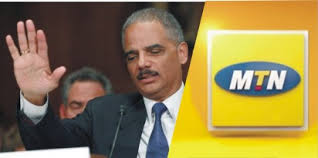
Africa’s largest mobile phone company, MTN, has hired a former United States Attorney-General, Eric Holder, to challenge the $3.9 billion fine imposed on it by the Nigerian Communications Commission (NCC) for failing to disconnect unregistered users.

MTN was handed a $5.2 billion penalty in October 2015, prompting weeks of lobbying that led to a 25 percent reduction to $3.9 billion, a fine imposed by the Nigerian Communications Commission, NCC, for having 5 million unregistered SIMs in its network, which eventually led to another round of SIM cards registration in the country.

Also, a judge in Lagos last month gave MTN until March 18 to reach a settlement on the fine, which equates to more than twice MTN’s annual average capital spending over the past five years.

Report has it that MTN was still not prepared to pay the fine and launched a court challenge in December, saying the NCC had no legal grounds to order the penalty.

No BVN, No Salaries – Rivers State Government Tells Workers

The Rivers State Governor, Nyesom Wike, has said that Civil Servants who do not have bank verification numbers will not be paid their salaries.

The Governor stated this while addressing Civil Servants at the State Secretariat Complex in Port Harcourt.

Wike who noted that the wage bill of the State is enormous promised to check the excesses.

He said, ‘‘I will do everything possible to block every loophole for the development of the State as the amount of money we pay for salaries is so much. Therefore, I have directed the Commissioner of Finance to ensure that anyone without a Bank Verification Number (BVN) is not be paid salary so as to check excess payments”.

The State Chief Executive directed that collection of revenues by individuals should stop as all paper work for payment must get his approval so as to advance the State forward.

The Governor said that there is the need to ascertain the actual number of pensioners as according to him, the State Government allocates N1.4 billion every month for pensions.

Earlier, the Head of Service, Rufus Godwin thanked the Governor for fulfilling his promise of clearing the backlog of unpaid salaries and pension benefits and also for being the only Governor to visit Civil Servants three times within a year.

FG to Save N12billion from Unwanted Overhead Costs

The recently constituted Efficiency Unit in the Federal Ministry of Finance has stated that it aims at saving for the federal government some N12 billion annually by driving efficiency on government procurement processes.

The Head, Efficiency Unit, Patience Oniha, disclosed this in Abuja on Wednesday, February 3,at an interactive session with the press.

Oniha said the N12 billion would be saved when government adopts a procurement regime where it would purchase most of its items in bulk and enjoy some discount from contractors like is been done in the private.

She explained that “the current overhead for the Federal Government is about N400 billion. So if the FG can achieve 5 percent discount on just 60 percent (N240 billion) of that amount in procurement, N12 billion will be saved.

“Government can be a bigger purchaser of items rather than buying items in piece meal,” she said.

Official Launch of MasterCard Wellness Month 2016

Fitness personalities and local media attended the official launch of the MasterCard Wellness Month on 16 January at the Bodyline Wellness Center in Ikoyi, Lagos.  Attendees were treated to fun morning of Yoga, Spinning, Boot Camp, Zumba as well as a healthy breakfast.  The initiative runs until 17 February and is exclusive to MasterCard cardholders in Lagos.  Hosted by Wellness Coach Maje Ayida, the event had a good turnout of personalities including:  Liz Awoliyi (Genevieve Online), Tewa Onsanya (Exquisite Magazine), Ona Nwachukwu (Hello Magazine), Favour Ologu (TW Magazine), Latasha Ngwube (Vanguard Allure), Ifeoma Williams, Mimi Onalaja (ELTv), international top model Victoria Michaels, Bolanle Olukanni, Nicole Chikwe, Lillian Unachukwu, Seun Fadina and SheDams.  MasterCard Wellness Month gives MasterCard cardholders the opportunity to enjoy spa treatments, gym sessions and healthy food and drink options from select and premium merchants across Lagos.  Participants are encouraged to share their experiences on Twitter at @MyKamdora or @MasterCardMEA by using #MasterCardWellnessMonth.

Lillan Unachukwu- Celebrity Stylist & CEO TigerLilly Gym Gear
L-R A.M(Fitness Expert), Nicole Chikwe (Beautypreneur)
L-R Favour Olugu(Editor, TW Magazine), Onah Nwachukwu(Hello Magazine), Bolanle Olukanni, Mimi Onalaja(EbonyLifeTv)
L-R Maje Aiyda, Stella Elele (Team Kamdora), Kamile (MasterCard), Denika Fadina (Sales & Marketing, Kamdora)
L-R Maje Ayida, Kamile Olufowobi
L-R Maje Ayida, Seun Fadina
L-R Tomi Hodonu (GM, Cheki.com.ng), Ijeom Ubosi (CEO, Kontessa), Jika Nwobi
Nicolas Okoye- CEO Annabel
Victoria Micheals- Top International Model

L-R

Nigeria Eyes 100th Position on Ease of Doing Business Index

The Federal Government has said it is making efforts to position the country to scoop the 100th position on the ease of doing business index from the 169th position it occupies now.

The Minister of State for Industry, Trade and Investment, Hajiya Aisha Abubakar, who hosted some foreign investors led by the Chief Executive Officer of Susman and Associates Limited, Shamsudden Usman, in her office in Abuja recently, disclosed that an inter-Ministerial Committee has been set up to achieve the purpose.

The committee, which will kick off meeting soon, is expected to speed up the process of Nigeria climbing 69 steps up the index of global countries where businesses are done with ease.

Hajiya Abubakar also told the visiting investors that the federal government was working on reducing imports and increasing exports to reposition the nation’s economy.

“We are trying to move away from imports and create an environment from within before taking our products outside,” she said.

She said the declining oil price is an opportunity for the country to increase investments in non-oil sectors.

She assured the team that there are increased incentives for investors coming to the country to attract more Foreign Direct Investment (FDI).

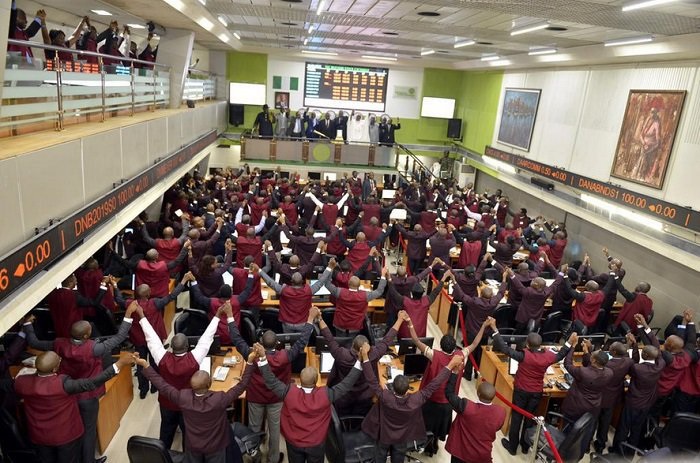
Trading Resumes Downward Trajectory as NSE Index Drops 0.96%

Trading Resumes Downward Trajectory as NSE Index Drops 0.96%

Trading activities on the floor of the Nigerian Stock Exchange,NSE, resumed its movement south on Wednesday, February 3, as the All Share Index lost 0.96% to close at 23,605.89 points, compared with the marginal appreciation of 0.03% recorded on Tuesday, February 2.

Year-to-date (YTD), the NSE ASI depreciated by 17.58%.

Likewise, the Market Capitalization depreciated by 0.96% to close at N8.12trn, compared with the marginal appreciation of 0.03% recorded yesterday to close at N8.20trn.

The depreciation recorded in the share prices of Zenith Bank, GT Bank, Nigerian Breweries, UACN, and Transcorp were mainly responsible for the loss recorded in the value of the Index.

The total value of stocks traded on the floors of The NSE today was N2.91bn, up by 20.75% from N2.41bn traded yesterday. The total volume of stocks traded was 1,315mn in 4,012 deals.

The three most actively traded stocks were: Wema Bank (1,136mn), FBN Holdings (35.58mn) and GT Bank (27.08mn). The trading in Wema Bank shares accounted for 86.44% of the total volume traded today.
The most actively traded sectors were: Financial Services (1,284mn), Conglomerates (13.42mn) and Consumer Goods (8.38mn).

FG Saves N9.4billion in One Month From Petroleum Product Subsidy Removal

Indications have emerged that theFederal Government has saved close to N9.4 billion in January alone, following the discontinuation of the payment of subsidy to oil marketers for the importation of petrol and kerosene.

Data compiled from the Petroleum Products Pricing Regulatory Agency (PPPRA) website showed that the country was saved an average of N5.77 and N6.66 per day on a litre of petrol and kerosene respectively in January.

The PPPRA which is the government agency that regulates the prices of petroleum products in the country had on January 1 revised its pricing template thereby erasing the usual subsidy component to negative subsidy on the products.

The difference between the Retail Price and the EOMP was what the federal government paid as subsidy to oil marketers.

However, the new EOMP is lower than the Retail Price meaning a negative subsidy and that Nigerians are paying extra for the commodities whenever they buy them at both NNPC and non-NNPC run filling stations.

The negative subsidy (the extra amount which would be recovered from marketers), according to explanations by Group General Manager, Corporate Planning and Strategy NNPC, Mr. Bello Rabiu, would be remitted to the Petroleum Support Fund (PSF) in line with the PPPRA guidelines.

Foreign Investments Slid by N2.2trillion in 2015 – NBS

According to a new report released by the National Bureau of Statistics,the total value of capital imported into Nigeria in 2015 plungedby N2.21trn from the value recorded the previous year.

The report showed that a total $9.64 billion (N1.92trn) was imported into Nigeria in 2015 as against $20.75 billion (N4.13trn) that was imported the previous year.

The difference of the values attracted in 2014 and 2015 translated to 53.53 per cent fall in 2015.
The NBS indicated that the data on capital importation used in this report was obtained from the Central Bank of Nigeria (CBN).

Further analysis of the report showed that a total of $1.56 billion was imported in the fourth quarter of last year, translating to a decline of 43.34 per cent from levels recorded in the previous quarter.

The sector that imported the most capital in the fourth quarter of last year was banking, importing $193.49 million and “after being a relatively unimportant sector for the last few years” in terms of capital importation, electrical became the second largest importer of capital.

The NBS attributed the growth in capital imported by electricity to “possibly pointing to increased investments in the sector as a result of the sector’s deregulation in recent years.”

Power Supply Hits Record High of 5074.7 megawatts

The Transmission Company of Nigeria, TCN, has said power supply in the country has hit an all-time high of 5074.7 megawatts (MW), 

The system operator, while announcing this feat in a statement on Wednesday, February 3, stated that the attainment of the highest maximum daily energy wheeled nationwide of 109,372 megawatts hour (MWH) which was attained on Tuesday, 2nd February, 2016.

The previous peak generation was 4,883.9MW achieved on Monday, 23rd November, 2015, while the previous highest maximum daily energy wheeled nationwide was 107,142.32MWH recorded on Tuesday, 26th January, 2016.

Oil Price Plunge: NNPC Unbundles PPMC into Three Firms

The Nigerian National Petroleum Corporation, NNPC, on Wednesday, February 3, announced the unbundling of one of its subsidiaries, the Pipelines and Products Marketing Company (PPMC) into three different companies in order to guarantee energy efficiency and security.

Minister of state for petroleum, Ibe Kachikwu, listed them as Pipelines Company, Products Marketing Company and a storage company.

The minister, who noted that the petroleum industry is currently undergoing fundamental changes in the face of dwindling global crude oil prices, canvassed the support of members of the National Assembly to allow the NNPC solicit for funds from private local and international investors to execute its capital projects.

Kachikwu made the appeal when he received the House of Representatives Committee on Petroleum Downstream at the NNPC Towers in Abuja during their oversight visit to the Corporation.

Also, the Corporation pledged to collaborate with the National Assembly to ensure efficiency and transformation of the downstream sector of the petroleum industry.

He informed the legislators that the NNPC had complied with the federal government’s directive on the Treasury Single Account (TSA) which, according to him, promotes probity and accountability in the day-to-day operations of the Corporation.

Oil Price Leaps To $33 Per Barrel As Russia Ratifies OPEC’s Position

crude oil prices jumped 40 cents to $33.12 per barrel on Wednesday, February 3, overturning earlier losses after fresh comments from Russia about its willingness to talk with the Organisation of the Petroleum Exporting Countries, OPEC, over output cuts.

Russian foreign minister, Sergei Lavrov, said if there is consensus among OPEC and non-OPEC members to meet, “then we will meet”.

This helped push oil price, which had been set for a third day of decline after data on Tuesday showed another big build in U.S. inventories, off the day’s lows.

Brent for April delivery rose 40 cents to $33.12 a barrel, pulling away from a session low of $32.30.

US crude futures rose 46 cents to $30.34, off a session low of $29.40.


Recent Posts