





By Oraye St. Franklyn, LLB, MCPRS.
Few developments have been as controversial as the capture of Venezuelan President Nicolás Maduro at the wake of this new year 2026. The operation that led to his removal and transfer out of the country has been widely described by critics as a kidnapping. It raised immediate and serious questions under international law, particularly the prohibition on the use of force against the sovereignty and political independence of states. Many legal scholars and several governments argue that the action conflicts with the United Nations Charter and long-standing norms governing state conduct.
This controversy cannot be brushed aside. It is not a matter of political taste or ideological alignment. It goes to the core of the legal order that claims to regulate state behaviour.
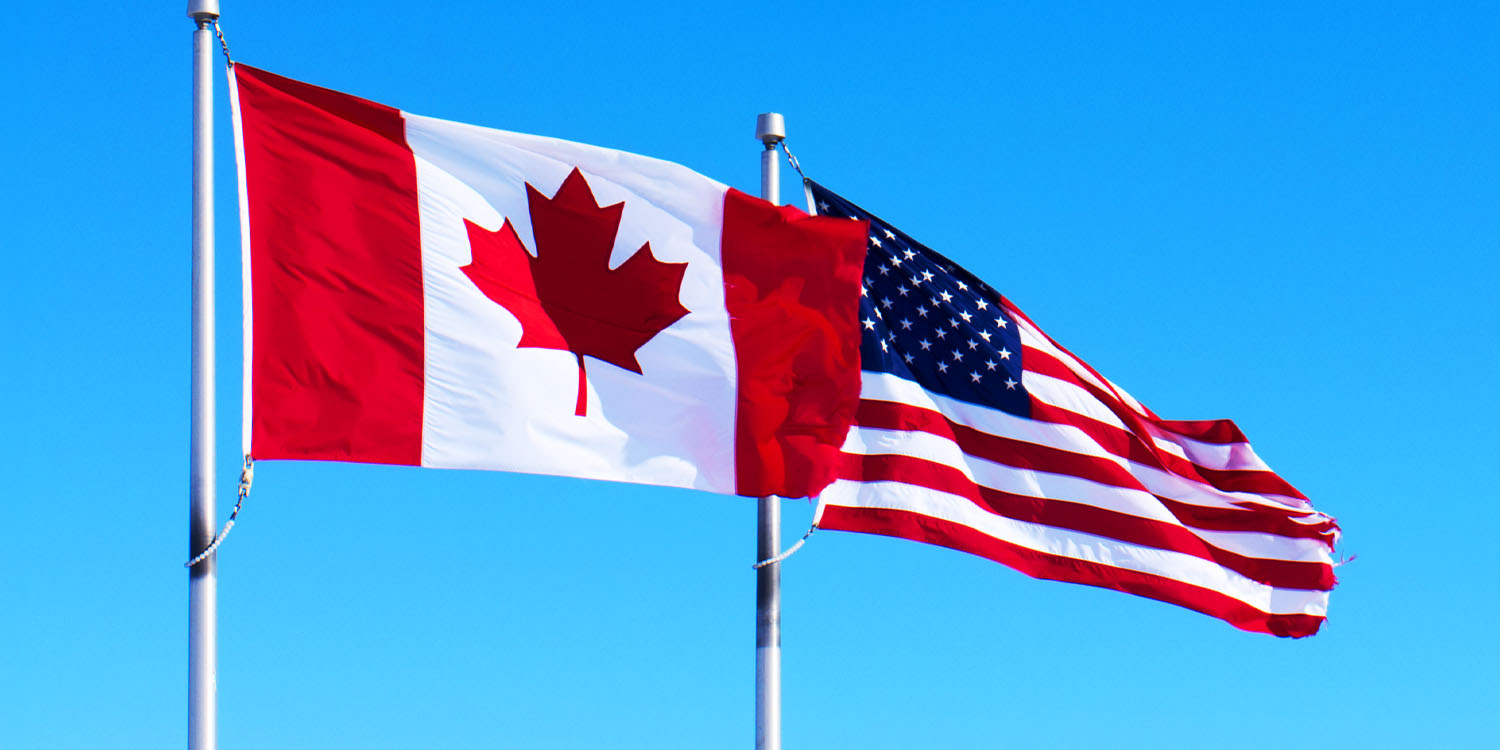
The situation also compels a more personal and immediate question for us in Canada. What really does the U.S. current posture mean for Canada at a moment when its power is increasingly exercised first, and explained later?
Why the United States Intervened in Venezuela
Beyond the legal dispute, the intervention reflects overlapping strategic calculations.
Historically, the United States has asserted a special role in the Western Hemisphere. The Monroe Doctrine framed the region as a space where external powers should not entrench themselves. Over time, that idea hardened into an assumption of primacy. In 2026, that assumption has returned in sharper form, driven less by ideology than by competition.
A central driver of current policy is the determination to curb the growing presence of Russia, Iran, and China in Latin America. Each plays a different role, but together they represent what Washington views as strategic encroachment into its near abroad.
Russia has expanded military cooperation, arms sales, and energy diplomacy with Caracas. Iran has developed security and intelligence ties with governments openly hostile to U.S. influence. China’s role is more economic, but no less consequential. Through large loans, infrastructure projects, technology partnerships, and long-term oil agreements, Beijing has embedded itself deeply in Venezuela’s economy. For U.S. policymakers, Chinese influence over energy flows and critical infrastructure is not seen as neutral commerce. It is seen as leverage with long horizons.
From Washington’s perspective, allowing Venezuela to function as a hub for Russian, Iranian, and Chinese influence is unacceptable. Critics argue that this framing transforms legitimate strategic concern into a justification for intervention that sidelines sovereignty and law. Both claims can be true at the same time.
Why Cuba and Colombia Remain Pressure Points
Cuba and Colombia must be understood through the same lens, though they occupy different positions.
Cuba’s economic fragility and reliance on external partners make it sensitive to U.S. pressure. Its long-standing ties with Russia, growing engagement with China in telecommunications and infrastructure, and limited cooperation with Iran reinforce Washington’s view of Havana as a strategic outpost for rival powers.
Colombia, by contrast, has been a close U.S. partner for decades. Yet even allies are not exempt when alignment appears uncertain. Policy divergence, particularly on counternarcotics, has been met with public pressure and the implicit threat of consequences. The message is consistent. Drift will be corrected.
Canada and the Expansion of U.S. Leverage
It would be a mistake for Canadians to assume this posture stops at the Caribbean or the Andes.
has repeatedly framed Canada not as an equal partner but as a country whose prosperity depends on continued access to the U.S. market. He openly suggested that economic pressure could be used to force political outcomes, including remarks about Canada becoming a “51st state.” Whether framed as provocation or bravado, the logic was unmistakable.
Those remarks were backed by action. Steel and aluminum tariffs were imposed on Canada under national security authorities, despite Canada being a NATO ally. Broad-based tariffs on automobiles were threatened. NAFTA was renegotiated under the explicit threat of U.S. withdrawal, producing an agreement shaped by asymmetrical leverage. At multiple points, access to the U.S. market was framed as conditional, and economic pain as an acceptable tool for extracting compliance.
For Canada, the risk is not annexation by force. It is erosion by pressure. Repeated economic shocks narrow policy choices. Over time, governments begin to anticipate Washington’s preferences before asserting their own. Sovereignty fades not through conquest, but through constraint.
Greenland and the Logic of Acquisition
The same worldview has appeared elsewhere. Trump’s repeated interest in acquiring Greenland, and his refusal to rule out purchase or the use of force, was initially dismissed as implausible. Yet the reasoning was explicit. Greenland’s resources, shipping lanes, and strategic Arctic position were framed as assets to be secured.
The significance lies less in the outcome than in the normalization of the idea. Territory, resources, and sovereignty become negotiable when power allows negotiation, and coercion remains an option when it does not.
Canada’s Position
The primary challenge facing Canada is not military in nature, but economic and structural. Persistent dependence on the United States has created strategic leverage that constrains Canada’s policy autonomy. Long-standing economic integration with the U.S., while delivering clear benefits, has also introduced systemic vulnerabilities: as reliance became more concentrated, Canada’s capacity to respond independently to external shocks or policy divergence significantly diminished.
In the face of the growing aggression, Canada’s strategic response should be grounded in realism rather than confrontation or complacency. Fair enough
is providing some level of stable leadership in a new direction to mitigate our vulnerability. This reflects prudent risk management and should be encouraged. Canada should continue close cooperation with the United States where interests align, while systematically strengthening domestic capacity and diversification, as is now the case, to ensure our resilience where interests may diverge. Our long-term stability will depend on preparing for variability within the relationship, rather than assuming continuity. That era is gone.
Final Words
The U.S. intervention in Venezuela and its broader posture toward Cuba and Colombia arise from a convergence of hemispheric doctrine, energy interests, and renewed great-power competition. The removal of President Maduro has exposed legal questions that remain unresolved and deeply troubling.
Here lies the central paradox. The international legal order raises objections to such actions, yet lacks the capacity to restrain them. The United States does not act because the law permits it. It acts because its strength allows it. Legal challenges are acknowledged, debated, and absorbed by a system where enforcement depends on power. Dominance dulls consequence.
Once that reality is accepted, an uncomfortable question follows. If the strongest state can press its will despite serious legal objections and suffer little practical cost, on what persuasive basis is Russia expected to retreat from its pursuit of dominance in Ukraine. This is not an argument for equivalence or excuse. It is an argument about precedent. When legality becomes optional for the powerful, restraint becomes irrational for their rivals.
For Canada, the task is to provide balance. A strong relationship with the United States remains indispensable. So does an independent economic future grounded in resilience and diversification. In a world where power increasingly suppresses the consequences of legal breach, survival belongs to those who reduce exposure while continuing, patiently and consistently, to insist that law matters most when it is inconvenient to the strong.
Oraye St. Franklyn is a public affairs analyst based in Canada.