



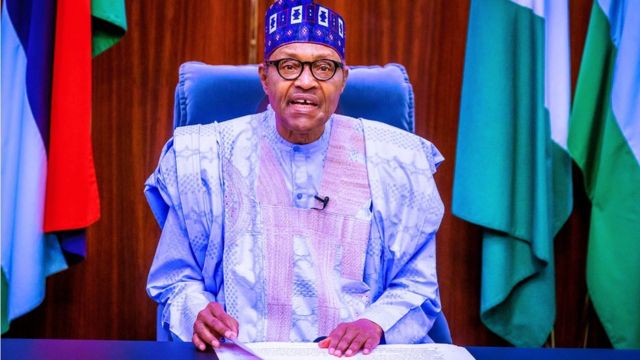
When the Federal Government declared a national holiday to mourn the death of former President Muhammadu Buhari, reactions were mixed some filled with reverence, others with skepticism. But beyond political affiliations and historical biases, the decision to mark his passing with a work-free day demands deeper reflection. It was not merely about the man but the memory, the moment, and the meaning of legacy in Nigeria’s evolving story.
A Symbol of Military and Civilian Transition
Muhammadu Buhari stood at the unique intersection of Nigeria’s military past and democratic aspirations. As a military Head of State from 1983 to 1985, and later as a democratically elected President from 2015 to 2023, Buhari’s political journey mirrored the country’s own transition often halting, always complex from autocracy to democracy. The national holiday recognizes that rare arc: a man who once seized power by force later submitted himself to the will of the electorate, not once but twice.
His life, therefore, is not just a personal journey,it is a historical bookmark. A day to pause and remember is, in many ways, a way to remind ourselves of how far Nigeria has come and how far it still has to go.
The Anti-Corruption Crusader
Perhaps the most enduring image of Buhari’s presidency was his relentless campaign against corruption. From the “War Against Indiscipline” in his military days to the establishment of tighter anti-graft frameworks in his civilian tenure, Buhari positioned himself as a moral compass in a system riddled with rot.
Critics may argue that his anti-corruption drive was selective or lacked long-term impact. But even in its flaws, it set a precedent. It rekindled national conversations around accountability, especially among the youth, and revived the idea, however fleeting that integrity could still matter in public office.
Infrastructure and Security Strides
During his eight years in Aso Rock, Buhari’s government pursued massive infrastructure investments; railways, roads, and agricultural revival schemes. The Second Niger Bridge, long delayed by successive governments, became a reality under his watch. His administration also expanded social investment programmes to address poverty and youth unemployment.
On security, though his administration struggled with rising banditry and insurgency, he inherited a fragmented military landscape and did manage to reclaim swathes of territory from Boko Haram in the early years of his presidency. For many Nigerians, his efforts, however imperfect offered a sense of renewed national direction.
A Man of Discipline
Buhari was not a charismatic orator. He rarely gave in to theatrics. His stoicism, at times seen as aloofness, defined his leadership style. But within that quiet persona lay a belief in structure, discipline, and national order.
His critics point to lapses,long medical trips abroad, opaque economic policies, and a seeming disconnect from public outcry during national crises. These are not easily forgotten, and rightly so. But even those failings form part of the full picture, necessary for any honest national memory.
Why a National Holiday Was Justified
A public holiday is not merely about celebration; it’s about collective memory. The decision to pause economic activity in honour of Muhammadu Buhari was a call to reflect not just on his life, but on the Nigeria he sought to shape.
In a nation often quick to forget, pausing to remember a leader’s death warts and all is a democratic act. It invites dialogue. It permits critique. And it encourages a more rounded, nuanced view of history.
Buhari was not a perfect man, but he was a consequential one. His death is a chapter ending in Nigeria’s post-independence narrative. A national holiday was not just deserved, it was necessary.