




KEY POINTS
- Nigerian stocks recovered on Friday after falling for two consecutive trading sessions.
- The NGX All-Share Index rose 0.92 per cent, adding ₦1.47 trillion to the total value of listed shares.
- Dangote Cement gained 10 per cent, while First Holdco rose 10 per cent and Fidelity Bank gained 9.09 per cent.
- Investors traded 611.68 million shares worth ₦23.14 billion, with more shares changing hands than on Thursday.
- The naira weakened against the dollar, while Brent crude rose to $116.02 per barrel.
MAIN STORY
The Nigerian stock market recovered on Friday, October 23, as investors bought shares in Dangote Cement and several banks, helping to increase the total value of listed companies by ₦1.47 trillion.
The Nigerian Exchange’s All-Share Index, which tracks the overall performance of listed stocks, rose by 0.92 per cent to close at 247,222.27 points. This ended two consecutive days of losses.
The increase raised the total market value of listed shares to approximately ₦160.51 trillion. Investors who bought and held stocks at the beginning of the year would have seen the market’s overall return reach 58.87 per cent by Friday.
According to market analysts, Friday’s gain recovered more than twice the points the market had lost over the previous two trading sessions. However, the market remained 2.14 per cent below its closing level on September 28.
Dangote Cement led the major gainers, with its share price rising 10 per cent. First Holdco also gained 10 per cent, while Fidelity Bank rose 9.09 per cent and Wema Bank advanced 3.45 per cent.
These gains helped lift the industrial stocks index by 3.68 per cent and the banking stocks index by 2.57 per cent.
However, the recovery was not shared by the entire market. Twenty-five stocks fell in value, compared with 23 that gained. This means that although the market’s overall value increased, more companies recorded losses than gains.
Trading activity also increased. Investors bought and sold 611.68 million shares worth ₦23.14 billion in 33,585 transactions. The number of shares traded rose by 69.56 per cent from the previous session, while the total value of transactions increased by 13.88 per cent.
Livestock recorded the highest number of shares traded, with 46.84 million units. Aradel led in transaction value, with shares worth ₦4.20 billion changing hands. Stanbic IBTC and Dangote Cement followed.
Despite the increase in the number of shares traded, the average value of each share traded fell to about ₦37.83 from ₦56.33 on Thursday. This suggests that much of the increase in trading activity involved lower-priced stocks.
Outside the main stock market, the NASD OTC Exchange, where investors trade shares of companies not listed on the main NGX market, recorded a slight decline of 0.01 per cent. Trading amounted to 342,930 units worth ₦1.08 million across nine transactions.
The naira also weakened against the dollar. At the Nigerian Foreign Exchange Market, the dollar rose from ₦1,344.40 on Thursday to ₦1,361.84 on Friday. At bureau de change operators, the average dollar rate increased from ₦1,370 to ₦1,375.
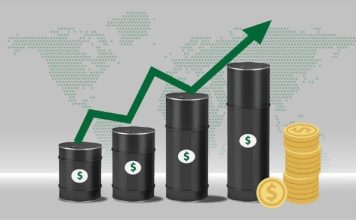
Meanwhile, international oil prices climbed as tensions in the Middle East raised concerns about possible disruptions to supplies. Brent crude rose 2.52 per cent to $116.02 per barrel, while US benchmark West Texas Intermediate increased 3.04 per cent to $102.49.
Gold fell 1.34 per cent to $3,990.47 per ounce, while silver declined 3.39 per cent to $53.08. Despite the increase in crude prices, the NGX Oil and Gas Index fell 2.51 per cent.
On corporate disclosures, First Holdco, Stanbic IBTC Holdings, Unilever Nigeria and Transcorp Power submitted their third-quarter 2026 financial statements to the NGX. May and Baker, Champion Breweries and Japaul Gold and Ventures also filed notices concerning board meetings.
THE ISSUES
Friday’s recovery shows that investors were willing to buy selected stocks after two days of losses. However, the fact that more stocks fell than rose suggests that confidence had not returned across the market.
The performance of Dangote Cement and the banks was particularly important to the rebound. If these major stocks continue to rise, they could support the overall market. But if their gains fade while other companies continue to lose value, the recovery could prove short-lived.
The increase in trading activity also needs context. More shares were exchanged, but the average value of each share traded declined. This means the higher volume did not represent an equally large increase in the money investors put into the market.
The weaker naira presents another concern for Nigerian businesses. Companies that depend on imported raw materials, machinery or other dollar-priced goods may face higher costs when the dollar becomes more expensive. The impact will depend on each company’s foreign currency needs and ability to pass additional costs on to customers.
Higher oil prices could increase Nigeria’s export earnings, provided the country maintains sufficient production and sales. But the fall in oil and gas stocks on Friday shows that higher global crude prices do not automatically translate into gains for companies in the sector.
The third-quarter financial results could also influence investor decisions by providing more information about companies’ earnings, costs and business performance.
WHAT’S NEXT
Investors will be watching whether Dangote Cement and banking stocks can sustain their gains and whether more companies begin to record share price increases.
The newly submitted third-quarter financial statements could influence which stocks investors choose to buy or sell as they assess companies’ financial performance.
Oil prices, movements in the naira and developments in the Middle East will also remain important to Nigeria’s economy and listed businesses.
BOTTOM LINE
The Nigerian stock market recovered on Friday, adding ₦1.47 trillion in value as Dangote Cement and banking stocks led the gains. However, more stocks declined than advanced, suggesting that the recovery was concentrated in selected companies rather than spread across the market.
Source: Proshare market report