









KEY POINTS
- NASRDA and international partners are advocating for reliable irrigation cropland data using space technology to address longstanding data gaps in Nigeria’s agricultural sector.
- The Irrigation Earth Observation (IrrEO) project, a four-year collaboration with the University of Delaware and University of Manchester, aims to generate high-resolution satellite-based irrigation maps.
- Experts noted that Nigeria has a potential irrigation area of three million hectares, but currently utilizes less than 10 per cent of that capacity.
- The project will promote knowledge exchange with Kenya and Ethiopia while working to deliver an operational irrigation monitoring platform for government decision-making.
MAIN STORY
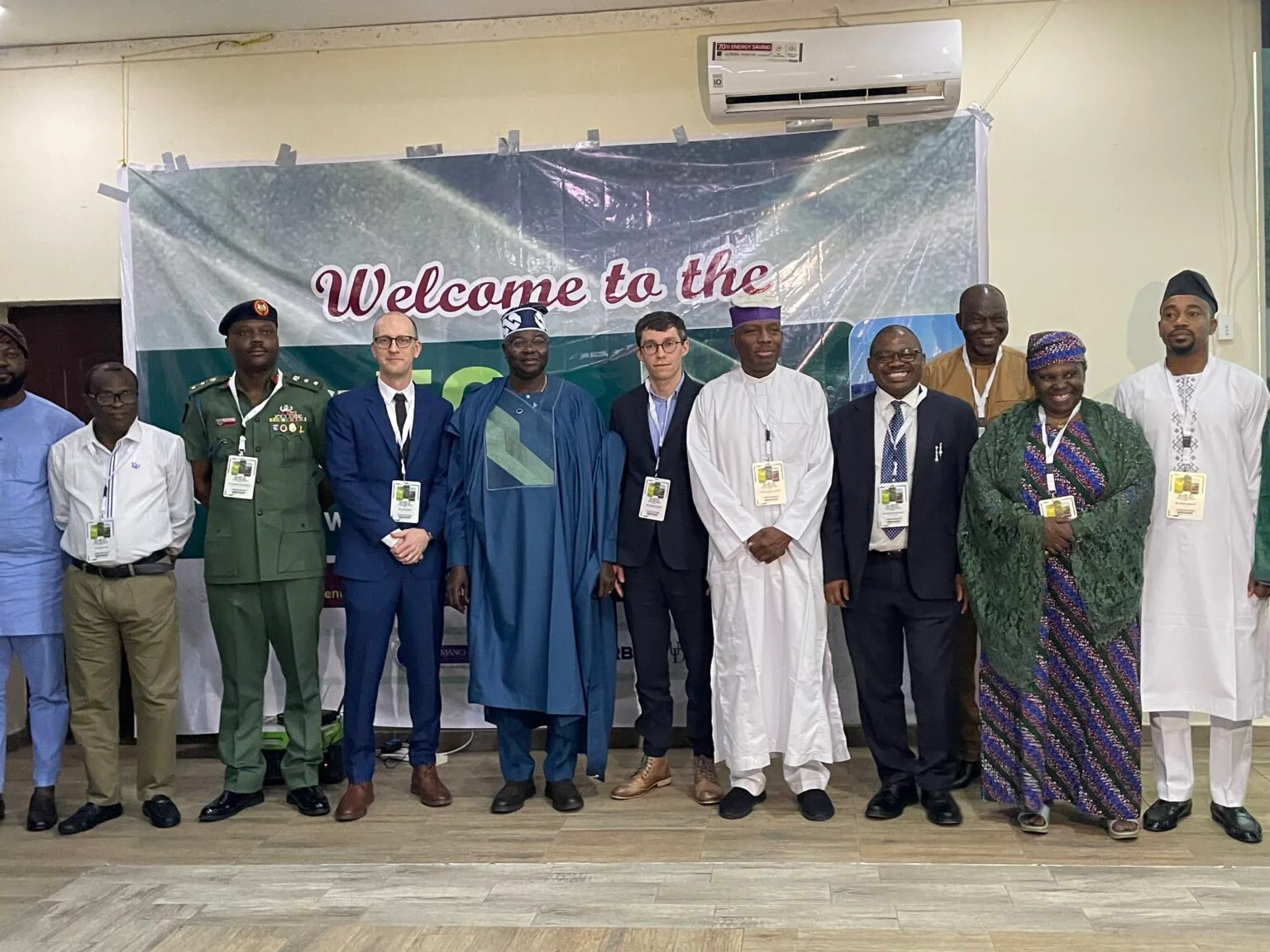
The National Space Research and Development Agency (NASRDA) has launched a strategic initiative to harness Earth observation technology for agricultural planning. At a three-day workshop in Abuja titled “Advancing Satellite-Based Tools to Map Irrigated Croplands in Nigeria,” NASRDA Director-General Dr. Matthew Adepoju emphasized that outdated irrigation data remains a global challenge that space technology is uniquely positioned to solve.
The IrrEO project is designed to move beyond theoretical development into practical application by integrating satellite-based tools into government ministries. According to project leads, Nigeria’s strategic importance and growing population make the expansion of agricultural productivity a national priority. By combining irrigated dry-season farming with traditional rain-fed agriculture, the initiative seeks to provide the evidence-based data necessary to significantly increase national food production.
Over the next four years, the project will focus on identifying optimal planting periods, monitoring crop production, and promoting efficient water use across the country. The first two years will involve extensive nationwide fieldwork, with tangible outputs expected by the third year. This data-driven approach is expected to enhance inter-agency collaboration between the Ministries of Agriculture, Water Resources, and Livestock Development to ensure long-term sustainability.
WHAT’S BEING SAID
- “The goal of this project is to harness the potential of earth observation to provide reliable, high-resolution data at national scale that can be regularly updated to support decision-making,” stated Dr. Matthew Adepoju, Director-General of NASRDA.
- On Nigeria’s untapped potential: “Nigeria had irrigation potential of about three million hectares but was currently utilising less than 10 per cent,” noted Dr. Seun Adeluyi, Country Lead for the IrrEO project.
- Regarding the regional impact: “By gaining a better understanding of how irrigation is developing, we can tackle food security and livelihood challenges,” said Dr. Timothy Foster of the University of Manchester.
WHAT’S NEXT
- The project will undergo two years of extensive nationwide fieldwork to validate satellite findings and ensure the accuracy of the irrigation maps.
- NASRDA will work toward making many of the technological products freely available to stakeholders to support widespread agricultural planning.
- By the end of the four-year period, an operational irrigation monitoring platform will be handed over to government institutions for sustainable food security management.
BOTTOM LINE
The Bottom Line is that Nigeria is turning to the stars to solve challenges on the ground. NASRDA insists that by closing the data gap through satellite mapping, the nation can finally unlock the 90 per cent of its irrigation potential that currently lies dormant, securing food for a growing population.



 has launched a strategic initiative to harness Earth observation technology for agricultural planning. At a three-day workshop in Abuja titled “Advancing Satellite-Based Tools to Map Irrigated Croplands in Nigeria,” NASRDA Director-General Dr. Matthew Adepoju emphasized that outdated irrigation data remains a global challenge that space technology is uniquely positioned to solve.)