






With the 2025 Africa Cup of Nations drawing closer, Morocco is finalizing a series of stadiums that many observers believe will elevate the tournament’s standards to new heights.
Scheduled to run from 21 December 2025 to 18 January 2026, the continental showpiece is already building anticipation as national team rosters emerge. Attention has now turned to Morocco’s host venues, with stadiums spread across five major cities — each blending modern architecture with the country’s rich cultural identity. CAF has confirmed the venues and full match schedule, offering fans a detailed look at what awaits.
Rabat: The Heart of AFCON 2025
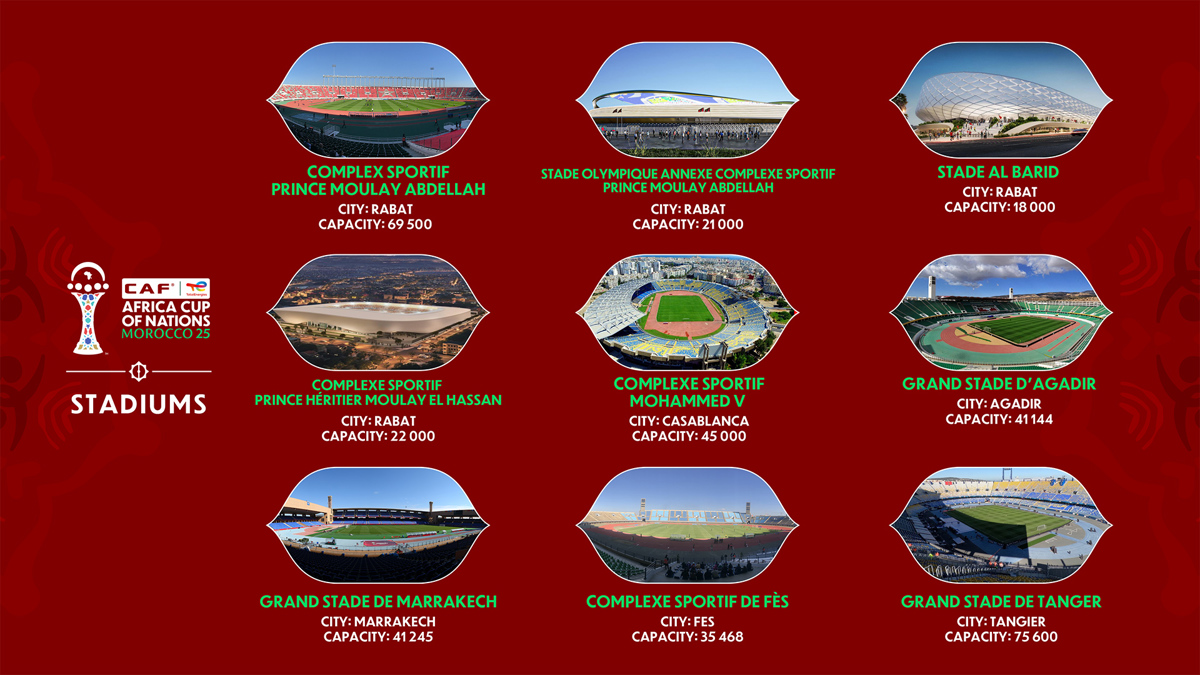
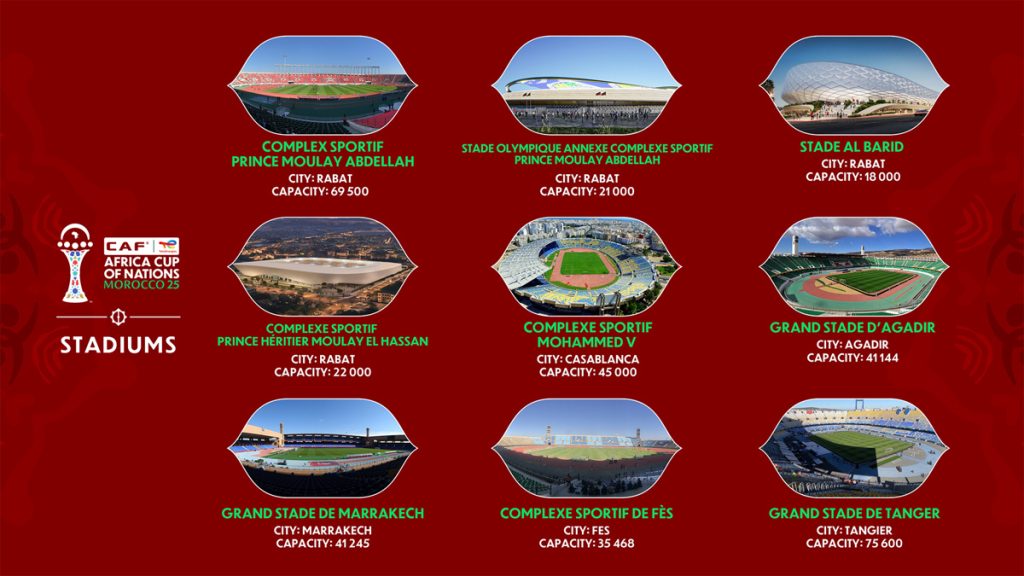
Rabat is set to host a substantial portion of the competition, led by the recently revamped Complexe Sportif Prince Moulay Abdellah. The 69,500-seat stadium reopened on September 5, 2025, following a significant renovation. Located just minutes from the city center, it has a strong pedigree, having hosted AFCON 1988 and the FIFA Club World Cup.
It will stage the opening match between Morocco and Comoros on December 21 and is also slated to host multiple knockout fixtures, including the semi-final and the final on January 18.
Also in Rabat is the newly built Tade Annexe Olympique, a 21,000-capacity arena completed in an impressive nine months. Featuring a natural-grass playing surface, world-class lighting systems and dedicated cryotherapy recovery rooms, it stands among the country’s most advanced sporting complexes. Teams such as Tunisia, Uganda, Benin and Botswana will contest group-level matches at this venue.
Another standout facility is the Complexe Sportif Prince Héritier Moulay El Hassan, built on the historic FUS Rabat grounds. Showcasing Berber-inspired architectural elements, the stadium will host Group E matches — including Algeria’s games — and a Round of 16 encounter.
Rabat’s stadium lineup is completed by Stade El Barid, located in the Agdal district. Known for its excellent sightlines and compact 18,000-seat design, it will welcome DR Congo, Benin, Uganda, Tanzania and Botswana for group-stage fixtures, in addition to hosting a Round of 16 match.
Casablanca: A Historic Football Fortress
Casablanca contributes the celebrated Stade Mohammed V, a stadium originally opened in 1955 and regarded as one of Africa’s most atmospheric footballing cathedrals. With its 67,000-seat capacity, the venue will host key group matches featuring Mali, Zambia, Burkina Faso and Sudan, as well as the third-place game scheduled for January 17.
Agadir, Fes, Marrakech and Tanger Gear Up for Packed AFCON Nights
On Morocco’s Atlantic coastline, the Grand Stade d’Agadir will host several high-profile encounters, including Egypt’s matches against Zimbabwe, South Africa and Angola. The stadium is also set to stage a quarter-final fixture on January 10.
Fes will play a central role in Nigeria’s Group C campaign, with the Complexe Sportif de Fès hosting all three group matches for the Super Eagles. Nigeria will begin their journey against Tanzania on December 23 before taking on Tunisia and Uganda at the same venue.
Further south, the Grand Stade de Marrakech — a 45,240-seater equipped with advanced media and medical facilities — will host matches involving South Africa, Côte d’Ivoire, Mozambique and Angola, plus a Round of 16 duel.
To the north, the Grand Stade de Tanger, named after famed explorer Ibn Battuta, stands as one of Morocco’s most imposing arenas. With a seating capacity of 68,000, it will host all Group D games — including Senegal’s tournament openers — and a knockout-stage matchup.