







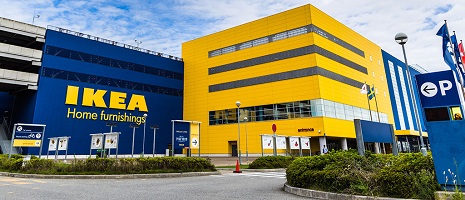
Furniture giant IKEA has announced it will close seven of its large physical stores in mainland China starting February 2, 2026. The move marks a significant pivot in the retailer’s strategy for the world’s second-largest economy, moving away from massive suburban “blue-box” warehouses toward more agile, smaller-format outlets and a strengthened digital presence.
The closures, announced via the company’s official WeChat account on Wednesday, January 7, affect key locations including Shanghai Baoshan, Guangzhou Panyu, and Tianjin Zhongbei, as well as stores in the second-tier cities of Nantong, Xuzhou, Ningbo, and Harbin.
The restructuring comes as the Chinese retail landscape continues to grapple with muted consumer sentiment. A prolonged property crisis, concerns over job security, and stagnant wages have significantly dampened spending on home furnishings.
While China currently accounts for roughly 3.5% of IKEA’s global sales, the company is seeing a clear shift in how its customers shop. To adapt, IKEA is moving from “scale expansion to precise cultivation,” focusing resources on key urban hubs like Beijing and Shenzhen while shuttering underperforming large-scale sites.
Despite the closures, IKEA remains committed to the Chinese market, with plans to open more than ten smaller-format stores over the next two years. Upcoming openings include a new store in Dongguan slated for February 2026 and a debut in Tongzhou, Beijing, in April 2026. These smaller outlets are designed to be more accessible to urban dwellers and act as pick-up points for the brand’s rapidly growing e-commerce channels.
Digital growth is a cornerstone of this new strategy. Following the launch of a flagship store on JD.com in August 2025, IKEA has integrated its logistics with JD’s nationwide network, enabling faster delivery even in regions without a physical store presence.
By leveraging third-party platforms alongside its own app and WeChat mini-programs, IKEA aims to reach over one billion potential consumers in China, ensuring that its products remain accessible despite a shrinking physical footprint.