








KEY POINTS
- FOU officers trained on reputational culture and stakeholder relationship management.
- Customs Comptroller stresses public trust as agency’s most valuable asset.
- Continuous training and mentorship programmes to strengthen professionalism.
MAIN STORY
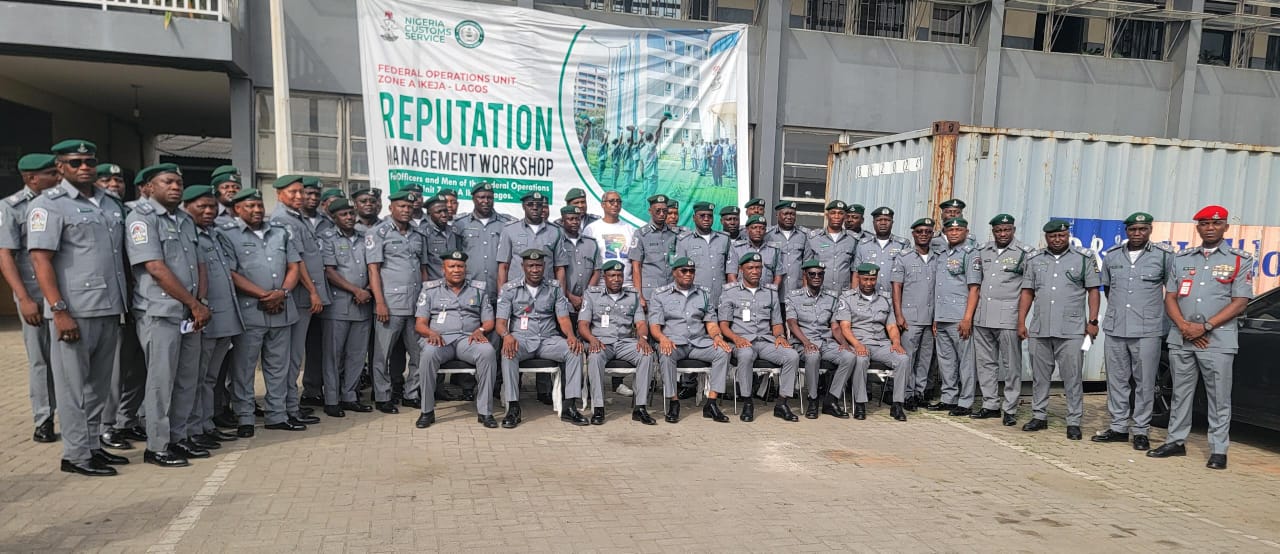
The Federal Operations Unit (FOU) of the Nigeria Customs Service has organised a reputation management workshop on Tuesday, 24th February,2025, aimed at strengthening professionalism, stakeholder relations and public trust among officers.
Speaking at the Digital One workshop on reputational culture, the Customs Area Controller, Comptroller Mohammed Shuaibu Aliyu, described reputation as the foundation of institutional integrity and operational success in modern public service.
Aliyu noted that in today’s fast-paced digital era, where information spreads rapidly across social media and public platforms, maintaining a positive institutional image has become critical to effective service delivery.
“Public trust stands as our most precious asset. Reputation is far more than a personal virtue; it forms the bedrock of our institution’s integrity, effectiveness and long-term success,” he said.
He explained that officers, by virtue of their duties in enforcing trade laws, combating smuggling and facilitating legitimate trade, operate under intense public scrutiny and must therefore demonstrate professionalism at all times.
The comptroller warned that a single act of misconduct, poor stakeholder engagement or insensitive public communication could erode years of institutional goodwill, while consistent transparency and responsiveness would strengthen public confidence.
THE ISSUES
Aliyu emphasised that Customs officers operate in the public space and are accountable to Nigerians whose economic interests they are mandated to protect.
He stressed that a damaged institutional reputation could undermine operational effectiveness, invite regulatory challenges and weaken public confidence in the service.
WHAT’S BEING SAID
The controller noted that the service has recorded significant improvements in its integrity ratings, citing recognition from global transparency assessments, including those linked to Transparency International.
According to him, sustaining such progress requires continuous training, ethical conduct and strong stakeholder engagement.
He added that the service already operates a mentorship-based counselling mechanism at command level, where senior officers guide junior personnel on professional conduct.
Aliyu also assured that reputation management training would be sustained as part of ongoing capacity-building efforts across commands.
WHAT’S NEXT
He urged participants to actively engage in the workshop, apply lessons learned and serve as ambassadors of trust within and outside the service.
BOTTOM LINE
The workshop reflects the Nigeria Customs Service’s renewed focus on strengthening professionalism, improving public perception and institutionalising ethical conduct as core pillars of effective border and trade enforcement.






 of the Nigeria Customs Service has organised a reputation management workshop aimed ...)