







KEY POINTS
- Federal Government increases 2026 borrowing plan from N17.89trn to N29.20trn
- Fiscal deficit rises sharply to N31.46trn amid higher spending projections
- Debt servicing cost hits N15.81trn, intensifying fiscal pressure
MAIN STORY
The Federal Government has raised its borrowing plan for the 2026 fiscal year to N29.20 trillion, reflecting a significant increase in the country’s budget deficit and overall expenditure framework.
This is contained in the 2026 Appropriation Bill approved by the National Assembly and detailed in the House of Representatives’ Order Paper dated March 31, 2026. The revised borrowing figure marks an increase of N11.31 trillion from the earlier projection of N17.89 trillion outlined in the 2026 Abridged Budget Call Circular issued in December 2025.
The updated fiscal framework shows that the deficit has expanded to N31.46 trillion, driven by a projected total expenditure of N68.32 trillion against expected revenue of N36.87 trillion.
To bridge this gap, the government is relying heavily on debt financing, with borrowing accounting for the largest share of deficit funding. Other financing sources remain minimal, including N189.16 billion expected from privatisation and asset sales, and N2.05 trillion from multilateral and bilateral project-tied loans.
Although revenue projections have improved, largely due to anticipated increases in federation revenues, independent income, and earnings from government-owned enterprises, they continue to lag behind the pace of expenditure growth.
A breakdown of projected revenue shows that N25.92 trillion is expected from federation revenues, N4.31 trillion from independent sources, and N5.85 trillion from government enterprises. Additional inflows include N1.37 trillion in grants and N300 billion from special funds.
On the expenditure side, capital spending is projected at N32.29 trillion, indicating a strong focus on infrastructure and development projects. Recurrent non-debt expenditure is estimated at N15.43 trillion, while statutory transfers are expected to reach N4.80 trillion.
Debt servicing remains a major fiscal burden, with total debt service projected at N15.81 trillion. Of this amount, domestic debt servicing accounts for N10.16 trillion, while foreign debt obligations stand at N5.36 trillion.
THE ISSUES
The widening fiscal deficit raises concerns about Nigeria’s growing dependence on borrowing to finance public expenditure. Analysts warn that the rising debt profile and high debt servicing costs could constrain fiscal sustainability and limit funds available for critical sectors.
Additionally, the imbalance between revenue growth and expenditure expansion underscores persistent structural challenges in revenue generation.
WHAT’S BEING SAID
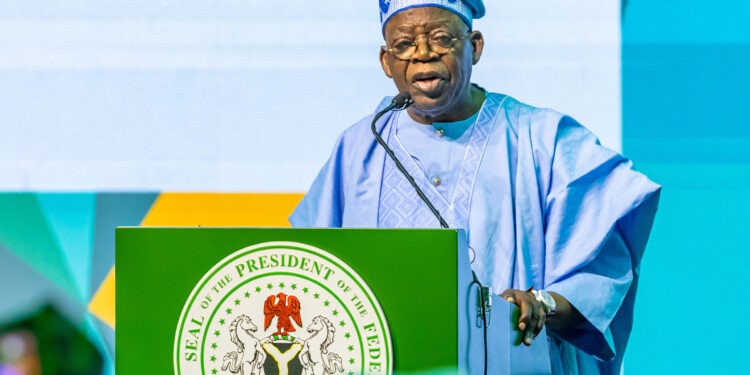
President Bola Ahmed Tinubu had earlier sought legislative approval to increase the 2026 budget by N9 trillion, raising it from N58.4 trillion to N67.4 trillion. The request was conveyed to Senate President Godswill Akpabio during plenary.
Lawmakers, in defending the revised framework, pointed to revenue-enhancing measures, including a $10 per barrel increase in the oil benchmark, expected to generate about N2.592 trillion.
They also highlighted improved contributions from the telecommunications sector, projecting that MTN Nigeria could remit N724 billion in company income tax, while Airtel Nigeria is expected to contribute N150 billion in 2026.
Despite these measures, the National Assembly approved an additional N6.163 trillion in external borrowing, maintaining that Nigeria’s debt level remains within manageable limits.
WHAT’S NEXT
Attention is expected to shift to the implementation of the 2026 budget, particularly the government’s ability to meet its revenue targets and manage rising debt obligations.
Economic stakeholders will also closely monitor global oil prices, tax reforms, and non-oil revenue performance, which are critical to reducing borrowing pressures.
BOTTOM LINE
Nigeria’s 2026 fiscal outlook reflects a growing reliance on borrowing amid expanding expenditure needs, raising fresh concerns about debt sustainability despite efforts to boost revenue.