



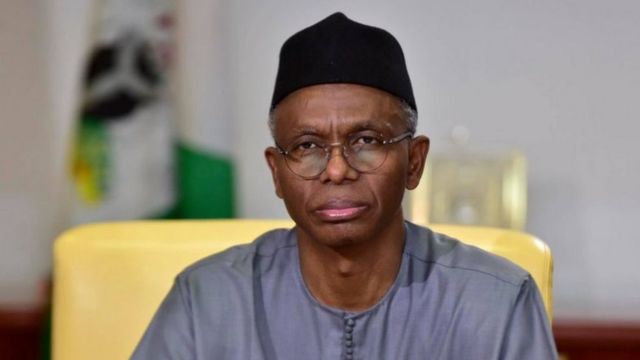
The Department of State Services has scheduled February 25 for the arraignment of former Kaduna State Governor, Nasir El-Rufai, on allegations bordering on cybercrime and actions deemed injurious to national security.
The matter is billed to be heard before Justice Joyce Abdulmalik of the Federal High Court in Abuja, following its reassignment by the Chief Judge of the court, John Tsoho.
Court documents indicate that the DSS filed a three-count criminal charge against the former governor, accusing him of unlawful interception of the telephone communications of the National Security Adviser (NSA), Nuhu Ribadu.
The charge, marked FHC/ABJ/CR/99/2026, was instituted at the Federal High Court in Abuja. Prosecutors allege that El-Rufai’s actions contravened provisions of the Cybercrimes (Prohibition, Prevention, etc.) Amendment Act, 2024, as well as the Nigerian Communications Act, 2003.
Details of the Charges
In the first count, the DSS alleged that on February 13, during a live appearance on ARISE Television’s Prime Time programme in Abuja, El-Rufai admitted to unlawfully intercepting the telephone communications of the NSA in collaboration with unnamed associates.
The prosecution contends that the alleged act violates Section 12(1) of the Cybercrimes (Prohibition, Prevention, etc.) Amendment Act, 2024, which criminalises unlawful interception of electronic communications.
The second count asserts that during the same television interview, the former governor acknowledged having knowledge of an individual who carried out the alleged interception but failed to notify appropriate security authorities. The DSS argues that this omission constitutes an offence under Section 27(b) of the amended Cybercrimes Act.
The third charge alleges that El-Rufai and other individuals currently at large deployed technical devices or systems within Abuja in 2026 to unlawfully intercept the NSA’s communications. According to the prosecution, the alleged actions compromised public safety, threatened national security, and generated reasonable apprehension among citizens.
The DSS maintains that the conduct violates Section 131(2) of the Nigerian Communications Act, 2003, which prohibits unauthorised interference with telecommunications infrastructure.
Background to the Investigation
The charges stem from statements reportedly made by El-Rufai during a live television interview in which he claimed to have overheard a directive by the NSA instructing security personnel to effect his arrest.
The former governor linked the alleged directive to an attempted arrest at the Nnamdi Azikiwe International Airport on February 12, shortly after he returned from Cairo, Egypt. The developments surrounding the cybercrime allegations come amid parallel legal and investigative proceedings involving multiple anti-graft agencies.
Earlier in the week, the Economic and Financial Crimes Commission detained El-Rufai over separate allegations relating to corruption. He was subsequently granted administrative bail at approximately 8 p.m. on Wednesday.
However, shortly after his release, he was reportedly taken into custody by the Independent Corrupt Practices and Other Related Offences Commission in connection with ongoing investigations.
Confirming the development, ICPC spokesperson John Odey stated in a message circulated to journalists that the former governor remains in the commission’s custody as inquiries continue.
The February 25 arraignment is expected to mark the commencement of formal judicial proceedings in the cybercrime and national security matter before the Federal High Court in Abuja.