










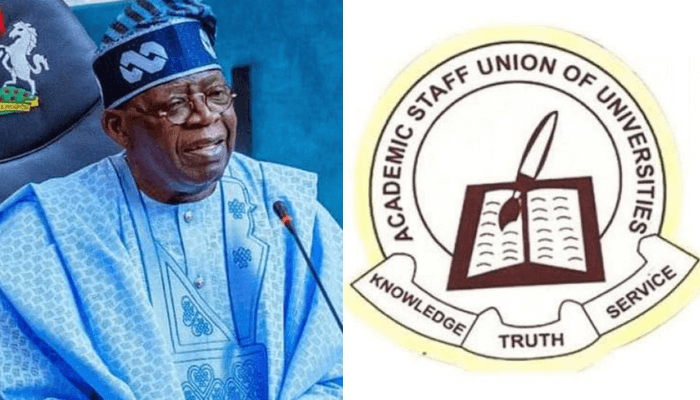
The landmark 2025 agreement between the Federal Government and the Academic Staff Union of Universities (ASUU) has ignited a high-stakes debate over the future of Nigeria’s pension landscape. At the heart of the friction is a provision granting professors the right to retire at age 70 with a pension equivalent to 100% of their final salary.
While the National Pension Commission (PenCom) maintains that the Contributory Pension Scheme (CPS) remains the primary vehicle, financial critics warn that the government is effectively reintroducing “Defined Benefit” (DB) obligations—a system Nigeria abandoned in 2004 due to its tendency to create massive, unfunded liabilities.
Financial analyst Kalu Aja and other experts argue that if a professor’s Retirement Savings Account (RSA) balance cannot fund 100% of their final salary, the government must pay the “differential.” This promise, they warn, mirrors the inefficiencies of the old Pay-As-You-Go system that once left Nigeria with pension debts equal to 25% of its GDP.
However, PenCom Director-General Omolola Oloworaran clarified that this is not a policy reversal but the fulfillment of the Pension Reform Act 2014, which already recognized enhanced benefits for professors. She emphasized that the current administration is simply showing the “political will” to fund these long-ignored legal obligations.
Beyond pensions, the fiscal scale of the agreement is raising eyebrows. A proposal to establish a National Research Council funded by at least 1% of Nigeria’s GDP would require over N4 trillion annually—a figure that dwarfs the entire current federal education budget.
Education Minister Tunji Alausa has defended the deal, stating that President Tinubu only signed off once funding for the 40% salary hike and nine new academic allowances was secured.
The agreement also introduces a new “Professorial Cadre Allowance” of N140,000 monthly to support research and mentorship.
As the pact takes effect this month, the university system enters a three-year “consolidation phase” intended to end the cycle of strikes that has plagued the sector for 16 years. While the government celebrates this as a “turning point” for industrial harmony, the brewing pension debate suggests that the long-term cost of this peace may be a significant new burden on the national treasury.
The real test of sustainability will come as the first wave of professors retires under the new terms, revealing the true weight of the government’s “differential” payments.










 has ignited a high-stakes debate over the future of Nigeria’s pension landscape. At the heart of the friction is a provision granting professors the right to retire at age 70 with a pension equivalent to 100% of their final salary.)