







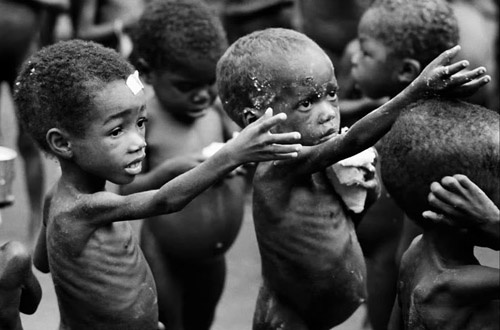
…UN says 309 million Africans face hunger as conflict, climate shocks and soaring food costs threaten progress toward Zero Hunger.
Key points
- Africa is now home to 309 million hungry people, surpassing Asia despite a global decline in hunger.
- Global hunger fell for the third consecutive year, with about 645 million people affected in 2025.
- Nearly 67% of Africans cannot afford a healthy diet, according to the latest UN report.
- More than 56% of Africa’s population experiences moderate or severe food insecurity.
- The UN warns that conflict, climate change and declining humanitarian support could leave up to 520 million people hungry by 2030.
Main Story
Africa has overtaken Asia as the world’s hunger epicentre, with an estimated 309 million people experiencing hunger in 2025 despite a steady decline in global food insecurity, according to the latest United Nations assessment on global nutrition.
The findings, contained in the 2026 State of Food Security and Nutrition in the World (SOFI) report, reveal that while global hunger has eased for a third consecutive year, the gains have largely bypassed Africa, where rapid population growth, persistent conflicts and climate-related disruptions continue to fuel food insecurity.
The report, jointly published by the Food and Agriculture Organisation (FAO), International Fund for Agricultural Development (IFAD), United Nations Children’s Fund (UNICEF), World Food Programme (WFP) and the World Health Organisation (WHO), estimates that 645 million people, representing 7.8% of the world’s population, suffered from hunger in 2025.
That figure marks an improvement from 8.1% in 2024 and 8.6% in 2022, translating to nearly 14 million fewer hungry people than the previous year.
However, the report paints a far more troubling picture for Africa.
Although the proportion of Africans experiencing hunger declined marginally from 20.3% in 2024 to 20.0% in 2025, population growth pushed the continent’s total number of hungry people to 309 million, overtaking Asia’s 292 million for the first time.
The report also found that nearly two out of every three Africans—about 67% of the population—remain unable to afford a healthy diet, highlighting the widening affordability crisis across the continent.
Beyond hunger, Africa continues to bear the heaviest burden of food insecurity globally. The report estimates that 56.6% of Africans experience moderate or severe food insecurity, meaning millions regularly compromise on either the quality or quantity of the food they consume.
Globally, about 2.1 billion people, representing 25.8% of the world’s population, faced moderate or severe food insecurity during the year.
Women and rural populations remain disproportionately affected by the crisis, with the UN agencies warning that existing inequalities continue to undermine progress toward achieving global food security.
The report cautioned that recent improvements remain fragile, warning that escalating conflicts, climate-related disasters, persistent inflation and shrinking humanitarian funding threaten to reverse the gains recorded in recent years.
If these pressures persist, the agencies projected that between 510 million and 520 million people could still be living with hunger by 2030, placing the global target of ending hunger increasingly out of reach.
The Issues
The report highlights Africa’s growing vulnerability to food insecurity despite global progress. Conflict, climate change, weak agricultural productivity, rising food prices and rapid population growth continue to outpace efforts to improve food availability and affordability.
The inability of nearly 67% of Africans to afford a healthy diet also raises concerns about worsening malnutrition, declining productivity and increasing poverty across the continent.
The UN agencies warn that without stronger investments in climate-resilient agriculture, conflict resolution, social protection and food systems, progress toward the Sustainable Development Goal of Zero Hunger will remain elusive.
What’s Being Said
The UN agencies said that while global hunger has continued to decline, Africa has become the region with the largest number of hungry people, underscoring widening inequalities in global food security.
They warned that ongoing conflicts, climate shocks and declining humanitarian financing could reverse recent gains and leave up to 520 million people facing hunger by the end of the decade.
What’s Next
The report is expected to shape discussions among governments, development partners and humanitarian agencies as they seek to accelerate investments in agriculture, climate adaptation and social protection.
The UN agencies also called for stronger international cooperation to protect recent gains and ensure vulnerable regions, particularly Africa, are not left behind in global efforts to end hunger.
Bottom Line
The latest UN food security report delivers a stark warning: while the world is making gradual progress against hunger, Africa is moving in the opposite direction. With 309 million people now experiencing hunger and nearly two-thirds of the population unable to afford a healthy diet, the continent has become the global epicentre of food insecurity.