





KEY POINTS
- Nvidia’s board is not considering reinstating former CEO Jensen Huang, despite a petition attracting more than 180,200 signatures.
- Elon Musk and other prominent technology executives have backed calls for Huang’s return, while some investors warn against acting before investigations are completed.
- Nvidia shares fell more than 4 per cent on Monday, as the company faced uncertainty over its leadership and the allegations surrounding Huang.
MAIN STORY
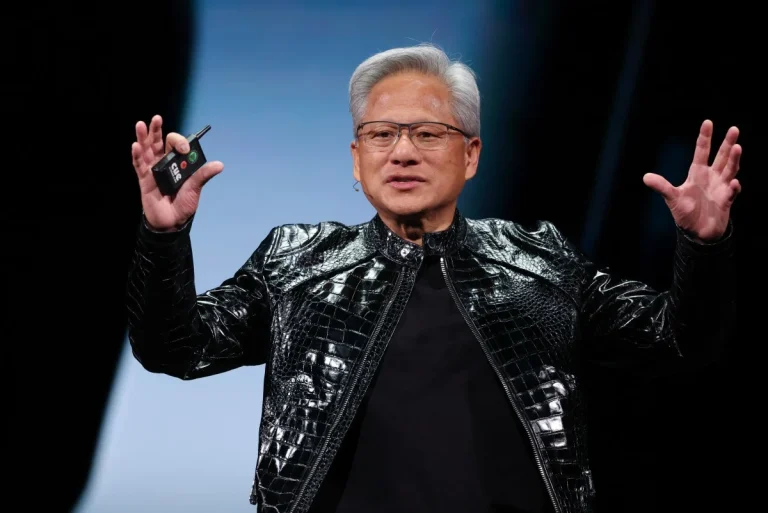
Nvidia’s board is not considering bringing back Jensen Huang as chief executive, despite growing public and investor pressure for his reinstatement following his resignation last Thursday, three people familiar with the matter told Reuters.
The campaign, known as “Stand With Jensen”, had attracted more than 180,200 signatures, including people identifying themselves as Nvidia employees and shareholders.
SpaceX and Tesla CEO Elon Musk, Epic Games CEO Tim Sweeney and Replit CEO Amjad Masad were among those listed as supporters. US President Donald Trump also said on Monday that he would not mind seeing Huang return to the position.
However, the campaign’s website cautioned that professional affiliations supplied by signatories had not been independently verified. More than 8,800 signatories identified themselves as current Nvidia employees, while over 94,000 said they were shareholders.
An open letter accompanying the campaign urged the board to reinstate Huang while an independent investigation established the facts surrounding the allegations.
Huang stepped down last Thursday following reports of alleged affairs involving employees, including one who reportedly reported directly to him. He also acknowledged having an affair with a Chinese businesswoman, Alice Huang.
The situation has raised questions about the former chief executive’s relationship with the company, as well as possible national security implications linked to his relationship with the Chinese businesswoman.
Two sources familiar with the matter told Reuters that US intelligence agencies were still investigating the extent of her relationship with China’s Ministry of State Security and whether she had passed information to Beijing. Evidence gathered so far suggested she was likely an intelligence asset who shared information rather than a fully trained spy, the sources said.
Nvidia has not publicly confirmed the intelligence allegations.
The controversy has divided investors over whether Huang should return. Some prominent shareholders, including Gavin Baker of Atreides Management and Brad Gerstner of Altimeter Capital Management, have urged the company not to rush its succession decision before the facts are established.
Nvidia shares fell more than 4 per cent on Monday, ahead of the company’s third-quarter earnings report scheduled for Tuesday.
The stock has lost ground since reports of Huang’s personal relationships emerged. Reuters reported that Nvidia had lost about $800 billion in market value, while its price-to-earnings ratio had fallen to 11.54 from 15.59.
THE ISSUES
The dispute presents Nvidia’s board with a difficult leadership decision. Huang’s influence extends beyond his executive position, covering relationships with employees, customers, suppliers and investors.
Nvidia depends on Taiwan Semiconductor Manufacturing Company (TSMC) to manufacture its most advanced chips, alongside a wider network of suppliers involved in producing the hardware that supports the artificial intelligence industry.
That makes leadership uncertainty significant for a company whose business depends on maintaining relationships across a complex global supply chain.
However, reinstating Huang before investigations are completed could expose Nvidia to legal and governance risks. Governance experts and some investors have warned that the company needs to establish the facts before deciding on his future.
Richard Windsor, an independent technology researcher, said large institutional investors were likely to oppose Huang’s return while investigations remained unresolved because of the uncertainty and potential legal exposure.
He nevertheless argued that shareholders could ultimately benefit from Huang returning because of the relationships he had built with customers and suppliers.
Analysts at T. Rowe Price also suggested that the leadership transition could require a broader restructuring of the company’s organisation rather than simply appointing another chief executive.
WHAT’S BEING SAID
“We write with gratitude for Jensen Huang and with a clear demand to the Board: bring Jensen back while an independent investigation establishes the facts.” – Stand With Jensen campaign open letter.
“I think he learned a big lesson.” – US President Donald Trump.
WHAT’S NEXT
Nvidia’s immediate challenge is to manage the leadership transition while addressing concerns among investors, employees and business partners.
The company is also due to release its third-quarter earnings on Tuesday, giving investors another indication of its business performance amid the uncertainty surrounding its leadership.
The board’s position, according to the sources cited by Reuters, is that it is not considering Huang’s reinstatement.
BOTTOM LINE
The campaign for Huang’s return shows how strongly some employees, shareholders and technology figures identify Nvidia’s success with its former chief executive. But public support does not determine the board’s decision. The company must weigh his business relationships and influence against the legal, governance and reputational risks raised by the ongoing investigations.