






KEY POINTS
- Nigeria has recorded no additional Ebola case 21 days after confirming an imported Bundibugyo virus infection from Uganda.
- NCDC identified 62 contacts, with 34 completing monitoring and 28 still under surveillance.
- The agency also confirmed dengue fever in Sokoto and Zamfara and Chikungunya in Sokoto.
- Health authorities are strengthening preparedness for meningitis and Lassa fever as seasonal risks increase.
MAIN STORY
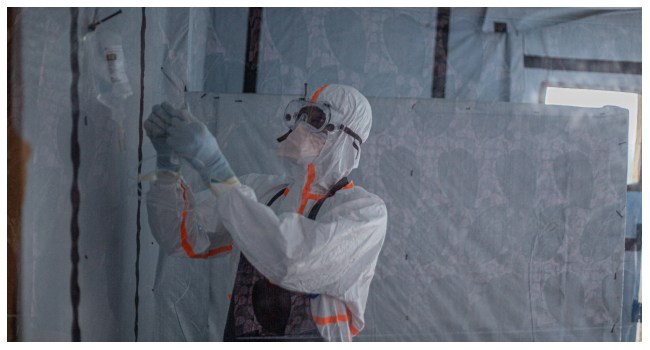
Nigeria has recorded no additional Ebola case 21 days after confirming an imported infection of the Bundibugyo virus from Uganda, the Nigeria Centre for Disease Control and Prevention (NCDC) has said.
The NCDC Director-General, Dr Jide Idris, disclosed this in a national health security update issued on Tuesday, noting that the agency had identified 62 contacts linked to the imported case.
Of that number, 34 people had completed their individual 21-day monitoring period, while 28 remained under surveillance.
Idris clarified that being identified as a contact did not mean an individual had contracted Ebola, explaining that monitoring was intended to detect symptoms early and enable a prompt response.
The agency is continuing contact tracing, laboratory testing, surveillance and investigations of reported alerts in collaboration with federal and state authorities.
Idris urged healthcare workers in public and private facilities to remain alert, establish patients’ travel and exposure histories and immediately report suspected cases to public health authorities.
He advised anyone who develops symptoms after possible exposure to avoid contact with others and call the NCDC toll-free line, 6232, for guidance before visiting a health facility.
Beyond Ebola, the agency reported confirmed dengue fever cases in Sokoto and Zamfara States, as well as Chikungunya in Sokoto. National Rapid Response Teams, including entomologists from the National Arbovirus Research Centre in Enugu, have been deployed to support affected states.
The teams are assisting with case identification, laboratory investigations, clinical preparedness, community engagement and mosquito control.
Idris warned against assuming that every fever is malaria, noting that dengue and Chikungunya can also cause fever, headaches, body pains and joint pains. He urged people experiencing persistent fever, rash, vomiting or severe joint pains to seek medical assessment, particularly because dengue can become life-threatening when warning signs are ignored.
The NCDC also raised concerns about cerebrospinal meningitis as the dry season advances, warning that the risk increases in parts of the country’s meningitis belt. States were urged to strengthen surveillance, diagnostic services, clinical preparedness and vaccination responses where necessary.
Diphtheria remains another concern, particularly among children who have missed routine immunisation. Idris urged parents and caregivers to check their children’s vaccination status and seek advice on missed doses. He said fever accompanied by sore throat, neck swelling, difficulty swallowing or breathing required prompt medical attention.
On Lassa fever, the NCDC chief said Nigeria was approaching the period when cases historically increase. He called on states to strengthen surveillance, testing, treatment readiness and infection prevention before the seasonal peak.
He also urged households to protect food from rodents, use covered storage containers and maintain clean surroundings.
Ahead of the festive period, Idris called on state governments, event organisers and healthcare providers to strengthen health and safety arrangements for concerts, religious gatherings and other mass events. He recommended basic medical support, proper sanitation and clear procedures for identifying and reporting suspected infections.
THE ISSUES
The absence of additional Ebola cases 21 days after the imported infection is encouraging, but it does not mean the country’s public health response can be relaxed. The NCDC is still monitoring 28 contacts, and continued surveillance is necessary to identify any symptoms that may emerge among people exposed to the infected individual.
Contact tracing is important because Ebola can spread through direct contact with the blood or body fluids of an infected person who is showing symptoms. Identifying and monitoring people who may have been exposed allows health authorities to isolate suspected cases quickly and limit further transmission. The 21-day monitoring period is therefore a critical part of the response, not proof that every contact has been infected.
The other infections reported by the NCDC require different prevention measures. Dengue and Chikungunya are transmitted through infected mosquitoes, making mosquito control and the removal of breeding sites important. Stagnant water around homes, uncovered water containers and discarded tyres can provide places where mosquitoes breed. Unlike the Ebola response, which focuses heavily on identifying contacts and preventing direct exposure, controlling these infections also requires action within communities and households.
The warning against treating every fever as malaria is particularly relevant in Nigeria, where fever is commonly associated with malaria. However, dengue, Chikungunya, Lassa fever and other infections can produce similar early symptoms. Assuming that every fever is malaria may delay the diagnosis of a more serious illness. Persistent symptoms, unusual pain, rash or other warning signs should therefore prompt medical assessment rather than prolonged self-medication.
The seasonal warnings on meningitis and Lassa fever also show why disease preparedness cannot begin only after cases rise. Meningitis requires prompt diagnosis and treatment because severe cases can deteriorate quickly. Lassa fever also poses risks to healthcare workers, particularly where suspected patients are not identified early or infection prevention procedures are inadequate.
For Nigeria, these overlapping health threats place demands on state health systems, including laboratories, trained personnel, medicines, surveillance networks and emergency response funding. The festive season adds another challenge because large gatherings and travel can make it harder to identify and contain infectious disease risks quickly.
WHAT’S BEING SAID
“NCDC is sustaining contact tracing, laboratory testing, surveillance, infection prevention and investigation of reported alerts in collaboration with relevant federal and state authorities.” – Dr Jide Idris, Director-General, NCDC.
“State governments have to sustain surveillance, laboratory capacity, treatment readiness and community engagement, while providing frontline workers with adequate funding and operational resources.” – Dr Jide Idris, Director-General, NCDC.
WHAT’S NEXT
The NCDC says its Ebola response remains active while it continues interventions against dengue, Chikungunya and diphtheria. The agency is also strengthening preparedness for the expected seasonal increase in meningitis and Lassa fever.
State governments and health facilities are expected to maintain surveillance, testing capacity, treatment readiness and infection prevention measures. Nigerians can report suspected cases or seek guidance through the NCDC toll-free line, 6232, or their state public health authorities.
BOTTOM LINE
Nigeria has recorded no new Ebola case 21 days after confirming an imported infection, but other disease threats remain active. The NCDC is urging Nigerians to avoid self-diagnosis, maintain basic preventive measures and seek medical attention early, while health authorities strengthen their capacity to detect and respond to outbreaks.