








KEY POINTS
- UN Secretary-General António Guterres called for annual global emissions reductions of at least 6 per cent in the coming years.
- He warned that dependence on fossil fuels carries economic and security risks, alongside its contribution to climate change.
- More than 90,000 people are expected at COP31 in Antalya, Türkiye, as countries face pressure to deliver on climate commitments.
MAIN STORY
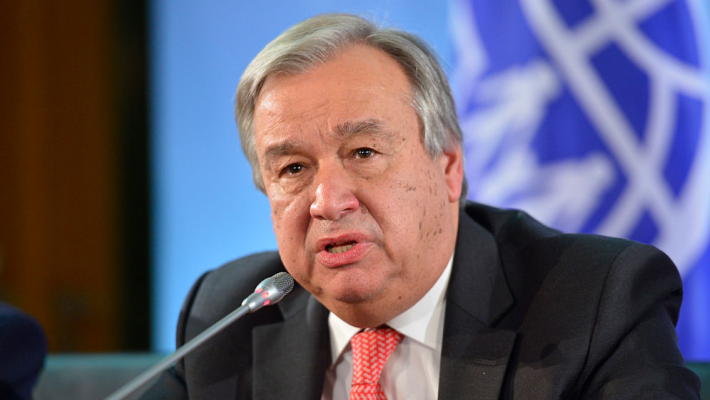
United Nations Secretary-General António Guterres has urged countries to accelerate the transition from fossil fuels to renewable energy, calling for global emissions to fall by at least 6 per cent annually in the coming years.
Guterres also called for economies that are cleaner, more secure and less vulnerable to external shocks, as delegates gather in Antalya, Türkiye, for the 31st UN Climate Change Conference (COP31).
The UN Deputy Spokesperson, Farhan Haq, disclosed this on Tuesday while briefing UN correspondents in New York, following the secretary-general’s engagements at the conference.
Haq said Guterres addressed the COP30 Presidency Roadmap for Transitioning Away from Fossil Fuels in Energy Systems in a Just, Orderly and Equitable Manner, emphasising the need for countries to reduce their dependence on fossil fuels.
According to the UN chief, fossil fuels are not only driving the climate crisis but also exposing countries to economic and security risks. He pointed to the conflict in the Middle East as an illustration of the consequences of dependence on fossil energy.
Guterres also held bilateral meetings with Türkiye’s President, Recep Tayyip Erdoğan, and China’s Vice President, Han Zheng, to discuss international cooperation and the expected outcomes of COP31.
During his meeting with Erdoğan, they discussed climate action and cooperation at the summit, alongside regional and international issues including the war in Ukraine, the Middle East conflict, Libya and Cyprus.
His discussion with Han focused on the need for credible COP31 outcomes that address gaps in emissions reduction, climate finance and adaptation.
The secretary-general also met members of the Youth Advisory Group and participated in a roundtable with young people. He said young people should be recognised as active participants and leaders in climate discussions, rather than simply beneficiaries of climate policies.
He urged them to connect international climate negotiations with their communities and help communicate scientific information online, where climate disinformation can spread rapidly.
Guterres further met climate scientists to discuss recent developments in climate science, financing and the energy transition, as well as policy priorities for the conference and beyond.
More than 90,000 people are expected to attend COP31, which opened on Monday and is scheduled to close on November 20.
THE ISSUES
Guterres’ call for annual emissions cuts of at least 6 per cent reflects the pressure on governments to move beyond climate promises and reduce the amount of greenhouse gases released into the atmosphere.
The fossil fuel issue is also an economic concern. Countries that depend heavily on oil and gas can face higher energy costs and supply disruptions when conflicts affect production, transportation or international trade. The Middle East crisis has brought this vulnerability into focus, showing how instability in one region can affect energy markets elsewhere.
For Nigeria, the transition presents a difficult balance. Oil and gas remain important sources of government revenue and foreign exchange, while the country also faces the need to expand reliable electricity supply and reduce exposure to costly energy imports. Moving towards renewable energy therefore involves more than setting emissions targets. It requires investment in power infrastructure, financing, technology and reliable alternatives that businesses and households can afford.
The emphasis on climate finance and adaptation is equally important. Countries need funding not only to develop cleaner energy systems but also to prepare for the effects of climate change, including damage to agriculture, infrastructure and livelihoods. Without adequate financing, developing economies may struggle to meet emissions targets while addressing immediate development needs.
Guterres’ engagement with young people and climate scientists also highlights another challenge facing climate negotiations: translating scientific evidence and international agreements into public understanding and practical action. Climate commitments have limited value if communities do not understand the changes required or governments fail to implement them.
WHAT’S NEXT
COP31 is expected to continue until November 20, with negotiations focused on strengthening cooperation and securing outcomes on emissions reduction, climate finance and adaptation.
The challenge for participating countries will be to turn their commitments into measurable action, particularly on reducing fossil fuel dependence and supporting economies that face the highest costs of climate change.
BOTTOM LINE
Guterres is pressing governments to treat the energy transition as both a climate priority and an economic security issue. The outcome of COP31 will be measured not only by the promises made in Antalya but by whether countries can translate them into faster emissions cuts, cleaner energy systems and practical support for vulnerable economies.