








By Kehinde Victor
KEY POINTS
- The Centre for Crisis Communication wants an integrated national framework to counter misinformation, AI-generated deepfakes and cyber threats ahead of the 2027 elections.
- It proposed an Integrated National Crisis Information Architecture to improve information-sharing and coordination among security agencies.
- The centre also called for the revival of the Forum of Spokespersons of Security and Response Agencies.
MAIN STORY
The Centre for Crisis Communication (CCC) has called for a coordinated national framework to combat misinformation, AI-generated deepfakes and cyber threats ahead of Nigeria’s 2027 general elections.
The centre said conflicting statements from security agencies, delayed information-sharing and weak coordination could undermine emergency response and public confidence, particularly when false information spreads during security incidents.
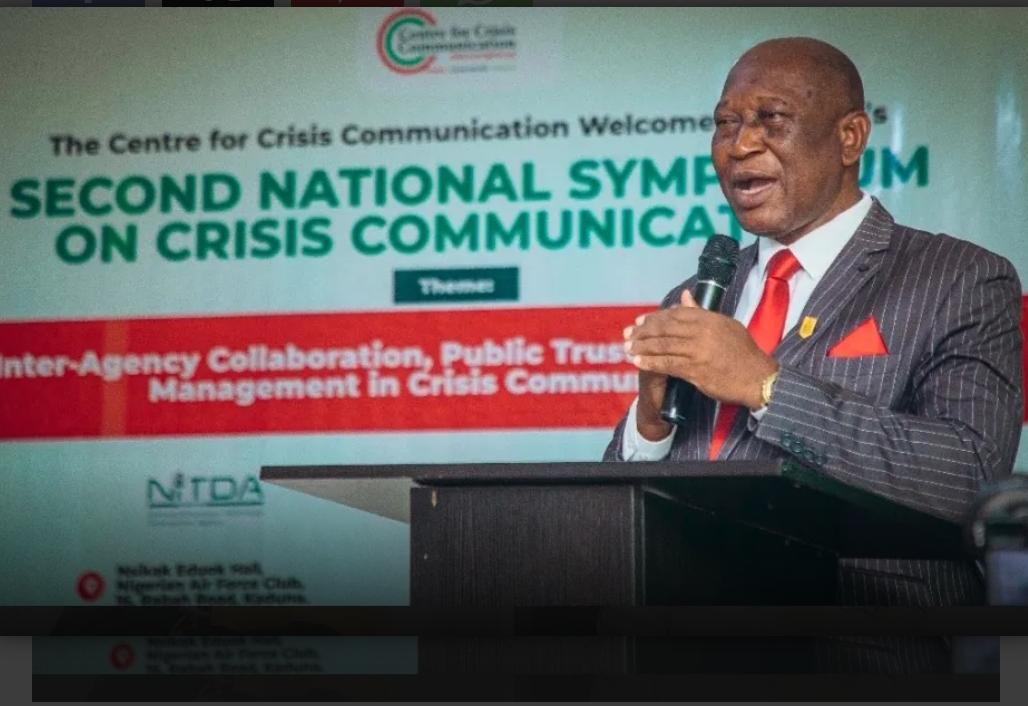
The recommendations were contained in a communiqué issued on Friday after the centre’s Second National Symposium on Crisis Communication, held from October 27 to 28 at the Nigerian Air Force Club in Kaduna.
The symposium, which attracted more than 150 participants from security and intelligence agencies, emergency services, academia, the media and other institutions, focused on inter-agency collaboration, public trust and cyber threat management.
The communiqué, signed by retired Commodore Kabir Aliyu on behalf of the centre, called for an Integrated National Crisis Information Architecture (INCIA) to harmonise information-sharing, define institutional responsibilities and improve communication during emergencies.
It also recommended standard operating procedures to guide agencies in coordinating public statements and sharing verified information without compromising operational security.
THE ISSUES
The centre identified misinformation and poor coordination as threats to effective crisis management, warning that contradictory accounts of security incidents could confuse citizens, damage institutional credibility and complicate emergency response.
The concern extends beyond conventional false reports to the growing use of social media and emerging technologies to manipulate information and public opinion.
Ahead of the 2027 elections, AI-generated deepfakes and coordinated disinformation campaigns could make it harder for citizens to distinguish authentic information from manipulated content.
The CCC therefore called for technological systems to detect and counter false information, alongside digital literacy programmes and responsible use of social media and artificial intelligence.
It also advocated regulatory frameworks for social media and AI applications, while stressing that national security measures must respect freedom of expression, fundamental rights and due process
WHAT’S NEXT
Beyond the proposed national information architecture, the symposium recommended establishing a Homeland Security Academy or inter-agency training centre to improve joint training, operational coordination and emergency preparedness.
It also called for stronger early-warning systems, joint threat monitoring, secure information-sharing arrangements and regular inter-agency exercises.
The centre urged authorities to revive the Forum of Spokespersons of Security and Response Agencies (FOSSRA), which would provide a platform for coordinated messaging and professional cooperation among security and emergency response institutions.
It further encouraged sensitisation programmes for political actors, journalists and media editors on responsible communication and the risks of spreading false or manipulated information.
The symposium also called for closer collaboration between security agencies and media organisations, recognising the media’s role in providing timely information during emergencies.
BOTTOM LINE
The CCC wants crisis communication treated as part of Nigeria’s national security and emergency management system, rather than simply a public relations function. Its recommendations place particular emphasis on coordinated agency messaging, reliable information-sharing and the ability to detect manipulated content before it fuels confusion or undermines public trust.




 has called for a coordinated national framework to combat misinformation, ...)