








By Emmanuella Opara | October 27th 2026
KEY POINTS
- President Bola Tinubu says the government will rehabilitate and reposition the Port Harcourt, Warri and Kaduna refineries.
- The NNPC has signed memoranda of understanding with two Chinese firms for the refineries’ revamp.
- Tinubu says the government wants Nigeria to refine more crude domestically and become a reliable supplier of petroleum products to African countries.
- The President cites the Dangote Petroleum Refinery’s 650,000-barrel-per-day capacity as a boost to Nigeria’s refining and export ambitions.
MAIN STORY
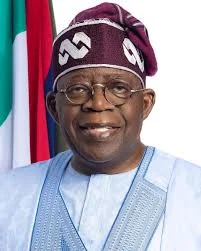
President Bola Tinubu has pledged to revive Nigeria’s dormant state-owned refineries, saying the government will pursue a commercially sustainable approach to rehabilitation as the country expands its domestic refining capacity.
Tinubu, represented by the Permanent Secretary of the Ministry of Petroleum Resources, Patience Oyekunle, made the commitment on Monday at the 20th OTL Africa Downstream Energy Week in Lagos.
The President said the government would not allow the national refineries to become stranded investments, despite the emergence of large-scale private refining facilities in the country.
The Port Harcourt, Warri and Kaduna refineries, managed by the Nigerian National Petroleum Company Limited, have remained inactive despite billions of naira spent on turnaround maintenance over the years. The current NNPC leadership has signed memoranda of understanding with two Chinese firms for their rehabilitation.
Tinubu said the process would be guided by technical assessments, stronger partnerships and improved operational discipline to make the facilities commercially viable.
“Our objective is clear. Nigeria must first refine more of its crudes, create more value domestically, and become a reliable supplier of energy to Africa,” he said.
He said Nigeria was moving away from an oil industry characterised by dependence on imported petroleum products and infrastructure constraints towards one driven by domestic refining, private investment, market efficiency and regional competitiveness.
The President also linked the industry’s prospects to reforms introduced under the Petroleum Industry Act, saying they were designed to establish a transparent, commercially viable and investment-friendly environment capable of delivering greater value to Nigerians.
Tinubu described the emergence of large-scale private refining capacity as a turning point for the sector, citing the Dangote Petroleum Refinery as a major development in Nigeria’s ambition to become a net exporter of refined petroleum products.
He said the refinery had reached its nameplate capacity of 650,000 barrels per day, improving the country’s prospects of supplying refined products to other African markets.
However, the President said Nigeria’s energy ambitions extended beyond crude oil production and the expansion of refining capacity. He called for the development of an energy economy that uses petroleum resources to support industrialisation, manufacturing and other productive activities.
For decades, Nigeria exported crude oil while importing a substantial proportion of the petroleum products required by its domestic economy. Tinubu said his administration wanted to change that pattern by retaining more value within the country through refining, petrochemicals, gas processing and other energy-intensive industries.
“Our commitment is therefore not to simply produce hydrocarbons. It is to create an ecosystem in which hydrocarbons catalyse industrialisation, jobs, investment, technology, and prosperity,” he said.
The President urged operators across the petroleum value chain to invest more in local content, technology, infrastructure and human capital. He also called for greater attention to environmental protection and community development, saying resource extraction should generate additional value for the country.
“To our industry stakeholders, I say, the era of extracting value without building value is changing. We expect greater investment in local content, technology, infrastructure, human capital, environmental responsibilities, and boost community development,” he said.
Tinubu further encouraged investors with the technical expertise and financial capacity to explore opportunities in Nigeria’s oil and gas industry.
In his opening address, the Chairman of the OTL Advisory Board, Adetunji Oyebanji, said Africa’s downstream petroleum industry had progressed since the organisation began in 2007, with developments in refining, logistics and market liberalisation expanding the continent’s capacity to meet its energy needs.
Oyebanji also said the emergence of large-scale private refining in Nigeria, particularly the Dangote refinery, had changed the outlook for domestic petroleum supply and regional trade.
THE ISSUES
The proposed revival of the state-owned refineries comes after years of inactivity and substantial expenditure on maintenance. Their continued shutdown has limited their contribution to domestic fuel production, despite Nigeria’s position as a crude oil producer.
The government’s commitment now centres on a more commercially sustainable rehabilitation process. However, the announcement does not specify a completion timeline, the cost of the proposed work or when the Port Harcourt, Warri and Kaduna facilities are expected to resume operations.
The emergence of the Dangote refinery has also changed the domestic refining landscape. While its reported capacity strengthens Nigeria’s potential to supply regional markets, the state-owned refineries’ future will depend on whether their rehabilitation can deliver reliable operations and compete commercially.
WHAT’S BEING SAID
“At the same time, the government remains committed to ensuring that existing national refining assets are not allowed to become stranded investments.
“We are pursuing a more rigorous, commercially sustainable approach to the rehabilitation and repositioning of our refineries, supported by technical assessment, stronger partnerships, and improved operational discipline,” Patience Oyekunle, Permanent Secretary of the Ministry of Petroleum Resources, stated on behalf of President Bola Tinubu.
“Our objective is clear. Nigeria must first refine more of its crudes, create more value domestically, and become a reliable supplier of energy to Africa,” Bola Tinubu said.
WHAT’S NEXT
The next steps will involve the technical assessments and partnerships outlined by the government, alongside the rehabilitation arrangements being pursued by the NNPC with two Chinese firms. Further details on funding, implementation timelines and operational targets will be necessary to establish when the refineries could return to service.
BOTTOM LINE
Tinubu’s pledge signals renewed commitment to reviving Nigeria’s three dormant state-owned refineries as private refining capacity expands. The key test will be whether the government can turn the commitment and existing partnerships into commercially sustainable facilities that operate reliably and increase domestic value addition.