







KEY POINTS
- Seyi Makinde says he will introduce tax breaks for businesses if elected president in 2027.
- The Oyo governor claims his state increased internally generated revenue without raising taxes.
- He argues that government taxation should target wealth rather than deepen poverty.
- Makinde also promises reforms in education and security and questions the impact of federal economic policies on transport costs.
MAIN STORY
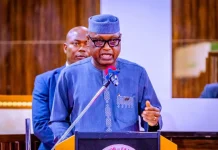
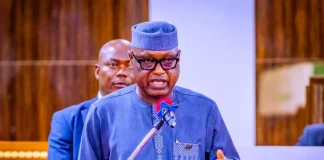
Seyi Makinde, governor of Oyo State and presidential candidate of the Allied Peoples’ Movement (APM), has promised tax breaks for businesses if elected president in the 2027 general election, arguing that supporting entrepreneurs is essential to expanding employment and economic growth.
Speaking on Tuesday at the party’s town hall meeting in Uyo, Akwa Ibom State, Makinde said his administration had increased Oyo State’s internally generated revenue (IGR) without raising taxes, which he presented as evidence that governments could improve revenue collection without placing additional burdens on taxpayers.
“We will ensure that we encourage entrepreneurs. We will ensure that people have tax breaks. And if you ask me whether we have done it before, yes, I did it in Oyo state. We increased Oyo state’s IGR without raising taxes on anybody. The records are there,” he said.
The governor argued that government alone could not provide the jobs and economic expansion Nigeria needs. He said policies should create conditions for entrepreneurs and businesses to grow, invest and employ more people.
Makinde also criticised the tax reform laws enacted under President Bola Tinubu’s administration, arguing that taxation should focus on wealth rather than worsening the financial difficulties of low-income earners and vulnerable households.
“You are supposed to tax wealth. You are not supposed to tax poverty. But they are only interested in taxing poverty,” he said.
His comments place business taxation among the economic issues likely to feature in the 2027 presidential campaign, particularly as businesses and households contend with operating costs and pressure on purchasing power. However, Makinde did not provide specific details of the proposed tax breaks, including the businesses that would qualify, the taxes that would be reduced or how the measures would affect government revenue.
THE ISSUES
The proposed tax breaks raise questions about how a future administration would balance business relief with the need to fund public services and infrastructure. Tax deductions, credits and exemptions can reduce the tax burden on eligible businesses, but their economic impact depends on the design of the measures, the businesses covered and the extent to which savings translate into investment and employment.
Makinde’s claim that Oyo State increased its IGR without raising taxes also points to the distinction between increasing revenue through higher tax rates and improving collections through better administration, compliance and economic activity. The governor did not provide figures at the town hall meeting to quantify the increase or explain which measures produced the reported result.
The presidential candidate also questioned the federal government’s economic policies, arguing that initiatives such as the Presidential Initiative on Compressed Natural Gas and the naira-for-crude policy had not delivered the expected reduction in transportation costs.
He called on the government to publish its petroleum pricing template so Nigerians could examine the figures and propose ways to improve the policies’ effectiveness.
For businesses, transport costs affect the movement of raw materials and finished goods, staff mobility and distribution expenses. Whether alternative-fuel initiatives and changes to crude oil supply arrangements can reduce these costs depends partly on pricing, infrastructure and the extent to which savings reach consumers and operators.
WHAT’S BEING SAID
Makinde said his proposed approach to taxation would encourage entrepreneurship and support economic growth.
- “We will ensure that we encourage entrepreneurs. We will ensure that people have tax breaks.” – Seyi Makinde, Oyo State governor and APM presidential candidate.
- “You are supposed to tax wealth. You are not supposed to tax poverty. But they are only interested in taxing poverty.” – Seyi Makinde, Oyo State governor and APM presidential candidate.
- “Anything that goes into the federation account, according to our constitution, should be shared between the federal government, state governments and local governments.” – Seyi Makinde, Oyo State governor and APM presidential candidate.
Bala Mohammed, Bauchi State governor and APM national leader, urged Nigerians to assess the party’s candidates based on their competence and records rather than their financial resources or age.
“It is not about money. It is not about age. It is about pedigree,” he said, expressing confidence in Makinde’s ability to address the country’s challenges.
Lawal Daura, the party’s vice-presidential candidate, said the APM would seek to reverse Nigeria’s prolonged stagnation and restore citizens’ dignity through reforms in education, security and the economy.
The party’s national chairman, Yusuf Dantelle, called for a fundamental change in the country’s direction, identifying insecurity, poverty and inequality as major national challenges.
WHAT’S NEXT
Beyond his tax proposals, Makinde pledged to overhaul Nigeria’s education and security systems. He said economic prosperity depended on skills and knowledge and argued that young Nigerians needed greater access to education. He cited his own experience of securing opportunities through his University of Lagos degree as an example of education’s potential impact.
On security, he pledged to eliminate militancy in the South-South geopolitical zone, while acknowledging that the problem had declined but remained unresolved.
The governor also alleged that the Federal Government had withheld nearly ₦250 billion in Nigeria LNG dividend payments due to states, with the amount accumulating over several years, including under the current administration. He argued that funds entering the Federation Account should be distributed among the federal, state and local governments in accordance with the Constitution.
Makinde further expressed confidence that the South-South would support the APM in 2027, pointing to the APC’s performance in the region during the 2023 elections.
The party has yet to provide detailed implementation plans for its proposed tax breaks and wider economic reforms in the statements supplied.
BOTTOM LINE
Makinde’s campaign promise centres on reducing the tax burden on businesses while increasing government revenue through other means. For Nigerian entrepreneurs, the key question is how any proposed relief would be structured, who would qualify and whether it would improve investment, employment and business survival without undermining public finances.
The APM candidate’s broader promises on education, security and transportation costs also place the party’s economic agenda within the wider debate over how Nigeria can stimulate growth and ease the pressures facing businesses and households.

, has promised tax breaks)