








Key points
- TGM Academy plans to train and certify 10,000 professional talent managers across Africa by 2030.
- The initiative will be backed by a ₦2.5 billion funding programme to strengthen the continent’s creative workforce.
- The academy unveiled its vision at the inaugural Talent Management Leadership Roundtable in Lagos.
- A scholarship fund has been launched to sponsor at least 50 aspiring talent managers.
Main Story

TGM Academy has unveiled plans to train and certify 10,000 professional talent managers across Africa by 2030 under a ₦2.5 billion initiative aimed at strengthening the continent’s creative economy and building a sustainable talent management ecosystem.
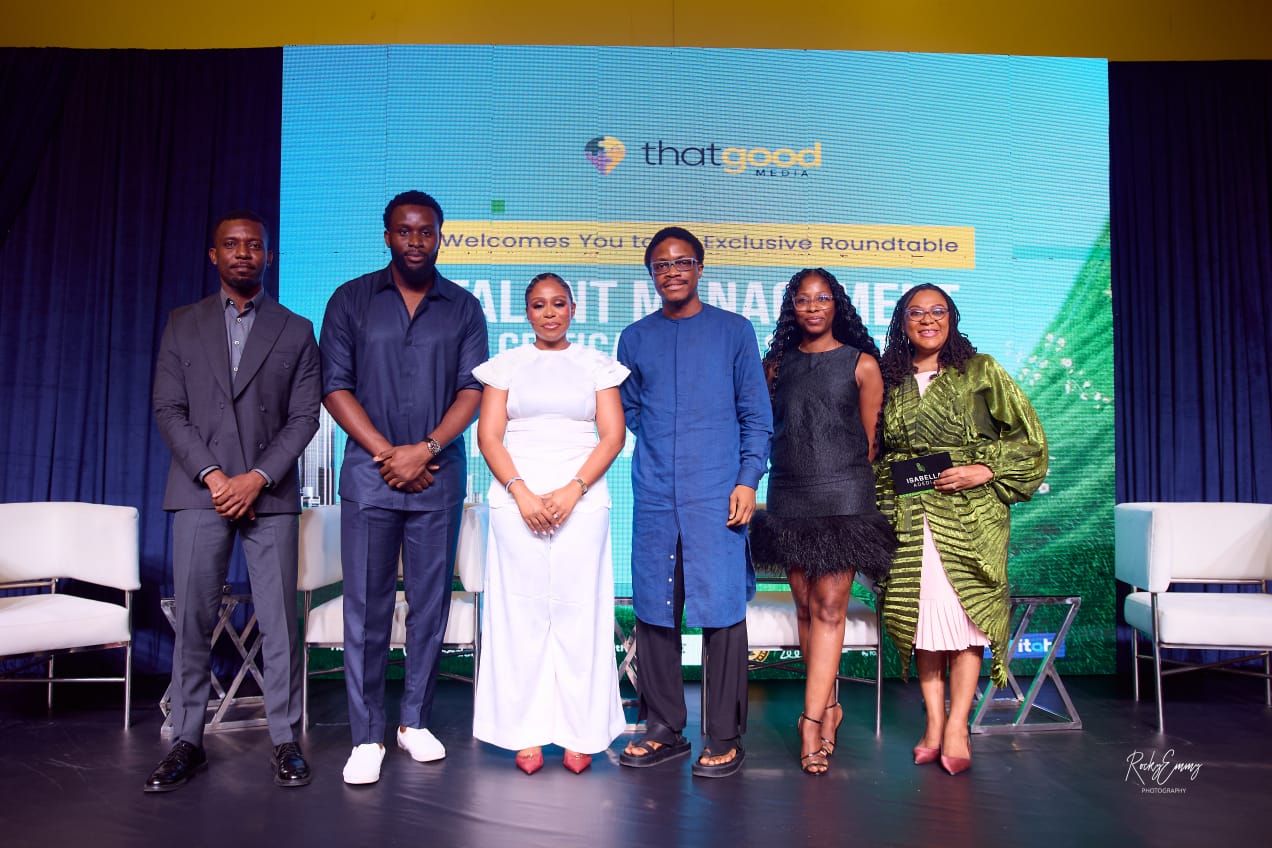
The announcement was made by the Founder and Chief Executive Officer of That Good Media and Founder of TGM Academy, Toyosi Etim-Effiong, during the inaugural Talent Management Leadership Roundtable held at Eko Hotel and Suites, Victoria Island, Lagos.
The event marked the public introduction of TGM Academy, described as Nigeria’s first institution dedicated exclusively to the professional development of talent managers.
Held under the theme, “Talent Management as Critical Infrastructure for Cultural Exchange and the Creative Economy,” the roundtable brought together stakeholders from the creative industry, government, diplomatic community, academia and corporate sector to examine how structured talent management can drive sustainable growth across Africa’s creative industries.
Etim-Effiong said the academy’s long-term vision is to professionalise talent management by equipping thousands of practitioners with globally relevant skills while creating stronger institutional frameworks to support Africa’s growing creative sector.
She noted that although African creatives continue to gain international recognition across music, film, television and digital content, the professional systems supporting their careers have not developed at the same pace.
The Issues
Africa’s creative economy has witnessed rapid global growth in recent years, but industry stakeholders say the shortage of professionally trained talent managers continues to limit the sector’s commercial potential.
According to TGM Academy, many creatives still lack structured business support needed for contract negotiations, brand partnerships, intellectual property management, international expansion and long-term career development.
The academy argues that strengthening talent management will improve governance within the creative sector, attract greater investment and position African creatives to compete more effectively in the global marketplace.
Another challenge identified during the roundtable is limited access to specialised professional education for aspiring talent managers, prompting the launch of a scholarship programme to widen participation.
What’s Being Said
“The future of African entertainment will not be determined by the quality of our talent. The world already knows that we have extraordinary talent. It will be determined by the quality of the systems we build around that talent, and by how effectively those systems connect African creativity with the rest of the world,” Etim-Effiong said.
She announced that the academy aims to train and certify 10,000 professional talent managers across Africa by 2030 through a ₦2.5 billion funding initiative designed to strengthen the continent’s creative workforce.
Etim-Effiong also unveiled the TGM Academy Scholarship Fund, calling on governments, development partners, foundations and corporate organisations to sponsor at least 50 students.
“This is not a donation to a programme. It is an investment in the workforce that makes every other creative investment on this continent safer, more structured, and more profitable,” she said.
Executive Secretary of the Lateef Jakande Leadership Academy, Aishat Agbaje-Okubadejo, stressed the need to prioritise human capital development alongside physical infrastructure.
“We need to stop seeing human capital development as secondary to physical infrastructure. The creative economy will only thrive when we intentionally build systems that outlive us and prepare people with the skills, ethics and curiosity required to lead the future,” she said.
Award-winning producer and global media executive Sidra Smith described talent management as a critical investment capable of helping African creatives build sustainable businesses and expand global partnerships.
What’s Next
TGM Academy said insights from the leadership roundtable will shape its curriculum, institutional partnerships and programme design ahead of its official launch.
The academy also introduced Megowa, a digital platform designed to connect verified African talent, talent managers, brands, production companies, cultural institutions and international partners within a trusted professional ecosystem.
It is seeking partnerships with governments, diplomatic missions, corporate organisations, development agencies and industry stakeholders to strengthen the institutional infrastructure supporting Africa’s creative economy.
The newly launched scholarship fund is expected to mobilise public and private sector support to expand access to professional talent management education.
Bottom Line
TGM Academy’s plan to train 10,000 certified talent managers by 2030 reflects a growing recognition that Africa’s creative economy requires stronger institutional support alongside creative talent. If successfully implemented, the initiative could help professionalise talent management, strengthen commercial structures and enhance the global competitiveness of African creatives.