







Key points
- President Bola Tinubu approves the creation of four new Nigerian Army divisions in Makurdi, Ilorin, Jalingo and Benin City.
- Army divisions increase from eight to 12 as part of efforts to strengthen national security and operational efficiency.
- Federal Government authorises the recruitment of 28,000 additional military personnel.
- Expansion will be implemented in two phases between September and December 2026.
- Nigerian Army declares a soldier wanted over alleged sale of military uniforms to terrorists, while Operation Hadin Kai clears an intercepted Nigerien national of terrorism allegations.
Main story

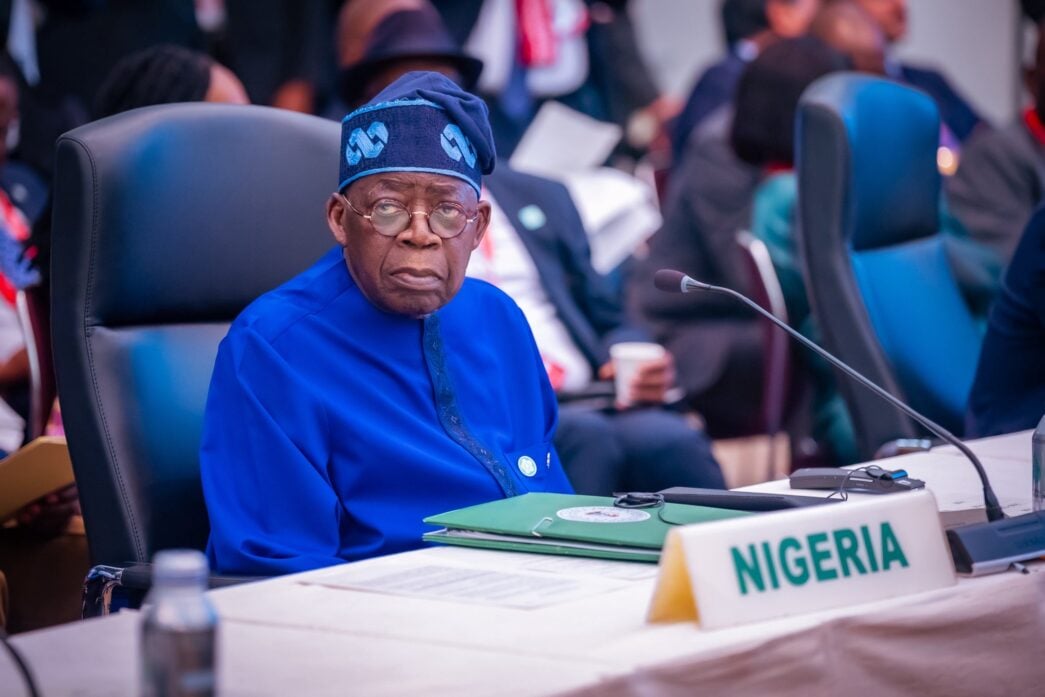
President Bola Tinubu has approved the establishment of four new Nigerian Army divisions and authorised the recruitment of 28,000 additional personnel in a major restructuring aimed at strengthening national security and improving the military’s operational capacity across the country.
The approval raises the number of Nigerian Army divisions from eight to 12, with the new formations to be located in Makurdi, Ilorin, Jalingo and Benin City.
The Presidency described the move as part of the administration’s broader strategy to reinforce command and control structures, improve troop deployment and enhance the Armed Forces’ ability to respond to Nigeria’s evolving security challenges.
Under the new force structure, the Army’s divisional headquarters will comprise 1 Division, Kaduna; 2 Division, Ibadan; 3 Division, Jos; 5 Division, Makurdi; 6 Division, Port Harcourt; 7 Division, Maiduguri; 8 Division, Sokoto; 9 Division, Ilorin; 10 Division, Jalingo; 81 Division, Lagos; 82 Division, Enugu; and the newly created 83 Division in Benin City.
According to the Presidency, the expansion is expected to strengthen operational command, decentralise decision-making, improve border security, enhance the protection of critical national infrastructure and reinforce counter-insurgency as well as other internal security operations across the federation.
Implementation of the restructuring will be executed in two phases. The first phase, covering the establishment of the 5, 9 and 10 Divisions and the reorganisation of existing formations, is scheduled for completion by September 2026.
The second phase, which includes the establishment of the 83 Division and additional restructuring measures, is expected to be completed by December 2026.
President Tinubu said the expansion reflects his administration’s commitment to ensuring the Armed Forces remain adequately staffed, well-equipped and combat-ready to safeguard Nigeria’s territorial integrity and protect lives and property.
The President also commended the Chief of Army Staff, Lt.-Gen. Waidi Shuaibu, alongside officers and soldiers of the Nigerian Army, for their professionalism and commitment to national security.
The latest approval builds on the administration’s ongoing investments in military modernisation through improved troop welfare, acquisition of combat platforms, enhanced logistics and increased operational capabilities.
Army declares soldier wanted
Meanwhile, the Headquarters of the Nigerian Army Ordnance Corps (NAOC) has declared Private Mohammed Amutu wanted over his alleged involvement in the illegal sale and supply of military uniforms to terrorists and other criminal elements.
In a statement signed by the Assistant Director, Army Public Relations, Headquarters Nigerian Army Ordnance Corps, Maj. Oluwatope Aliko, the Army said preliminary investigations revealed that the soldier, attached to the Nigerian Army Ordnance Kits Factory, absconded from his unit on June 3, 2026.
The military said efforts were ongoing to apprehend the suspect, warning that any personnel involved in the unauthorised sale, diversion or distribution of military uniforms and other controlled items would face the full weight of military and civil laws.
The Army also appealed to members of the public to provide credible information that could lead to his arrest.
Operation Hadin Kai clears Nigerien national
In a separate development, the Joint Task Force, North East, Operation Hadin Kai (OPHK), has dismissed reports linking a Nigerien national, Aboubakar Zein-Nur, to terrorist activities.
The Acting Media Information Officer of Operation Hadin Kai, Capt. Mohammed Goni, said comprehensive intelligence assessments established that the individual had no affiliation with any terrorist organisation.
According to him, investigations confirmed that Zein-Nur, a resident of Shattu Anguba Village in Bosso, Republic of Niger, is a camel rearer who operates around the River Komadougou.
He explained that troops intercepted the individual during an operation at Cross Kauwa in Borno State and subjected him to routine profiling and security screening in line with standard operational procedures, given the exploitation of border corridors by terrorist groups.
Operation Hadin Kai reiterated that all individuals intercepted under suspicious circumstances are investigated thoroughly to distinguish innocent civilians from terrorist elements.
The issues
The expansion of the Nigerian Army comes as the country continues to grapple with multiple security threats, including insurgency, banditry, kidnapping, communal violence and cross-border crimes.
While increasing troop strength and expanding command structures could improve operational effectiveness and response times, security analysts have consistently argued that sustained investments in intelligence, surveillance technology, logistics, personnel welfare and inter-agency coordination are equally critical to addressing Nigeria’s security challenges.
The alleged diversion of military uniforms to criminal groups also underscores the need for stricter internal controls and accountability within the Armed Forces.
What’s being said
President Bola Tinubu
The President said the expansion demonstrates his administration’s commitment to ensuring the Armed Forces remain adequately staffed, equipped and operationally prepared to safeguard Nigeria’s sovereignty while protecting the lives and property of citizens.
Headquarters, Nigerian Army Ordnance Corps
The Army warned that any personnel found aiding terrorists or criminal groups through the unauthorised sale or diversion of military uniforms and other controlled items would face the full weight of military and civil laws.
Operation Hadin Kai
The military said investigations found no evidence linking intercepted Nigerien national Aboubakar Zein-Nur to terrorism, stressing that security screening remains a standard operational procedure for individuals intercepted in conflict areas.
What’s next
The Nigerian Army is expected to begin implementing the first phase of the restructuring immediately, with the new divisions becoming operational before the end of September.
Recruitment of the additional 28,000 personnel is also expected to commence as part of efforts to strengthen manpower, while authorities continue investigations into the alleged military uniform diversion and intensify efforts to apprehend the wanted soldier.
Bottom line
The creation of four new Army divisions and the recruitment of 28,000 additional personnel represent one of the most significant military expansions under the Tinubu administration, reflecting a renewed push to strengthen Nigeria’s security architecture. However, the success of the initiative will ultimately depend on effective implementation, improved operational coordination, sustained funding and stronger internal accountability.