






By Boluwatife Oshadiya | July 13, 2026
Key Points
- Escalating US-Iran tensions trigger a cautious start to the trading week across global markets
- Wall Street advances on strong technology stocks despite rising geopolitical risks
- Brent crude surges 4.3% as investors assess inflation and interest rate implications
Main Story
Global financial markets opened the week on a mixed note as investors weighed renewed geopolitical tensions in the Middle East against continued strength in technology stocks, resulting in divergent performances across major equity markets.
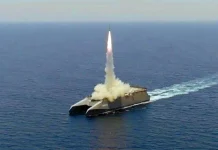
Investor sentiment turned cautious following recent military exchanges involving the United States and Iran, alongside conflicting reports over the status of the Strait of Hormuz—a critical global oil shipping route. The developments fuelled a risk-off mood, pushing Brent crude oil up 4.3%, raising fresh concerns that higher energy prices could prolong inflationary pressures and delay interest rate cuts by the US Federal Reserve.
Asian markets largely traded lower as investors reduced exposure to risk assets. Japan’s Nikkei 225 declined 2.46%, while Hong Kong’s Hang Seng Index slipped 0.11%. Australia’s ASX 200 ended largely unchanged, according to market data released by First National Bank (FNB).
In contrast, US equities closed Friday’s session in positive territory, supported by renewed optimism surrounding artificial intelligence and semiconductor stocks. The S&P 500 gained 0.42%, the Nasdaq Composite advanced 0.29%, and the Dow Jones Industrial Average added 0.29%, helped by a strong market debut from South Korean chipmaker SK Hynix, whose American depositary receipts climbed 13%.
European markets delivered mixed performances, with the FTSE 100 rising 0.24% while the Euro Stoxx 50 edged 0.23% lower as investors balanced geopolitical uncertainty against improving sentiment in the technology sector.
In South Africa, the Johannesburg Stock Exchange (JSE) was expected to open cautiously after weakness in global equity futures dampened investor appetite. Meanwhile, shares of Tencent fell 0.13% in Hong Kong trading, weighing on South African-listed technology investors Naspers and Prosus at the market open.
Despite the global uncertainty, the JSE ended the previous week on a stronger footing. Financial stocks led gains, rising 1.12%, with PSG advancing 3.61% and Standard Bank gaining 1.44%. Industrials climbed 0.45%, supported by a 7.84% rally in Industrial Materials, while Resources rose 0.51%.
The positive momentum lifted the FTSE/JSE All Share Index by 0.79% to 110,355 points, while the Top 40 Index gained 0.65% to close at 101,977 points.
The Issues
The latest market volatility highlights how quickly geopolitical developments can reshape investor sentiment and capital flows. Any disruption to the Strait of Hormuz—which handles a significant share of global oil exports—could sustain higher crude prices, complicating the inflation outlook for major economies. For central banks, particularly the US Federal Reserve, persistent energy-driven inflation could delay monetary policy easing and keep borrowing costs elevated for longer.
What’s Being Said
“Renewed geopolitical uncertainty has introduced a risk-off tone across global markets, although strength in AI and technology stocks continues to provide support for US equities,” First National Bank (FNB) said in its latest global markets brief.
The bank added that investors remain focused on developments in the Middle East, with crude oil prices and inflation expectations likely to remain key drivers of market direction in the near term.
What’s Next
- Investors will closely monitor developments surrounding US-Iran relations and the security of the Strait of Hormuz for potential market-moving signals.
- Market attention will remain on upcoming US inflation data and Federal Reserve communications for clues on the interest rate outlook.
- Oil price movements and earnings from major technology companies are expected to remain key drivers of global equity market performance this week.
Bottom Line
The Bottom Line: Global markets remain caught between two powerful forces—geopolitical uncertainty and resilient technology-led optimism. While AI continues to underpin equity valuations, any sustained escalation in Middle East tensions or further surge in oil prices could quickly shift investor focus from growth to risk preservation.