



By Boluwatife Oshadiya | June 1, 2026
Key Points
- Nigerian exporters face multiple charges before cargo even reaches Apapa Port, significantly increasing export costs
- Freight forwarding, terminal handling, inspections, certifications, and international shipping fees can push container export expenses into millions of naira
- Industry stakeholders warn that rising logistics and energy costs are undermining the competitiveness of Nigeria’s growing non-oil export sector
- Export operators are calling for digitalisation, streamlined inspections, and lower port charges to improve efficiency
- Despite record non-oil export growth, structural bottlenecks continue to raise the cost of doing business
Main Story
A few weeks after securing a buyer in the United Kingdom for a shipment of dried hibiscus flowers, Lagos-based exporter Mr. Iyiola believed the most difficult part of the transaction was behind him.
The products had been sourced, processed, packaged, and prepared for export. The buyer had confirmed payment arrangements. The shipping schedule had been secured. Yet before the container could enter Apapa Port, a new challenge emerged — cost.
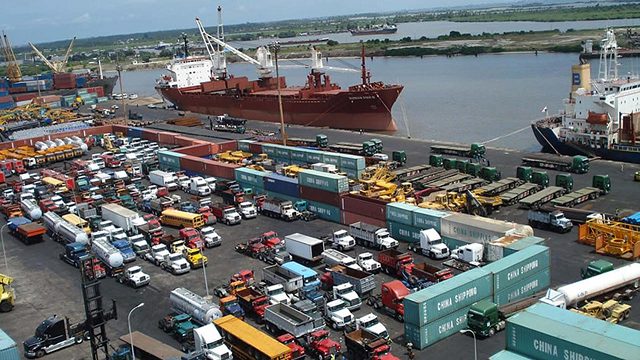
Documentation fees arrived first. Then came transportation expenses as the cargo moved through Lagos’ congested road network. Freight forwarding charges followed, alongside terminal handling fees, regulatory inspections, container stuffing expenses, and certification costs.
By the time the container was ready for loading onto an outbound vessel, the exporter had spent hundreds of thousands of naira before paying a single dollar for ocean freight.
His experience reflects a growing reality confronting thousands of Nigerian exporters.
While government agencies continue to promote export diversification and non-oil trade expansion, exporters say the actual cost of moving goods out of Nigeria remains one of the sector’s biggest challenges.
Industry operators argue that the burden extends beyond freight rates. Exporters must navigate multiple documentation requirements, overlapping agency procedures, infrastructure deficiencies, rising fuel costs, and operational delays that collectively increase the final cost of every shipment.
The impact is becoming increasingly significant as Nigeria attempts to position non-oil exports as a major source of foreign exchange earnings amid persistent volatility in global energy markets.
According to export consultants and freight forwarding professionals, the total cost of shipping a standard 20-foot container through Apapa Port depends on cargo type, destination, regulatory requirements, and logistics arrangements. However, exporters consistently face charges across several mandatory stages.
The first stage involves documentation and regulatory compliance. Exporters must process the Nigeria Export Proceed (NXP) form, register with the Nigerian Export Promotion Council (NEPC), and obtain product-specific certifications where applicable. The NXP processing fee alone typically costs around N8,000 per transaction, while additional permits vary depending on the commodity being exported.
Transportation costs represent another major expense. Goods must be moved from warehouses, farms, factories, or processing centres to export terminals, often through congested logistics corridors leading to Lagos ports.
Freight forwarding services generally cost between N200,000 and N250,000 per container, depending on complexity and destination requirements.
At the port, exporters incur terminal handling charges estimated at between N100,000 and N120,000 per container. Container stuffing fees range from N130,000 to N150,000, while inspection and certification processes can add another N100,000 to N150,000.
Additional compliance requirements such as certificates of origin, fumigation certificates, phytosanitary certificates, NAFDAC approvals, and mineral export permits can increase costs further depending on the nature of the cargo.
International freight remains one of the largest cost components. According to industry estimates, ocean freight for a 20-foot container bound for the United Kingdom or European Union currently ranges between €1,000 and €2,000, excluding inland logistics and regulatory expenses.
Exporters are also required to pay the Nigeria Export Supervision Scheme (NESS) fee, which is charged at 0.5 percent of Free on Board (FOB) value.
For many exporters, particularly small and medium-sized enterprises, these cumulative costs significantly affect profitability and competitiveness in international markets.
The Issues
Nigeria’s export ambitions have grown substantially over the past decade, but infrastructure and logistics challenges continue to constrain the sector.
One of the most persistent issues is the cost and efficiency of moving cargo through the country’s port system. While reforms have improved aspects of export processing, multiple agency checks, documentation requirements, and port access challenges continue to create delays and additional expenses.
Road infrastructure remains another concern. Apapa and surrounding logistics corridors have historically experienced severe congestion, increasing transportation costs and reducing supply chain efficiency. Although government interventions have improved traffic conditions compared to previous years, exporters continue to report delays that affect delivery schedules.
Energy costs present another challenge. Exporters involved in processing agricultural commodities, manufactured goods, and value-added products must contend with rising electricity and fuel expenses before goods even reach export terminals.
These challenges are occurring at a time when Nigeria is aggressively pursuing export diversification.
According to data from the National Bureau of Statistics (NBS), non-oil exports rose to N12.36 trillion in 2025, up from N9.09 trillion in 2024. The increase reflects stronger performance across agricultural products, manufactured goods, chemicals, and mineral exports.
However, industry stakeholders argue that sustaining this growth will require improvements in logistics efficiency and cost management.
Without addressing structural bottlenecks, exporters warn that Nigeria risks losing competitiveness to rival export markets across Africa and other emerging economies.
What’s Being Said
“Exporters are affected by bottlenecks across port access, documentation, storage charges and logistics delays that increase the overall cost of exporting goods,” said Frank Ogunojemite, President of the Africa Association of Professional Freight Forwarders & Logistics of Nigeria (APFFLON).
According to Ogunojemite, operational inefficiencies continue to undermine efforts to improve trade facilitation and expand non-oil exports.
“Multiple bottlenecks across port access, documentation processes and agency checks have made export operations more expensive and less efficient,” he added.
Okechukwu Anthony Onyebuchi, Operations and Documentation Manager at Fortune Global Shipping, explained that export documentation is now centralised through the Lilypond Export Command in Lagos before cargo can access Apapa, Tin Can Island, PTML, and Lekki ports.
“Export documentation is now centrally processed through the Lilypond Export Command in Lagos, where approvals are issued before cargo can access ports such as Apapa, Tin Can Island, PTML and Lekki,” Onyebuchi said.
He noted that exporters must still undergo multiple inspections and obtain approvals from several government agencies before shipment clearance.
Bamidele Ayemibo, Lead Consultant at 3T Impex Trade Center, said logistics expenses remain one of the biggest challenges confronting exporters.
“Exporters incur costs across multiple stages of the export chain, including documentation, freight forwarding, port handling and international freight,” Ayemibo said.
He added that freight charges alone for exports to the UK and European Union currently range between €1,000 and €2,000 per 20-foot container.
“Rising inland transport, port handling and energy-related costs are impacting exporters, particularly smaller operators who bear the brunt of logistics expenses,” Ayemibo added.
What’s Next
- Industry groups are expected to intensify calls for the full digitalisation of export procedures across government agencies to reduce processing delays and paperwork.
- Stakeholders continue to advocate for a single-window export clearance framework that would consolidate inspections and documentation requirements.
- Ongoing investments in port infrastructure, road rehabilitation, and logistics corridors will be closely monitored for their impact on export efficiency.
- Policymakers are expected to focus on improving Nigeria’s competitiveness under the African Continental Free Trade Area (AfCFTA), where logistics efficiency remains a key determinant of export success.
Bottom Line
The Bottom Line: Nigeria’s non-oil export sector is growing rapidly, but the cost of moving goods out of the country remains a significant competitive disadvantage. Unless structural bottlenecks across documentation, logistics, infrastructure, and port operations are addressed, exporters will continue to absorb costs that ultimately weaken Nigeria’s position in global markets. For a country seeking to diversify its economy away from oil, reducing the cost of export logistics may prove just as important as increasing production itself.