









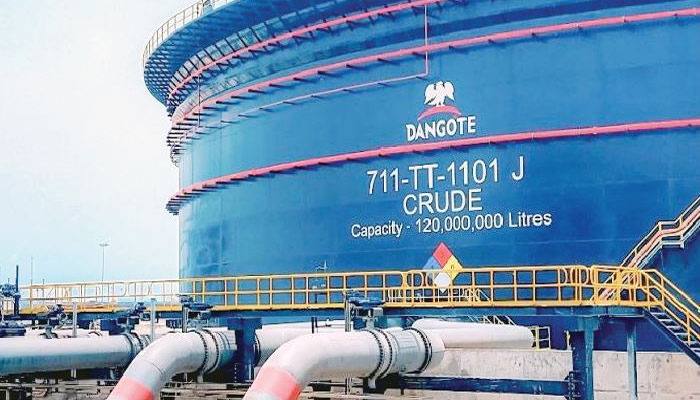
Dangote Petroleum Refinery has cautioned that continued dependence on coastal logistics for the distribution of petrol could significantly drive up pump prices, potentially pushing the cost of Premium Motor Spirit (PMS) to as high as N1,000 per litre if the associated expenses are transferred to consumers.
The refinery issued the warning in a statement on Thursday, highlighting the cost implications of evacuating petroleum products through marine transportation rather than pipelines or land-based distribution systems.
According to the company, while petroleum marketers retain the freedom to choose their preferred evacuation methods, reliance on coastal shipping introduces substantial additional costs that could undermine the price advantages achieved through domestic refining.
The refinery noted that the issue extends beyond operational preferences and carries broader consequences for fuel affordability, consumer welfare, and Nigeria’s overall energy cost structure, particularly at a time when local refining is expected to stabilise prices.
Cost Implications of Coastal Logistics
Dangote Refinery stated that marine-based evacuation significantly increases the cost of distributing refined petroleum products and could erode the economic benefits of local production if adopted widely.
“Coastal logistics can add approximately N75 per litre to the cost of petrol, which could push PMS pump prices to N1,000 per litre if passed on to consumers,” the company said.
It further noted that Nigeria’s daily fuel consumption averages around 50 million litres of PMS and about 14 million litres of diesel. Based on these volumes, reliance on coastal logistics could impose an additional annual cost estimated at N1.752 trillion.
According to the refinery, these costs would ultimately be absorbed either by producers through reduced margins or by consumers through higher pump prices.
Call for Cost-Efficient Distribution Choices
The company urged both marketers and policymakers to prioritise evacuation and distribution options that support price stability and protect end users from unnecessary cost escalation.
Dangote Refinery explained that coastal logistics involves transporting petroleum products by sea along Nigeria’s coastline, a process that introduces expenses related to port charges, maritime levies, vessel operations, and regulatory fees—costs that do not directly enhance consumer value.
In contrast, the refinery maintains that gantry-based truck loading remains the most cost-effective evacuation method. According to the company, its gantry infrastructure eliminates multiple layers of costs associated with marine transportation.
The refinery warned that inefficient evacuation decisions could reverse the pricing gains already achieved through increased domestic refining capacity.
Local Refining Gains at Risk
Nigeria’s energy sector has historically depended on imported refined petroleum products due to limited domestic refining capacity, exposing the economy to foreign exchange pressures and global price volatility.
The commencement of operations at the Dangote Refinery marked a structural shift toward local refining, significantly reducing reliance on imports. Increased domestic supply has helped moderate fuel prices and improve market stability.
However, Dangote Refinery argued that distribution infrastructure has now emerged as a critical pressure point, with logistics costs playing an increasingly decisive role in determining pump prices.
The company disclosed that local refining has already delivered notable price reductions, with diesel prices declining from about N1,700 per litre to between N980 and N990, while PMS prices have dropped from around N1,250 per litre to a range of N839 to N900 per litre.
It added that increased domestic supply has reduced fuel import volumes, eased pressure on foreign exchange demand, and contributed to greater market stability, supporting a stronger naira exchange rate of about N1,385 to the dollar.
Infrastructure Investment and Expansion Plans
Dangote Refinery said it has made significant investments to support efficient fuel distribution nationwide, including the development of a gantry facility with 91 loading bays capable of dispatching up to 2,900 tankers daily.
The company described gantry loading as the most efficient evacuation option, as it avoids port-related charges and maritime expenses that inflate distribution costs.
It renewed calls for coordinated nationwide investment in pipeline infrastructure, arguing that improved pipeline networks would further reduce logistics costs and help ensure that consumers fully benefit from domestic refining.
In January, the refinery reaffirmed its commitment to operating at full capacity while supplying over 50 million litres of petrol daily to the Nigerian market. The Lagos-based 650,000 barrels-per-day facility said production remains stable and uninterrupted.
In October, Dangote Refinery also announced plans to expand its production capacity from 650,000 barrels per day to 1.4 million barrels per day, further strengthening Nigeria’s domestic refining landscape.



 to as high as N1,000 per litre if the associated expenses are transferred to consumers.)