




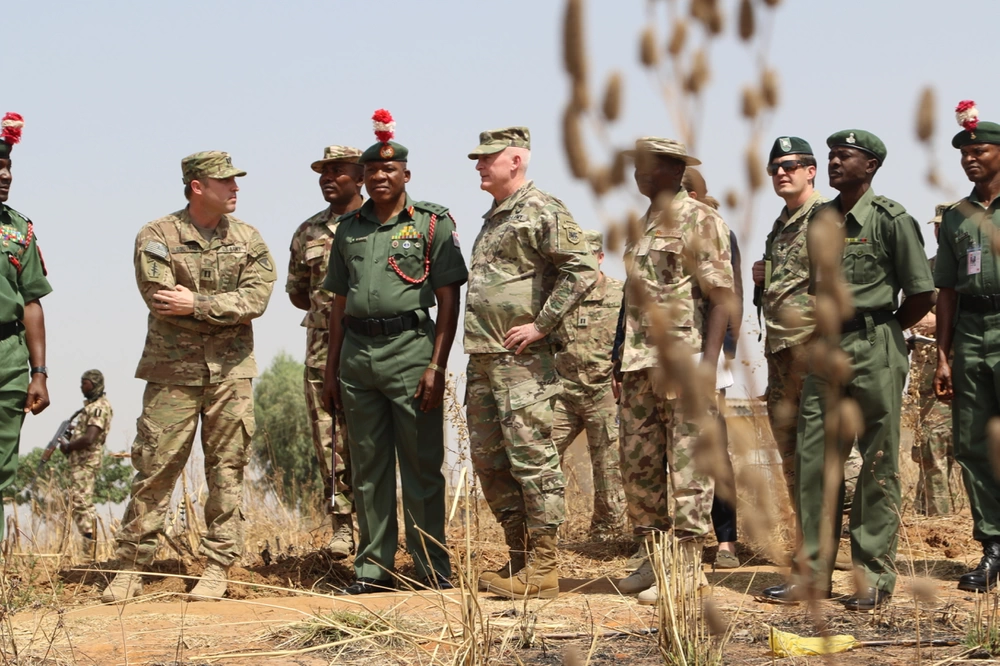
The United States has deployed a small contingent of troops to Nigeria, marking its first officially acknowledged ground presence in the country since airstrikes were carried out against terrorist targets on Christmas Day 2025.
The deployment comes amid growing security collaboration between Washington and Abuja following U.S. air operations ordered in December by President Donald Trump, who said the strikes targeted Islamic State-linked fighters operating within Nigeria.
At the time, Trump signaled that further American military action in Nigeria remained a possibility as part of broader efforts to counter extremist violence in West Africa.
According to a report by Reuters, the U.S. military had been conducting intelligence-gathering operations over Nigeria prior to the December strikes. Surveillance flights were reportedly launched from neighboring Ghana as early as late November 2025, providing intelligence support ahead of the air campaign.
Reuters reported on Tuesday that the troop deployment followed an agreement between the Nigerian government and the United States to expand cooperation in response to escalating terrorist threats across the region.
Confirming the development, AFRICOM Commander General Dagvin R. M. Anderson said the renewed partnership had led to the deployment of a specialized U.S. team to support Nigeria’s counterterrorism operations.
“That collaboration has resulted in a small U.S. team bringing unique capabilities from the United States to work alongside Nigeria,” Anderson said during a press briefing.
While the general did not specify the number of personnel involved or their exact mission, he indicated that the team would complement Nigeria’s ongoing security operations.
Reuters further reported that Nigeria’s Chief of Defence Staff, General Christopher Musa, also acknowledged the presence of U.S. troops in the country but declined to disclose operational details.
Security sources cited in the report suggested that the American personnel are likely engaged in intelligence collection and analytical support, assisting Nigerian forces in targeting militant groups such as Boko Haram and the Islamic State West Africa Province (ISWAP).
Nigeria’s counterterrorism efforts have attracted heightened scrutiny from Washington in recent months, particularly following accusations by President Trump that the Nigerian government had failed to adequately protect Christian communities in the country’s northwest.
The Federal Government has strongly rejected those claims, insisting that military operations are conducted without religious bias and are directed at all armed groups responsible for violence against civilians.
Officials in Abuja have repeatedly emphasized that Nigeria’s security forces target insurgents and criminal groups based on threat assessment and operational intelligence, not religious identity.
The deployment of U.S. troops is seen as a significant step in reinforcing bilateral military cooperation, as both countries seek to contain the spread of extremist violence in Nigeria and prevent further destabilization across West Africa.The United States has deployed a small contingent of troops to Nigeria, marking its first officially acknowledged ground presence in the country since airstrikes were carried out against terrorist targets on Christmas Day 2025.
The deployment comes amid growing security collaboration between Washington and Abuja following U.S. air operations ordered in December by President Donald Trump, who said the strikes targeted Islamic State-linked fighters operating within Nigeria.
At the time, Trump signaled that further American military action in Nigeria remained a possibility as part of broader efforts to counter extremist violence in West Africa.
According to a report by Reuters, the U.S. military had been conducting intelligence-gathering operations over Nigeria prior to the December strikes. Surveillance flights were reportedly launched from neighboring Ghana as early as late November 2025, providing intelligence support ahead of the air campaign.
Reuters reported on Tuesday that the troop deployment followed an agreement between the Nigerian government and the United States to expand cooperation in response to escalating terrorist threats across the region.
Confirming the development, AFRICOM Commander General Dagvin R. M. Anderson said the renewed partnership had led to the deployment of a specialized U.S. team to support Nigeria’s counterterrorism operations.
“That collaboration has resulted in a small U.S. team bringing unique capabilities from the United States to work alongside Nigeria,” Anderson said during a press briefing.
While the general did not specify the number of personnel involved or their exact mission, he indicated that the team would complement Nigeria’s ongoing security operations.
Reuters further reported that Nigeria’s Chief of Defence Staff, General Christopher Musa, also acknowledged the presence of U.S. troops in the country but declined to disclose operational details.
Security sources cited in the report suggested that the American personnel are likely engaged in intelligence collection and analytical support, assisting Nigerian forces in targeting militant groups such as Boko Haram and the Islamic State West Africa Province (ISWAP).
Nigeria’s counterterrorism efforts have attracted heightened scrutiny from Washington in recent months, particularly following accusations by President Trump that the Nigerian government had failed to adequately protect Christian communities in the country’s northwest.
The Federal Government has strongly rejected those claims, insisting that military operations are conducted without religious bias and are directed at all armed groups responsible for violence against civilians.
Officials in Abuja have repeatedly emphasized that Nigeria’s security forces target insurgents and criminal groups based on threat assessment and operational intelligence, not religious identity.
The deployment of U.S. troops is seen as a significant step in reinforcing bilateral military cooperation, as both countries seek to contain the spread of extremist violence in Nigeria and prevent further destabilization across West Africa.