









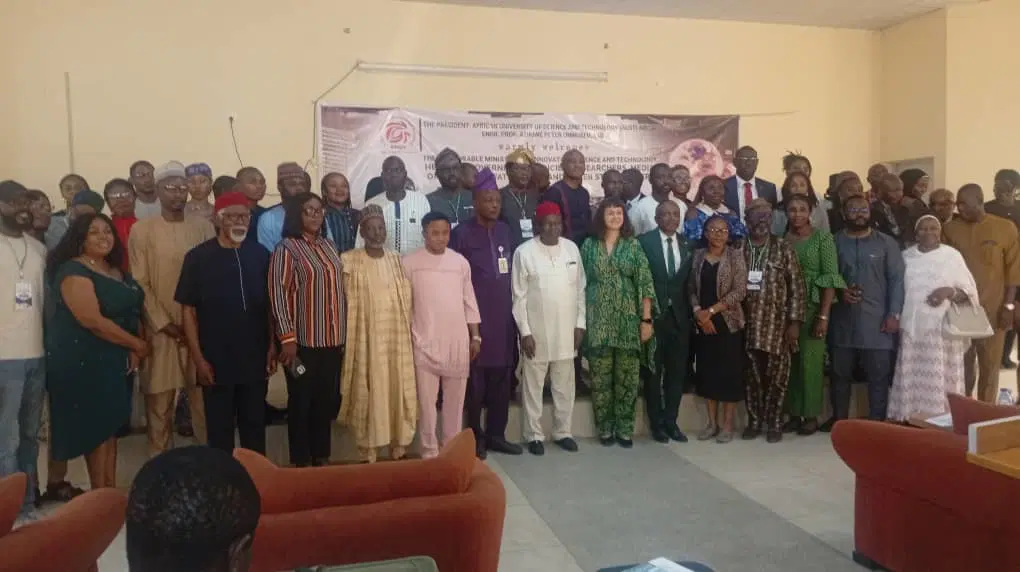
Stakeholders at the maiden Nigeria Science, Technology and Innovation Conference (STICOMMS) in Abuja have issued a stark warning regarding the intersection of environmental pollution and public health.
Keynote speaker Prof. Hillary Inyang alerted participants on Wednesday, January 21, 2026, that petroleum residues, specifically leaking underground storage tanks and hydrocarbon dust, could be contributing to as much as 60 percent of cancer cases in Nigeria. The conference, hosted by the African University of Science and Technology (AUST), emphasized that while Nigeria produces world-class scientific research, the “gown-to-town” gap remains a barrier to implementing life-saving regulations and industrial growth.
In immediate response to these health risks, the Nigerian Midstream and Downstream Petroleum Regulatory Authority (NMDPRA) and the NUPRC have moved to tighten oversight of the nation’s retail outlets. New regulations introduced this January mandate rigorous monitoring and automated leak detection for all underground tanks, with heavy penalties for non-compliance.
Authorities are also drafting a specialized framework to manage “orphaned” or abandoned filling stations, which experts identified as silent primary sources of groundwater poisoning. This regulatory shift aims to improve Nigeria’s life expectancy, which currently sits at a concerning 56 years compared to the global high of 81 years.
The conference highlighted AUST’s recent success in bridging the innovation gap, noting that the university has registered 12 new patents in the last two years. Prof. Azikiwe Onwualu, President of AUST, showcased “AUSTInspire,” an innovation hub dedicated to commercializing research in fields ranging from renewable energy to medical technology.
He argued that science communication is not just about sharing data but about making knowledge “accessible, commercialized, and aligned with societal needs.” Despite the absence of the Minister of Innovation, Science and Technology, the event successfully drew a diverse faculty of researchers and policymakers to discuss a unified STI (Science, Technology, and Innovation) agenda.
The summit climaxed with a high-profile recognition of Governor Umaru Bago of Niger State, who received an award for his leadership in food security and agricultural innovation. By integrating cutting-edge biotechnology and mechanized farming under his “Feed the Nation” agenda, Niger State has become a pilot for sustainable integrated productive communities.
As the conference concluded today, Thursday, January 22, the final resolution called for a permanent collaboration between science reporters and researchers to ensure that future environmental and health warnings are translated into immediate legislative action.









 in Abuja have issued a stark warning regarding the intersection of environmental pollution and public health.)