







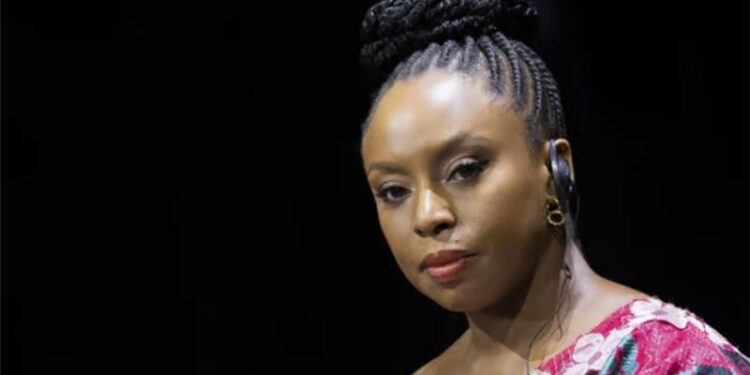
Renowned Nigerian author, Chimamanda Ngozi Adichie, has commenced legal action against Euracare Multi-Specialist Hospital, Lagos, over the death of her 21-month-old son, Nkanu Nnamdi Esege, allegedly arising from medical negligence.
The allegations, contained in a legal notice dated January 10, 2026, have prompted Lagos State Governor, Babajide Sanwo-Olu, to order a probe into the incident, further intensifying public scrutiny of standards within Nigeria’s private healthcare sector.
According to the notice and subsequent statements by the family, the child died barely a day after he was referred to Euracare for diagnostic procedures ahead of a planned medical evacuation to the United States.
The legal notice, issued by solicitors led by Professor Kemi Pinheiro, SAN, alleges that Euracare, its anaesthesiologist and other attending medical personnel breached their duty of care to the child. Adichie and her partner, Dr. Ivara Esege, contend that the hospital’s actions fell short of accepted medical and patient-safety standards.
Allegations of Procedural Lapses
The notice claims that the child was administered intravenous sedation using propofol and subsequently developed severe complications while being transported to the cardiac catheterisation laboratory following an MRI scan.
The parents alleged that despite being under deep sedation, the child was transferred between clinical areas under conditions that raised “serious and substantive concerns” about compliance with patient-safety protocols. Specifically, they claim the transfer was carried out without supplemental oxygen, continuous physiological monitoring or adequate accompanying medical personnel.
Further concerns cited include the cumulative dosing of propofol in a critically ill child, inadequate airway protection, delayed recognition of respiratory or cardiovascular distress, and the alleged absence of basic resuscitation equipment. The solicitors also accused the hospital of failing to adequately disclose the risks associated with the use of propofol, thereby undermining the process of informed consent.
Demand for Records and Evidence Preservation
As part of their legal demands, the parents requested certified copies of all medical records relating to their son’s treatment within seven days. These include admission notes, consent forms, anaesthetic charts, drug administration logs, intensive care unit records, incident reports, and the identities of all medical personnel involved in the child’s care.
The hospital was also directed to preserve all relevant evidence, including CCTV footage, electronic monitoring data, pharmacy records and internal communications. The letter warned that any destruction or alteration of evidence could constitute obstruction of justice and attract legal consequences.
Background to the Incident
The child, born on March 25, 2024, was referred from Atlantis Paediatric Hospital to Euracare on January 6, 2026, for preparatory investigations, including an echocardiogram, brain MRI, insertion of a peripherally inserted central catheter (PICC line), and a lumbar puncture. He reportedly died in the early hours of January 7, 2026, following complications that arose during and after the procedures.
The child’s aunt, Dr. Anthea Esege Nwandu, a dual board-certified internal medicine physician, has publicly disputed Euracare’s statement denying negligence. She alleged multiple inconsistencies in the hospital’s account and maintained that internationally accepted standards of care—such as continuous oxygen therapy, appropriate monitoring and transfer with resuscitation equipment—were not observed.
The case has reignited national conversations around medical negligence and accountability in Lagos hospitals. In 2022, similar allegations followed the death of Big Brother Naija star Patrick Fakoya, popularly known as Rico Swavey, prompting intervention by the Federal Competition and Consumer Protection Commission (FCCPC).
At the time, the FCCPC’s Director-General, Babatunde Irukera, described viral videos allegedly recorded by medical staff instead of rendering care as violations of medical standards, patient dignity and confidentiality, leading to a review by the Lagos State Government into possible culpable negligence and dereliction of duty.
As investigations into the Adichie case unfold, stakeholders say the outcome could have far-reaching implications for patient safety, regulatory oversight and accountability within Nigeria’s healthcare system.