





As Christmas approaches and Nigerians prepare for the season of giving, fresh concerns are emerging about the safety of charity-driven aid distributions. The warnings stem from the tragedies that unfolded last December, when poorly coordinated festive events resulted in dozens of deaths across the country, turning moments of goodwill into scenes of chaos and grief.
Nigeria has witnessed a sharp rise in the number of registered non-profits over the past four years. According to statistics from the Corporate Affairs Commission (CAC), the country recorded 191,278 registered Incorporated Trustees as of November 2023, covering NGOs, foundations, faith institutions, and charitable trusts. This represents an increase of more than 174,000 organisations since 2019.
However, experts caution that the growing numbers do not necessarily translate to increased impact. Independent assessments show that many registered organisations are inactive or lack the capacity to conduct large-scale community interventions. Crucially, no national database tracks how many NGOs actually distribute food or gifts during festive periods, leaving the true scale of Christmas charity in Nigeria largely undocumented.
This gap becomes more troubling in the face of Nigeria’s economic climate. According to the National Bureau of Statistics (NBS), headline inflation rose to 34.6% in November 2024 — the highest in nearly three decades and climbed further to 34.8% in December 2024. The result is a dramatic spike in the number of families struggling to afford essentials.
With food inflation at record highs, charity distribution has increasingly become a lifeline. This desperation, combined with poor planning and inadequate safety measures, set the stage for the tragic events of last Christmas.
When Goodwill Turned Deadly: The Stampedes of December 2024
December 2024 recorded some of the worst crowd-related tragedies Nigeria has witnessed in recent years, all linked to Christmas gifts, food distributions, or children’s charity programmes.
On 18 December 2024, a Christmas funfair for children at Basorun (Bashorun) in Ibadan, Oyo State ended in disaster. The event, which promised scholarship opportunities, food items and Christmas gifts to 5,000 children, attracted far more attendees than organisers anticipated.

A sudden crowd surge led to the deaths of at least 35 children and left several others injured. The incident, widely reported across national and international media, became one of Nigeria’s deadliest child-focused charity events.
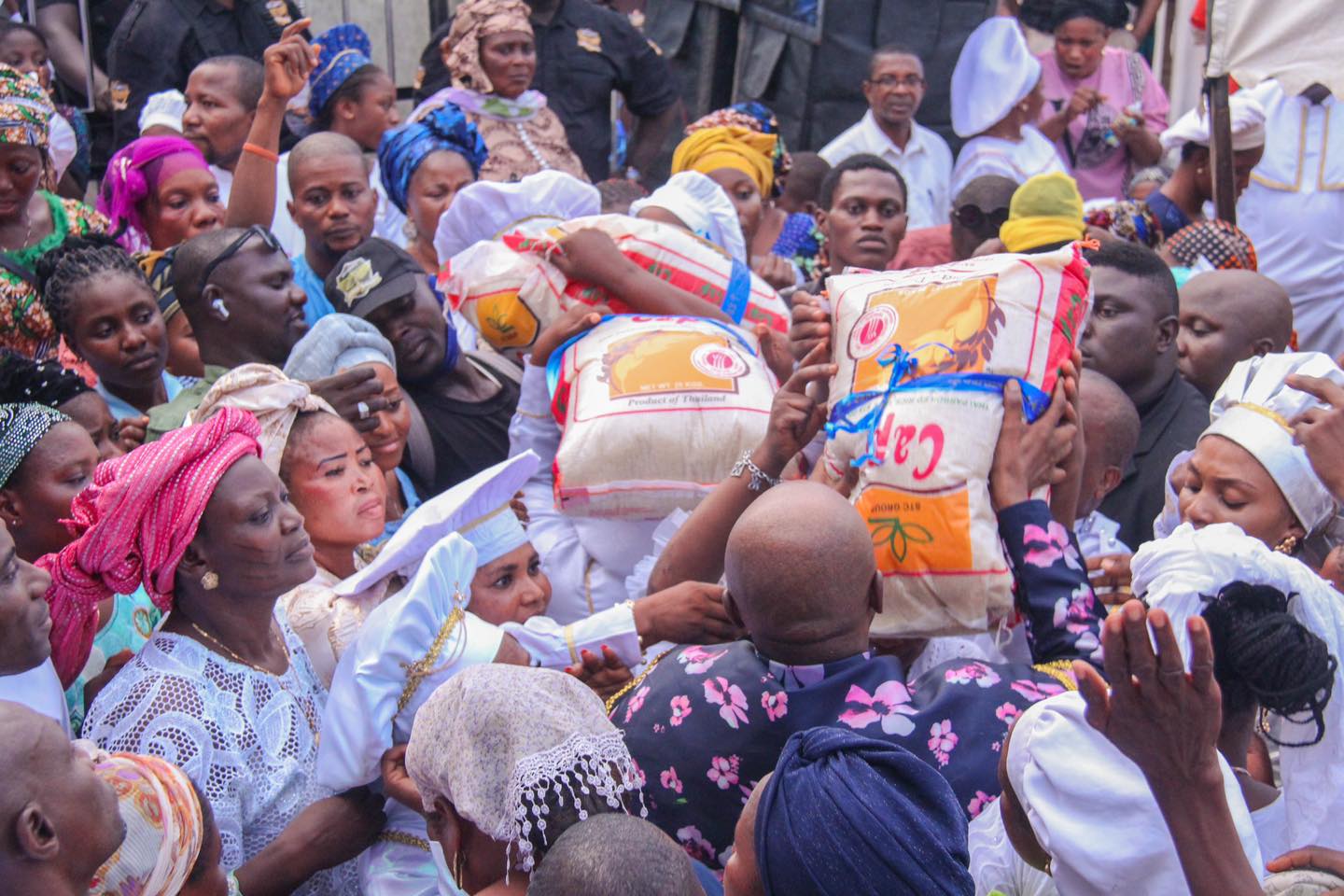
Just three days later, on 21 December 2024, another catastrophic stampede occurred in Okija, Ihiala Local Government Area of Anambra State. A charity event offering free rice and relief materials drew large crowds. Confusion at the distribution point led to a violent crush, killing at least 17 people, according to reports.
In the Federal Capital Territory, another frantic early-morning crowd formed at Holy Trinity Catholic Church, Maitama, during a festive charity distribution. By the time the gates opened at dawn, the surge had turned deadly. Ten people, including children, were confirmed dead.
Combined, these incidents claimed over 60 lives within four days, making December 2024 one of the darkest Christmas seasons in Nigeria’s recent history.
Why These Tragedies Happened
Interviews with security analysts, humanitarian experts and emergency responders point to several recurring factors:
Desperation driven by economic hardship makes large crowds inevitable.
Poor crowd-control measures, with many organisers lacking trained security personnel.
Overestimation of capacity, as small foundations and community groups attempted large events without professional support.
Lack of regulatory oversight, since many charitable events proceed without coordination with local authorities.
Experts warn that unless structural changes are implemented, such tragedies could continue during future festive seasons.
How Nigeria Can Prevent A Repeat In 2025
With the Christmas countdown now in days, humanitarian groups, religious bodies and private foundations are already planning outreach programmes. Stakeholders say the following steps are urgent:
1. Mandatory Safety Protocols for Charity Events: Organisers should be required to register large distributions with local councils, deploy trained security personnel and adopt controlled, ticket-based systems.
2. Government Oversight: Authorities must vet events likely to attract large crowds, enforce compliance, and penalise groups acting without permits.
3. Professionalisation of Non-Profits: The rapid proliferation of NGOs calls for clearer standards. Experts argue for annual audits, proper classification of active vs inactive organisations, and stricter documentation requirements.
4. Public Awareness and Responsible Beneficiary Behaviour: Residents should be sensitised to avoid dangerous rushes, with clear communication on distribution times and methods.
A Cautionary Christmas: For thousands of families who lost loved ones in December 2024, the festive season now carries a painful memory. Their tragedy serves as a warning that charity, while noble must be conducted with responsibility, structure and safety at its core.
As Nigerians prepare for Christmas 2025, the hope is simple: that generosity will no longer cost lives. With proper planning and oversight, the nation can ensure that the season of giving restores joy not grief to those who need it most.