







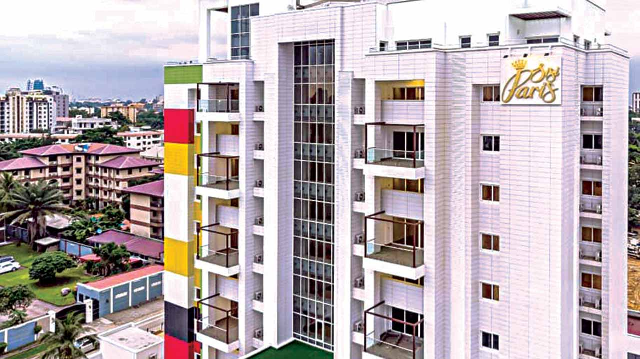
Despite the growing number of unsold luxury apartments across major Nigerian cities, the high-end real estate market has not yet shifted in favour of buyers.
Developers in Lagos, Abuja, and Port Harcourt continue to introduce new luxury projects even as existing ones remain largely unoccupied. Data from Estate Intel shows that over 700 ultra-luxury residential units are currently in the pipeline in Lagos alone, while total upcoming units in the segment are estimated at 1,436.
Similarly, listings on Nigeria Property Centre indicate that Lagos had about 47,000 homes for sale as of September 2025 — one of the highest levels in recent years.
Analysts say the apparent glut in supply has not translated into price reductions because many properties fail to meet buyer expectations in quality or design. Others note that some developers and investors hold their assets for prestige or long-term value rather than immediate sale.
Udo Okonjo, Chief Executive Officer of Fine & Country West Africa, explained that the mismatch between what developers offer and what buyers demand remains a key challenge. “Luxury is not for everyone,” she said. “Yes, we have vacant properties, but some are not built to what the market now demands.”
Market watchers say that while negotiation margins are widening and sales are taking longer to conclude, the market cannot yet be classified as a buyer’s market. Prices remain firm in prime locations such as Ikoyi, Banana Island, and Victoria Island, although softer in less exclusive neighbourhoods.
BizWatch Nigeria recently reported that housing costs in Lagos now consume as much as 70 percent of household income, a situation that further underscores the pressure on affordability even outside the luxury segment. Analysts say this trend highlights the widening gap between pricing in high-end developments and the spending power of average buyers.
Experts expect the current pattern to continue in the short term, noting that developers may need to rethink their pricing models and align better with evolving buyer preferences. Until that happens, sellers are likely to retain the upper hand in Nigeria’s luxury property market.