





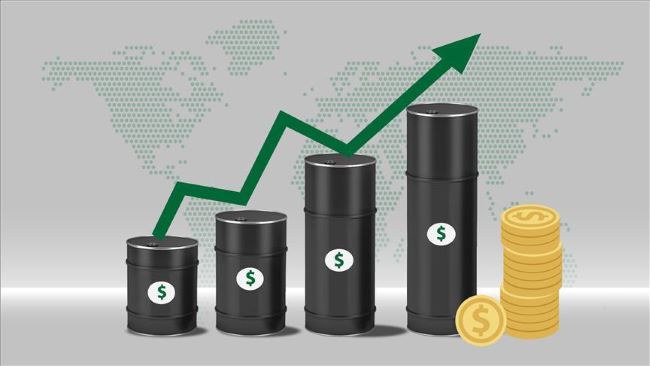
Oil prices extended their gains on Tuesday, rising by more than 0.80% for a second straight session, rebounding from last week’s lowest levels since June.
The rally was fueled by heightened geopolitical concerns, shifting OPEC+ supply strategies, and growing expectations of a more accommodative stance from the U.S. Federal Reserve, according to Samer Hasn, Senior Market Analyst at XS.com.
Geopolitical developments remain central to the market mood. The Pentagon confirmed that two Venezuelan military jets approached a U.S. Navy vessel in international waters at a dangerously close distance, escalating already tense U.S.–Venezuela relations.
This encounter came just days after President Donald Trump authorized a strike in the region, killing suspected narcotics traffickers. The move is part of Washington’s broader campaign to curb drug smuggling and increase pressure on Nicolás Maduro’s government. Reports suggest Trump is weighing a wider military campaign, including potential operations inside Venezuela, sparking renewed fears of instability in the world’s largest oil reserve holder.
Earlier deployments of three U.S. warships this month prompted speculation about a possible invasion, though analysts described the show of force as largely symbolic, aimed at unsettling Maduro’s inner circle while boosting Trump’s domestic political standing. Still, the risk of miscalculation remains high, keeping geopolitical premiums firmly embedded in oil markets.
On supply, crude futures snapped a three-day losing streak after OPEC+ confirmed plans to proceed with easing voluntary cuts in October, adding about 137,000 barrels per day. Analysts highlighted that with additional compensation cuts for overproducing members, the net effect will be modest, suggesting OPEC+ is maintaining a cautious, flexible posture to steady the market.
U.S. sanctions policy toward Venezuela continues to influence global oil trade flows. Earlier this year, Washington revoked Chevron’s license to operate in the country and introduced a 25% tariff on imports from nations buying Venezuelan crude, a move interpreted as targeting China. Analysts argue that these actions reflect an effort to reduce Maduro’s revenue while redirecting oil markets to U.S. advantage.
Meanwhile, Federal Reserve expectations are lending further support. The CME FedWatch Tool now indicates an 88% chance of a 25-basis-point rate cut in September, alongside an 11% chance of a 50-point cut. Markets are also pricing in up to 75 basis points of cumulative easing by year-end, spurred by weaker U.S. labor data. Lower interest rates typically bolster oil demand by improving financial conditions.
However, demand-side concerns persist. China’s latest trade data revealed exports rising just 4.4% in August, slowing from 7.2% in July and falling short of forecasts. A weaker trade balance underscored lingering global demand challenges, tempering optimism for a sustained oil price rally.
China’s Oil Imports Edge Higher
According to preliminary data from China’s General Administration of Customs, the country imported about 49.5 million tons of crude in August, a 4.8% increase from the previous month and 0.8% higher year-on-year. Between January and August, imports totaled 376 million tons, up 2.5% from the same period in 2024.
Analysts attribute the rise partly to post-maintenance refinery operations, as China’s more than 80 refineries—mostly state-run—continue to run at high processing rates. With an annual refining capacity of around 956 million tons, China remains the world’s largest crude buyer, meaning any shifts in its demand outlook carry global consequences.
Qatar and Syria Boost Energy Cooperation
On the diplomatic front, Qatar’s Energy Minister Saad bin Sherida Al-Kaabi met his Syrian counterpart, Mohammed Al-Bashir, in Doha on Monday to discuss strengthening ties in oil and gas.
Talks centered on exchanging expertise, joint project investment, and strategies to modernize Syria’s energy sector, according to the Syrian Arab News Agency (SANA). The ministers emphasized ongoing coordination to deepen cooperation in energy infrastructure.
Since the fall of Bashar al-Assad in late 2024 and the rise of President Ahmed al-Sharaa’s administration, Syria has sought new international partnerships. Qatar reopened its embassy in Damascus in December 2024 and has since strengthened political and economic relations, highlighted by Sharaa’s April 2025 visit to Doha.