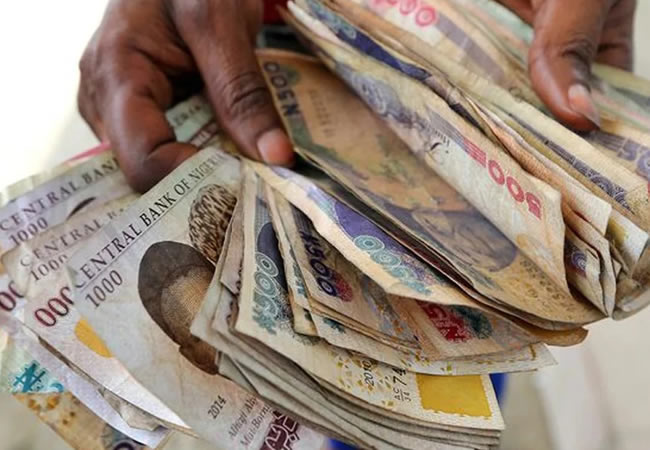
The Nigerian naira showed mixed performance across foreign exchange markets this week, as the country’s gross external reserves climbed toward the $40 billion mark on sustained inflows.
Data released by the Central Bank of Nigeria (CBN) on Wednesday revealed that the naira depreciated at the official window, closing at ₦1534.43 per dollar, compared to ₦1533.10 on Tuesday. The intraday spot rate peaked at ₦1537.25 amidst limited CBN intervention, indicating restrained dollar supply in recent sessions.

Conversely, the parallel market saw a slight appreciation in the naira to ₦1535 per dollar, buoyed by intermittent inflows and strong demand from travelers seeking personal travel allowances. Dealers said seasonal pressure continues to influence the black market, although liquidity has improved in recent weeks.
Despite reduced CBN activity, analysts note a level of stability has been maintained, thanks in part to stronger external reserves and ongoing policy tightening. As of Monday, gross reserves stood at $39.814 billion, putting the apex bank in a firmer position to defend the naira should volatility increase.
The outlook for the naira remains linked to global oil prices, the CBN’s forex strategy, and broader market sentiment. However, analysts warn that potential risks from falling oil prices and geopolitical developments could affect stability.
Global oil markets were also jittery this week, with Brent crude falling to $66.69 per barrel and West Texas Intermediate dropping to $64.19 amid renewed uncertainty over U.S. sanctions on Russia. The comments from former President Donald Trump about possible progress with Moscow rattled energy traders.
Gold prices also retreated after recent gains, with spot gold slipping by 0.39% to $3,368.01 per ounce, while U.S. futures edged down 0.22% to $3,430.52. Investors are awaiting signals from the White House ahead of upcoming Federal Reserve nominations and potential tariff actions targeting India.