






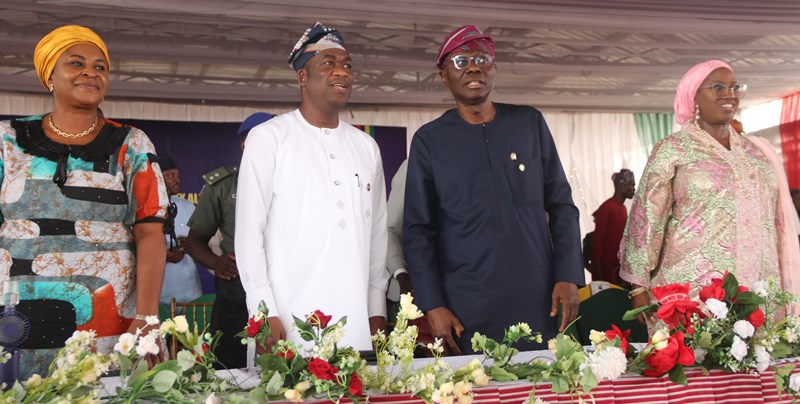
Lagos State Governor Babajide Sanwo-Olu on Tuesday took a major step toward addressing gender inequality and promoting inclusive economic growth with the launch of the Women Economic Empowerment (WEE) Policy Roadmap at Shell Hall, MUSON Centre, Onikan.
Developed by the Ministry of Women Affairs and Poverty Alleviation (WAPA), the roadmap provides a strategic framework designed to eliminate systemic barriers faced by women in key sectors such as agriculture, entrepreneurship, education, and emerging industries like technology.
“This initiative reflects our administration’s unwavering commitment to gender equity and inclusive economic growth,” Governor Sanwo-Olu stated during his keynote address. “Women constitute nearly half of our population, yet they continue to face substantial barriers in education, skill acquisition, access to finance, and participation in both traditional and emerging industries.”
The WEE Roadmap is anchored on five critical pillars — Agriculture, Entrepreneurship, Traditional Labour Market, Emerging Industries, and Education and Skill Acquisition. It sets out interventions such as improved access to finance, digital inclusion, enhanced working conditions, and gender-responsive policies grounded in data-driven strategies.
“In agriculture, we aim to increase women’s access to digital tools, e-commerce platforms, and targeted financing to grow agribusinesses and connect them to broader markets,” Sanwo-Olu explained. “In entrepreneurship, the roadmap recommends designing gender-friendly financial services and strengthening mentorship networks.”
The governor highlighted that the policy was shaped through extensive stakeholder engagement, involving government ministries, private sector leaders, NGOs, community representatives, and women’s groups, including persons with disabilities. “This participatory approach helped shape a contextual and inclusive understanding of who a woman is in Lagos State. Her aspirations and challenges, from youth to old age, must be central to the policies we design,” he said.
Acknowledging challenges such as cultural biases against girls’ education, underrepresentation in STEM, and legal and infrastructural gaps in the labour market, Sanwo-Olu stressed that the roadmap is a strategic instrument for unlocking women’s full potential. “Empowering women economically does not only lift individual households, it strengthens our communities and grows our economy,” he added.
The governor called on all stakeholders to ensure full implementation of the roadmap, urging them to see it “not just as a policy on paper, but as a living instrument that transforms lives across Lagos.”
Commissioner for Women Affairs and Poverty Alleviation, Bolaji Dada, described the roadmap as a practical strategy to address systemic economic barriers. “At WAPA, we see this roadmap as a launchpad to expand our vocational training programmes, strengthen micro-enterprise support, foster public-private partnerships, and drive policy advocacy for women in the informal sector,” she said.
“When we empower a woman, we uplift a household, strengthen the economy, and build a more prosperous Lagos. Women’s empowerment is not a women’s issue, it is a Lagos issue, a development issue, and a moral imperative,” Dada concluded.