







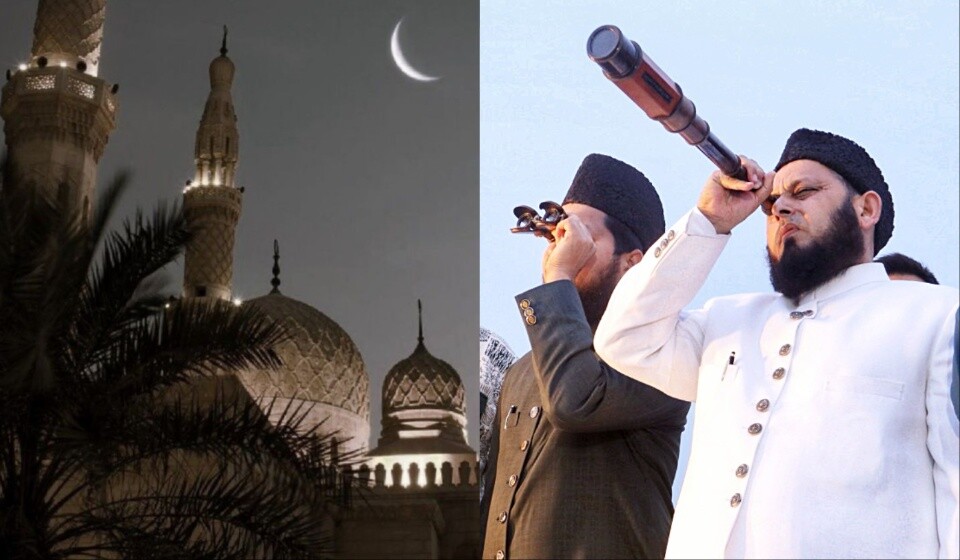
The Islamic lunar calendar ushers in a new era as Saudi Arabia and Nigeria both officially announce Thursday, June 26, 2025, as the first day of Muharram, signifying the beginning of the Hijri year 1447 AH.
The Supreme Court of Saudi Arabia confirmed the start of the Islamic New Year following the verified sighting of the new crescent moon on Wednesday evening, corresponding to the 29th of Dhul Hijjah. According to a report from the Saudi Press Agency, the decision was reached after credible testimonies were validated by the Crescent Sighting Committee.
The announcement was accompanied by a message of unity and prayers for the nation’s leaders, including King Salman and Crown Prince Mohammed bin Salman. The statement expressed hope for a year of peace and collective strength for Muslims around the globe.
Confirmation of the moon’s sighting was also disseminated via social media. The official account of the Two Holy Mosques in Makkah and Madinah, @HaramainInfo, posted on X (formerly Twitter):
“1st Muharram 1447 – Thursday, 26 June 2025. Crescent for the new Islamic year was sighted this evening. The new Hijri year begins tomorrow.”
In Nigeria, similar confirmation was issued by the National Moonsighting Committee under the National Supreme Council for Islamic Affairs (NSCIA). In a midnight announcement shared on X, the committee stated:
“His Eminence, the Sultan of Sokoto has declared Thursday, 26/6/2025 as 1st Muharram 1447 AH. The crescent for the new Islamic year and the month of Muharram was SEEN today.”
As Muslims begin their observance of the sacred month of Muharram, attention also turns toward Ashura, which will fall on Saturday, July 5, 2025. The 10th of Muharram, known as Ashura, holds deep spiritual meaning for the global Muslim community. It commemorates important historical events, including the miraculous escape of Prophet Musa (Moses) and the Children of Israel from the tyranny of Pharaoh. Additionally, it marks the martyrdom of Imam Hussain, the grandson of Prophet Muhammad (peace be upon him), who was slain at the Battle of Karbala.
Fasting on Ashura is a highly regarded Sunnah, with religious scholars recommending fasting either on the 9th and 10th or the 10th and 11th of Muharram for enhanced spiritual benefit.
The Hijri calendar—also referred to as the Islamic lunar calendar—originated in 622 CE with the pivotal Hijrah (migration) of the Prophet Muhammad (peace be upon him) from Makkah to Madinah. This momentous event marked the establishment of the first Islamic state and laid the foundation for the Muslim calendar.
Structured around lunar cycles, the Islamic calendar consists of 12 months: Muharram, Safar, Rabi’ al-Awwal, Rabi’ al-Thani, Jumada al-Awwal, Jumada al-Thani, Rajab, Sha’ban, Ramadan, Shawwal, Dhul Qa’dah, and Dhul Hijjah. Each month begins upon the verified sighting of a new crescent moon, making the Hijri year shorter than the Gregorian calendar by approximately 10 to 12 days.
Muharram, the first of these months, is one of four designated as sacred in Islam. During these months—Muharram, Rajab, Dhul Qa’dah, and Dhul Hijjah—conflict and warfare are traditionally prohibited, and acts of worship, self-purification, and reflection are strongly encouraged.
As the Muslim ummah welcomes 1447 AH, believers across the world engage in reflection, prayer, and acts of devotion, drawing on the spiritual richness of the Islamic calendar’s beginning. Religious leaders and scholars have encouraged the faithful to embrace the values of patience, faith, and unity in this new year.
The transition into 1447 AH invites both reflection on the lessons of the past and renewed spiritual commitment for the months ahead. With the advent of Muharram and the upcoming Ashura observance, Muslims everywhere are reminded of the enduring relevance of faith, sacrifice, and steadfastness.