





The Federal Government is considering urgent financial and policy interventions to address power tariff challenges affecting gas supply and payment structures at several thermal power plants operated by the Nigerian National Petroleum Company Limited (NNPC Ltd).
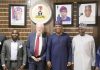
The development was disclosed during a high-level meeting held at the NNPC Towers in Abuja, involving the Minister of State for Petroleum Resources (Gas), Ekperikpe Ekpo; the Minister of Finance and Coordinating Minister of the Economy, Wale Edun; and top NNPC officials led by Dr. Salihu Jamari, who represented the Executive Vice President, Gas, Power and New Energy.
According to a statement released by Ekpo’s media aide, Louis Ibah, the discussions focused on financial bottlenecks and tariff gaps that threaten the operational viability of key gas-fired power plants, including the Maiduguri Emergency Power Plant, Okpai Independent Power Plant (IPP) Phase 2, and the Kano IPP Phase 1.
The NNPC Ltd delegation reportedly raised serious concerns over delayed payments and unresolved tariff shortfalls within the Nigeria Bulk Electricity Trading (NBET) framework, warning that these issues posed significant risks to the sustainability of the plants. “NNPC Ltd warned that without timely intervention, power supply to key regions may be jeopardised, with potential economic and social impacts,” the statement read.
Minister Ekpo stressed that resolving the tariff-related challenges is essential for Nigeria’s gas-to-power infrastructure to operate effectively and support economic development. He noted that reliable power generation was critical to stabilising regions such as Maiduguri and Kano, and to maximising contributions from Okpai Phase 2 to the national grid.
Finance Minister Wale Edun echoed the urgency, calling for a unified approach among stakeholders to develop a sustainable financial mechanism that ensures the continued viability of the power plants and strengthens national grid reliability.
All parties agreed to hold a follow-up meeting with the Minister of Power to work towards actionable solutions, with a short timeline aimed at securing the long-term operation of the affected plants.
Nigeria’s power sector continues to face liquidity challenges driven by subsidised tariffs and inadequate metering. While the government has pledged to subsidise electricity for all consumers except those in Band A, Power Minister Adebayo Adelabu recently revealed that the N200 billion monthly subsidy is unsustainable.
The inability of electricity distribution companies (DisCos) to recover sufficient revenues has had a ripple effect across the power value chain, resulting in mounting debts to power generation companies (GenCos) and gas suppliers. Stakeholders warn that unless structural financial issues are urgently addressed, the country’s power supply and economic stability could be at greater risk.