







After four straight months of decline, Nigeria’s foreign exchange reserves are beginning to stabilise, even as low crude oil prices persist. Data from the Central Bank of Nigeria (CBN) showed that external reserves fell to $37.9 billion by the end of April 2025, driven by a steep 16.74 per cent drop in crude oil prices—from $73.29 per barrel in early January to $62.78 by the end of May.
The slump in global oil prices follows the decision by the Organisation of the Petroleum Exporting Countries (OPEC) and its allies, including Russia, to increase output by nearly one million barrels per day between April and June. Market watchers suggest further output hikes may follow, with eight OPEC+ countries expected to consider a July increase of 411,000 barrels per day at an upcoming meeting.

This production glut, coupled with global economic uncertainties and a trade war triggered by the United States, has put downward pressure on oil benchmarks. For instance, as of May 27, the average premium on Dubai crude dropped to $1.21 per barrel, down from April’s $1.66.
Mounting Fiscal Pressure
With Brent crude projected to dip below $50 per barrel by year-end, Nigerian authorities face heightened fiscal challenges. At a benchmark of $50 and production capped at 1.5 million barrels per day, Nigeria risks falling 10 per cent short of its oil revenue projections—potentially pushing the fiscal deficit to 6–7 per cent of GDP and fuelling inflation.
Compounding the problem is Nigeria’s unstable oil production. Daily output averaged 1.54 million barrels in January but dipped to 1.4 million in March before recovering slightly to 1.49 million in April. Given that crude oil contributes over 90 per cent of Nigeria’s foreign exchange earnings—alongside diaspora remittances—volatility in output continues to pressure the external reserves.
CBN’s Strategic Response
Despite these headwinds, Nigeria’s reserves rebounded modestly from $37.93 billion on April 14 to $38.46 billion by May 29. This uptick is credited to a series of reforms by the CBN aimed at cushioning the domestic economy from global shocks.
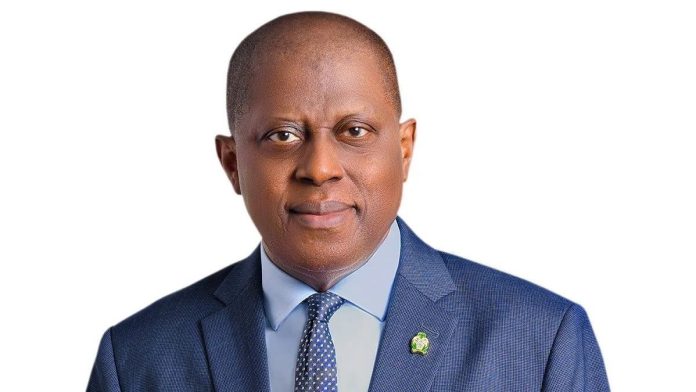
CBN Governor Olayemi Cardoso has spearheaded efforts to strengthen Nigeria’s export base, promote backward integration, and reduce reliance on imports—especially for goods that can be produced locally. The apex bank is also simplifying remittance processes to attract more diaspora inflows, leveraging Nigeria’s competitive exchange rate to drive export-led growth.
“The creative industry alone holds a $25 billion annual potential,” said Cardoso, who identified music, film, crafts, and digital exports as key growth drivers. He encouraged Nigerian businesses to embrace global markets and digital platforms to scale dollar inflows.
Push for Local Manufacturing
Cardoso has also called on telecom companies to embrace local production of vital components, including SIM cards, cables, and towers. During a meeting with Airtel Africa’s Group CEO Sunil Taldar, Cardoso argued that backward integration in the telecom sector could reduce dollar demand, create jobs, and bolster the economy.
Taldar welcomed the reforms and reaffirmed Airtel’s commitment to local sourcing, adding that it would ultimately improve efficiency and financial inclusion.
Industry stakeholders, including Gbolahan Awonuga of the Association of Licensed Telecom Operators of Nigeria, echoed this sentiment, calling for government support—particularly in providing stable power—to make local production competitive.
Strengthening FX Market Confidence
Foreign portfolio investors are showing renewed interest in Nigeria’s FX market, encouraged by stronger macroeconomic fundamentals and a more transparent exchange rate framework. The CBN’s interventions have led to a 226 per cent surge in daily turnover in the Nigerian Autonomous Foreign Exchange Market in the first half of 2024 compared to the same period the previous year. Foreign inflows jumped 72 per cent during the same period.
FX reserves climbed from $32 billion in May 2023 to over $40 billion in early 2024—representing eight months of import cover and marking the highest level in nearly three years.
Capital outflows of over $9 billion were processed smoothly, allowing investors to repatriate funds without the delays of previous years. “We also recorded a $6 billion current account surplus in H1 2024, buoyed by reduced petroleum imports, improved domestic refining, and higher remittance inflows,” Cardoso said.
Boosting Diaspora Engagement
To further support the naira and streamline remittances, the CBN recently introduced two new products for Nigerians abroad: the Non-Resident Nigerian Ordinary Account and the Non-Resident Nigerian Investment Account. These are designed to facilitate efficient fund transfers and encourage diaspora investment.
Dr Aminu Gwadabe, President of the Association of Bureaux De Change Operators of Nigeria, noted that diaspora remittances remain a critical source of FX. He commended the CBN’s initiatives to double formal remittances, which have already grown from an average of $300 million monthly in 2023 to nearly $600 million by August 2024.
Infrastructure and Policy Still Key
Experts warn, however, that sustainable progress depends on infrastructure development and policy consistency. Charles Abuede of Cowry Asset Management noted that without a stable operating environment, efforts to localise telecom production and reduce FX demand may fall short.
“Backwards integration can reduce costs and improve profit margins, but only if supported by reliable infrastructure and regulatory clarity,” he said.
As Nigeria seeks to insulate its economy from external shocks and bolster reserves, analysts agree that export diversification, investor confidence, and diaspora engagement will be key to building a more resilient and sustainable foreign exchange ecosystem.