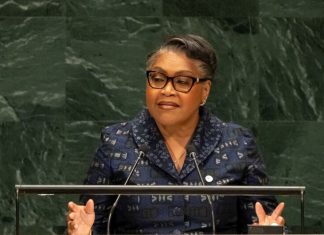









The Federal Government has reached six million Nigerians with conditional cash transfers within the last six months, according to the Minister of Humanitarian Affairs and Poverty Reduction, Prof. Nentawe Yilwatda. Speaking on Thursday in Jos during an interactive session with participants of the ongoing Skills-to-Wealth (S2W) training programme, Yilwatda highlighted the significant progress made under the administration’s revamped social support initiatives.
“Only two million people benefitted from the Conditional Cash Transfer (CCT) programme over the past nine years — that’s roughly 200,000 people per year,” the minister noted. “But in just six months, we’ve reached six million people — averaging one million per month.”

He attributed this leap to a new digital approach adopted by the ministry, which includes digitising beneficiary data, assigning digital identities, creating e-wallet accounts, and conducting physical verification.
“We cleaned up the social register by removing unverifiable names and households. Our goal is to ensure that every beneficiary is accurately identified and located,” Yilwatda added.
The minister also revealed that the programme aims to reach 15 million households by October 2025, in line with President Bola Tinubu’s directive.
“The President has instructed us to ensure these funds reach the people within nine months, and we are on track to meet that target,” he affirmed.
To ensure transparency and accountability, the ministry enlisted the World Bank to independently verify the payment process. Yilwatda said the bank’s verification team confirmed that 96% of the recipients were traceable and physically present in their listed homes.
“The remaining four percent were in hard-to-reach areas or had migrated due to insecurity. But overall, the results validated our new process,” he said.
On the Skills-to-Wealth (S2W) programme, Yilwatda said the initiative is aimed at empowering Nigerian youth in key sectors such as agriculture, renewable energy, and automotive technology.
He reaffirmed the Federal Government’s commitment to reducing poverty by combining financial support with skill development and long-term empowerment strategies.