








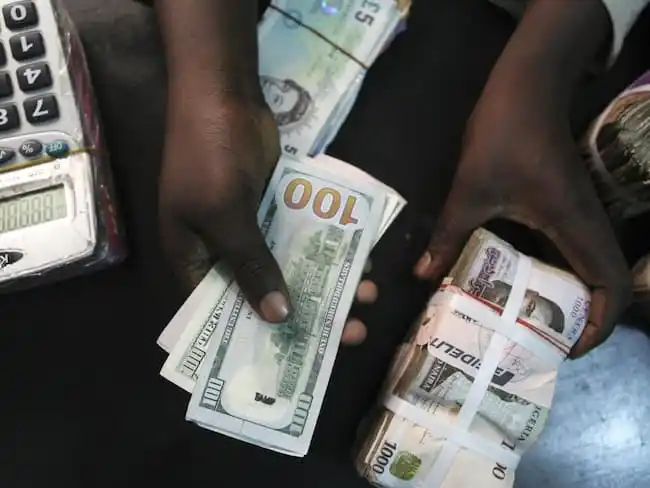
The Nigerian naira has weakened across different foreign exchange (FX) markets following the Central Bank of Nigeria’s (CBN) decision to pause its interventions. Despite this decline, the gap between the official and parallel market rates has disappeared, bringing the two rates closer together.
According to data from the FMDQ platform, the official exchange rate for the U.S. dollar depreciated to ₦1,500.80 per dollar. Transactions in the Nigerian foreign exchange market ranged between ₦1,497.10 and ₦1,505.00 per dollar on Wednesday.
A surge in demand for U.S. dollars outpaced the available foreign currency, making it harder for businesses and individuals to secure dollars for offshore payments.
Despite this, the naira has remained relatively stable since the beginning of the year, supported by CBN’s efforts to improve forex liquidity. The bank’s recent repayment of U.S. dollar swaps has also helped reduce pressure on demand.
In the parallel market, the naira declined to ₦1,500 per dollar, with Bureau de Change (BDC) operators waiting to receive their weekly dollar allocations from banks.
Meanwhile, Brent crude oil prices fell to a three-year low on Wednesday due to concerns over OPEC+ production plans, an unexpected increase in U.S. crude stockpiles, and new U.S. tariffs on imports from Canada, China, and Mexico.
Brent crude futures dropped by $2.58 (3.6%) to $68.46 per barrel, marking its lowest level since December 2021. Similarly, WTI crude fell by $2.90 (4.3%) to $65.36 per barrel, reaching its lowest point since May 2023.
On the other hand, gold prices rose slightly due to a weaker dollar and investor anticipation of U.S. payroll data. Spot gold increased by 0.2% to $2,923.16 per ounce, while U.S. gold futures climbed 0.4% to $2,933 per ounce.
Nigeria’s foreign reserves remain under pressure, dropping below $39 billion. Analysts at CardinalStone Partners Limited attribute this decline to the country’s repayment of external debts, particularly the $3.5 billion IMF loan received in 2020 for COVID-19 relief under the Rapid Financing Instrument. This five-year loan repayment started in 2023, with the remaining balance expected to be cleared this year.





 markets following the Central Bank of Nigeria's (CBN) decision to...)