








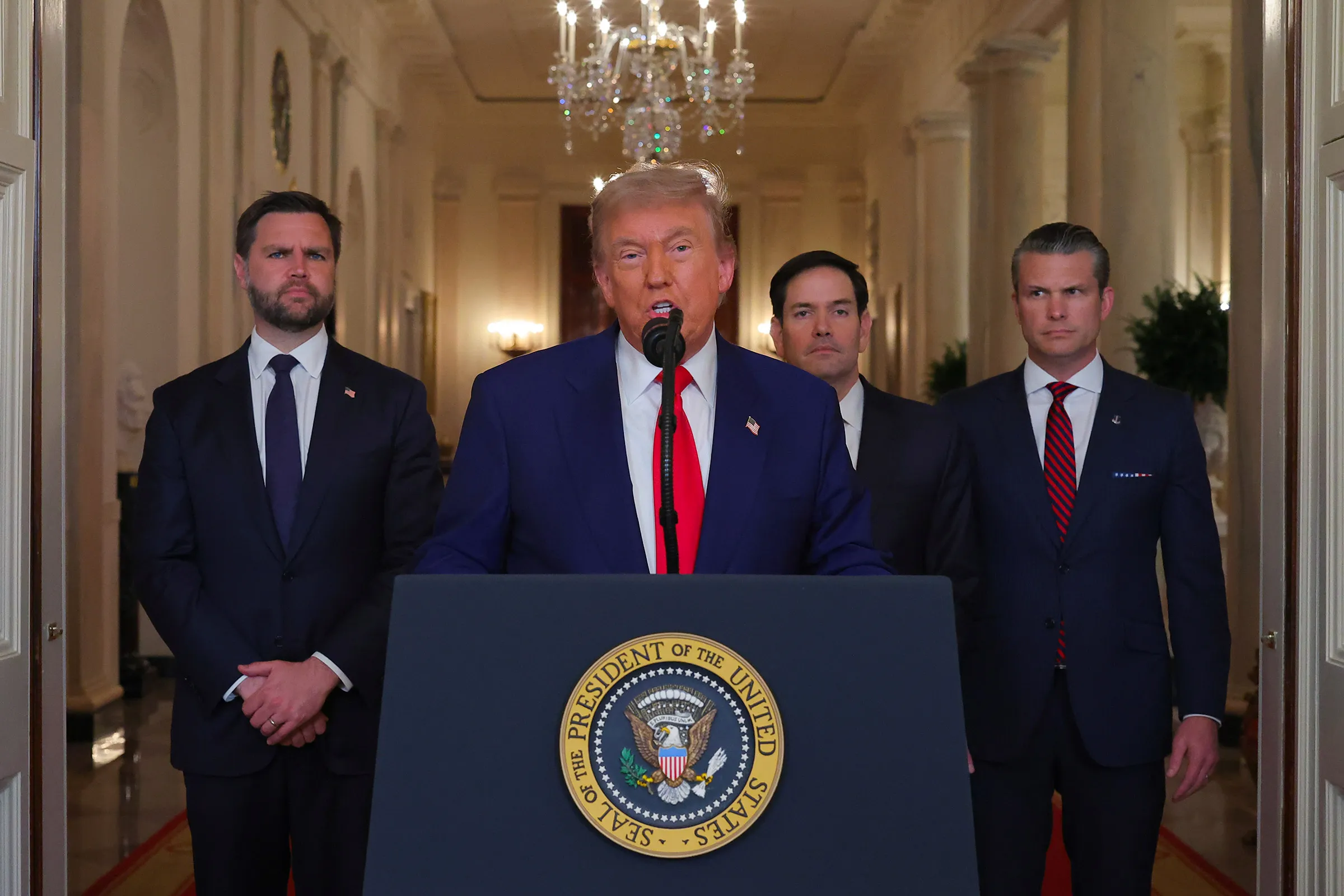
The United States federal government initiated a partial shutdown on Wednesday after congressional leaders and President Donald Trump were unable to resolve a persistent funding dispute amid heated discussions centered on Democratic calls for increased healthcare allocations.
Both Republican and Democratic parties swiftly pointed fingers at one another for the stalemate, which is set to affect hundreds of thousands of federal employees and the countless citizens relying on the public services they deliver.
This operational halt, affecting numerous federal departments and agencies, arrives amid intensifying political rifts in the nation’s capital, fueling concerns about the potential duration and repercussions of the interruption.
President Trump issued warnings about retaliating against Democrats and their supporters by slashing progressive initiatives and implementing widespread layoffs in the public sector during this initial disruption since a similar event in his prior administration.
“We’re going to see a significant number of individuals furloughed, and they’ll feel the impact deeply. Many of them align with Democratic views,” Trump remarked to journalists from the Oval Office.
He added that shutdowns could yield positive outcomes, proposing to leverage the downtime to eliminate unwanted programs, particularly those favored by Democrats.
Federal activities started winding down at 12:01 a.m. (0401 GMT) on Wednesday, following a chaotic yet unsuccessful effort in the Senate to endorse a temporary funding extension that had already cleared the House. Senate Minority Leader Chuck Schumer shared a social media clip featuring a countdown clock superimposed on the U.S. Capitol.
“The shutdown led by Republicans has commenced because they refused to safeguard America’s healthcare system,” he stated. “We’ll persist in advocating for everyday Americans.”
Essential services such as the U.S. Postal Service, military operations, and entitlement programs including Social Security and nutrition assistance will remain operational during the shutdown.
However, estimates from the Congressional Budget Office indicate that as many as 750,000 employees might be furloughed daily without compensation until the situation resolves. Associated Developments Senate Turns Down Proposal to Resolve Government Shutdown U.S. Embassy Confirms Passport and Visa Processing Will Proceed Amid Shutdown for Nigerians Precious Metal Gold Reaches All-Time Peak as U.S. Shutdown Commences
This marks the initial such closure since the record-setting 35-day episode nearly seven years prior, during Trump’s earlier presidency. Prospects for an agreement teetered precariously since Monday, when a final White House summit produced no advancements. Congress frequently encounters tight deadlines for approving expenditure blueprints, with talks often tense, yet lawmakers typically manage to prevent actual shutdowns.
With Democrats holding minority status in both legislative branches, they’ve aimed to exert influence over federal operations roughly eight months into Trump’s second term, which has involved the dissolution of several entire agencies.
– Duration Uncertainty – Trump’s suggestions of additional workforce reductions have heightened unease among federal staff, already rattled by substantial dismissals directed by billionaire Elon Musk’s Government Efficiency Department earlier this year.
Following the shutdown’s onset, House Speaker Mike Johnson posted on X, questioning, “How much longer will Chuck Schumer prolong this hardship for personal motives?”
“Consequences: Families lose access to WIC food support. Veterans miss out on medical care and anti-suicide initiatives. FEMA faces funding gaps amid storm season. Military personnel and airport security staff work without pay,” Johnson noted.
Kamala Harris, the former Democratic vice president and presidential candidate, posted on X that Republicans control the executive branch and both congressional chambers.
“This shutdown belongs to them,” Harris declared.
In the 100-seat Senate, funding legislation needs 60 affirmative votes—exceeding the Republican majority by seven. Republicans suggested prolonging existing budgets through late November to allow time for broader spending discussions.
Democrats, however, pushed for the reinstatement of hundreds of billions in healthcare investments, especially for the Affordable Care Act program aiding lower-income families, which the Trump team plans to dismantle.Nearly every Senate Democrat opposed the House-approved, seven-week interim funding bill just before the midnight cutoff. The shutdown’s length remains unpredictable.
Since 1976, when the contemporary budgeting framework was established by Congress, the federal government has experienced 21 closures. The most extended one started on December 22, 2018, amid a deadlock between Democrats and Trump over his request for $5.7 billion to construct a border wall in his first term.